Blog

  • Beyond the Intelligent Core: Sunline Advances Agentic Banking Architecture at HUAWEI CONNECT 2026

    Beyond the Intelligent Core: Sunline Advances Agentic Banking Architecture at HUAWEI CONNECT 2026

    SHANGHAI, September 18, 2026 – At HUAWEI CONNECT 2026 in Shanghai, Sunline takes banking intelligence beyond the transaction core, focusing on how core modernization, intelligent applications and AI-powered engineering are beginning to converge as banks move into the Agentic era. The direction reflects a broader shift in banking technology, where modernizing the core is increasingly connected with how banks use data, deploy AI and evolve complex technology environments.


    This convergence is reflected in Sunline’s Agentic Banking Architecture, which connects capabilities across the banking technology stack, from transaction processing and data intelligence to AI-driven applications and software engineering.


    From Core Banking Modernization to Agentic Banking

    The architecture is structured around three mutually reinforcing capabilities: Modern Core, Agent Core and AI Engineering. Together, they connect trusted transaction processing with real-time intelligence, AI-driven action and technology evolution.


    Modern Core, powered by SunCBS and APStack, provides the cloud-native transaction foundation for mission-critical banking. Agent Core, built around DataMind, DStack and AIS, connects banking data with enterprise AI and agent orchestration to support intelligent applications across business, operations and technology. AI Engineering, supported by SunTCR and AI-assisted engineering capabilities, applies intelligence to code understanding, knowledge generation and software engineering, helping development teams understand complex systems and deliver change more efficiently.

    Together, the three capabilities form a continuous intelligence loop: Transact, Understand, Act and Evolve, connecting banking operations with the intelligence and engineering capabilities required for continuous modernization.
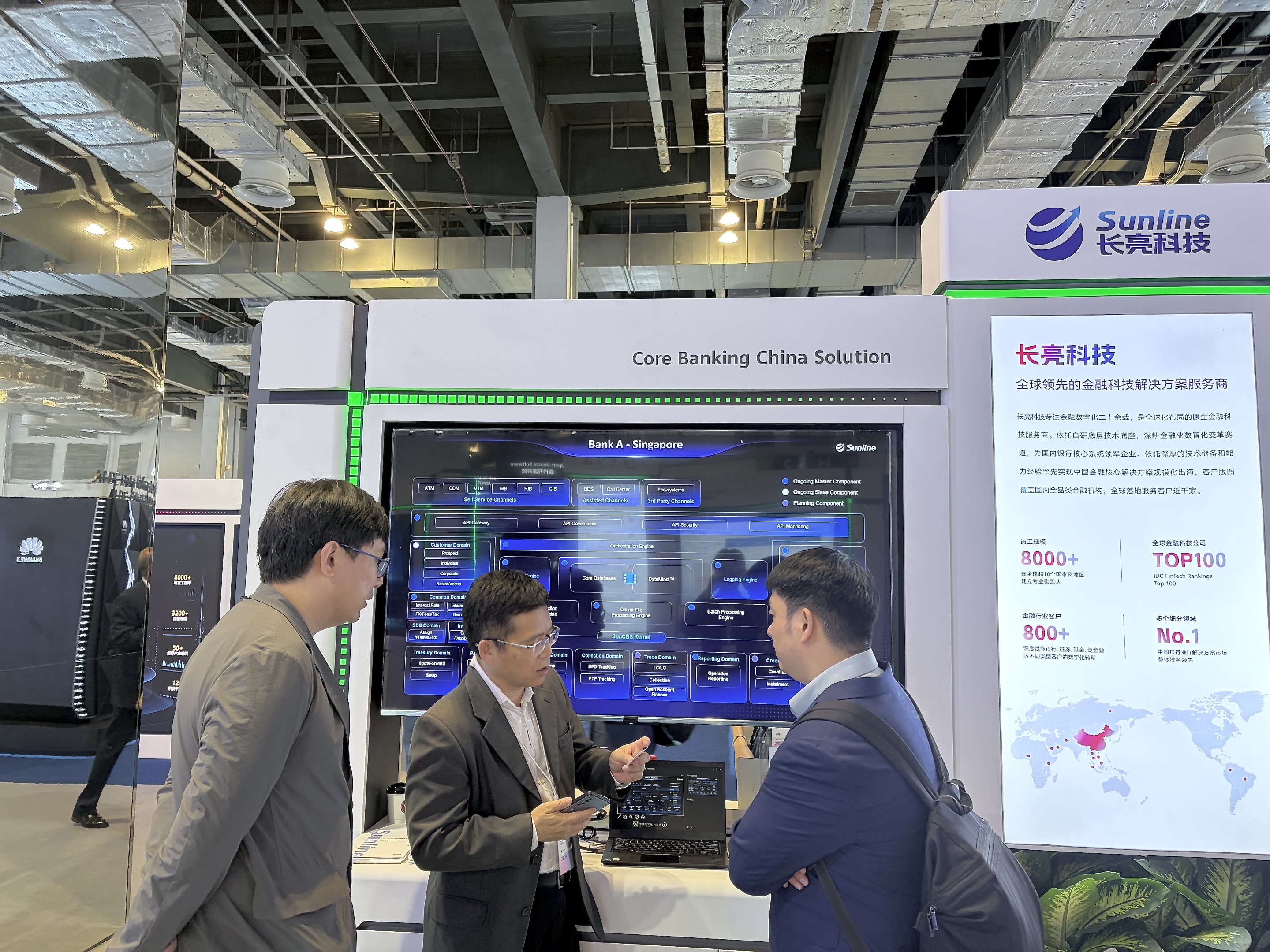

    Sunline engages with global banking customers at HUAWEI CONNECT 2026.


    Sunline and Huawei continue to deepen their partnership across banking modernization, AI innovation and international market development, bringing together complementary technology, industry expertise and implementation experience to support financial institutions across global markets.

    At the Banking Core Application Modernization & Intelligence Partner Roundtable, Sunline joined Huawei and ecosystem partners for discussions around Core Banking modernization, Agent Core and AI Coding, and how these capabilities are shaping the next phase of banking technology. Jack Wang, General Manager of New Markets at Sunline International, shared Sunline and Huawei’s overseas collaboration progress and exchanged perspectives with partners on bringing technology innovation and implementation experience to more international banking markets.


    “Core modernization is increasingly connected with advances in data, AI and software engineering. By deepening our collaboration with Huawei, we aim to bring these capabilities together across the banking technology stack and apply our combined technology and implementation experience in more international markets.” said Jack.
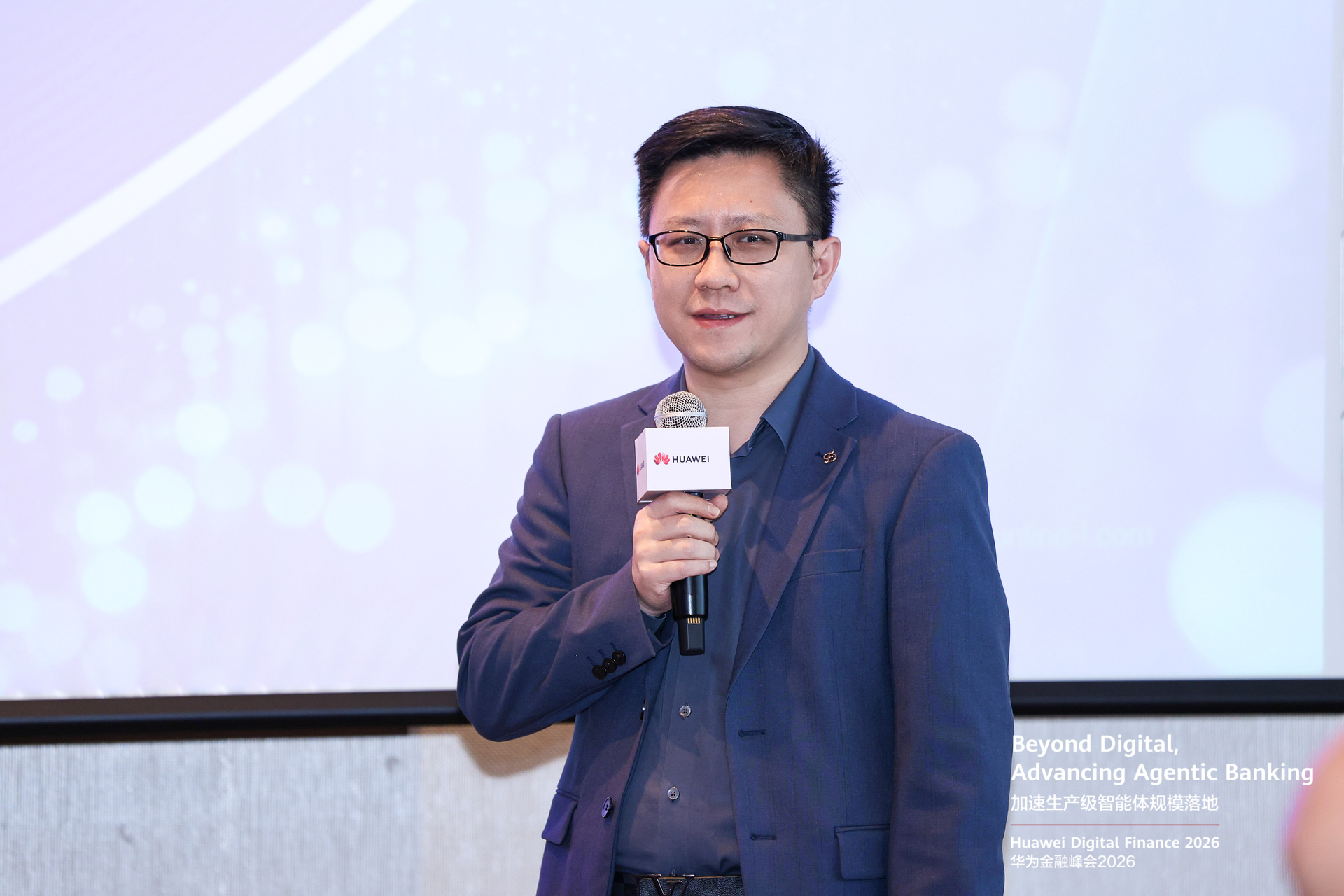

    Jack Wang, General Manager of New Markets at Sunline International, discusses the expansion of Sunline and Huawei’s technology collaboration across international markets.


    During the Banking AI Innovation Practice Forum as an important session during Huawei Connect 2026, Sunline joined Huawei and industry partners in the joint launch of the AI Coding Training Program, supporting broader industry collaboration around AI-enabled software engineering and development practices.
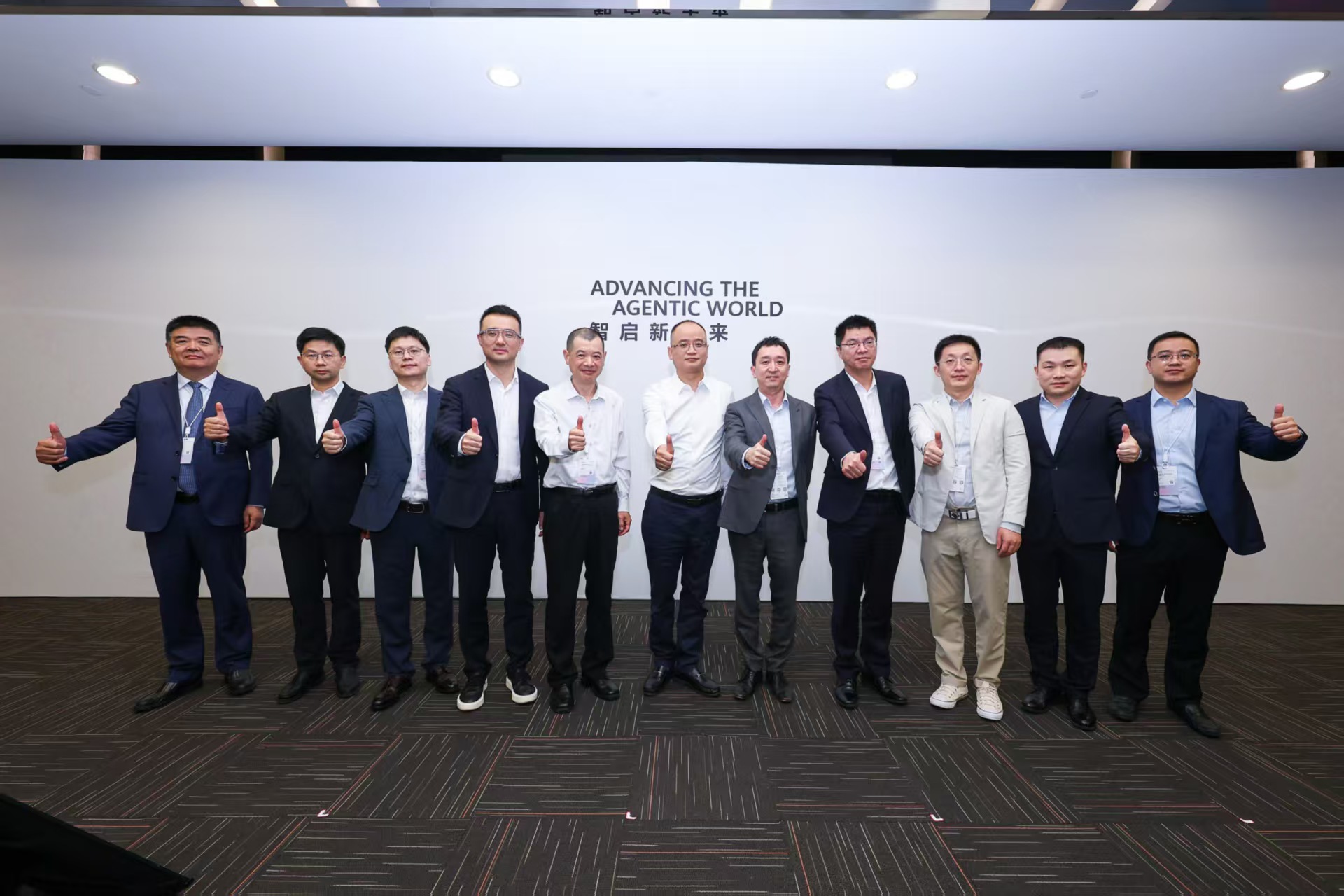
    Ruby Zhou, Sales President of Sunline International, joins Huawei and industry partners at the launch of the AI Coding Training Program.


    Today, Sunline serves more than 60 overseas financial institutions across over 10 countries and regions, with experience supporting banks across diverse regulatory, technology and business environments. This international footprint continues to shape how Sunline approaches the next generation of banking technology, with a strong focus on practical innovation that can adapt to different markets.


    HUAWEI CONNECT 2026 provides a global platform for Sunline to share this direction with banks and technology partners, exchange perspectives on the evolving role of AI in banking, and explore new opportunities for collaboration. As the industry moves toward an increasingly Agentic future, Sunline will continue to bridge proven banking technology with emerging intelligence to help shape what comes next for banking.

  • Composable Core Architectures and AI-Native Engineering: Sunline at the 23rd China-ASEAN Expo

    Composable Core Architectures and AI-Native Engineering: Sunline at the 23rd China-ASEAN Expo

    As economic integration and cross-border digital transactions accelerate across the China-ASEAN Free Trade Area, financial institutions throughout Southeast Asia face a critical architectural pivot. Legacy monoliths are increasingly unable to support high-concurrency digital volume, real-time transaction processing, and rapid ecosystem integration.

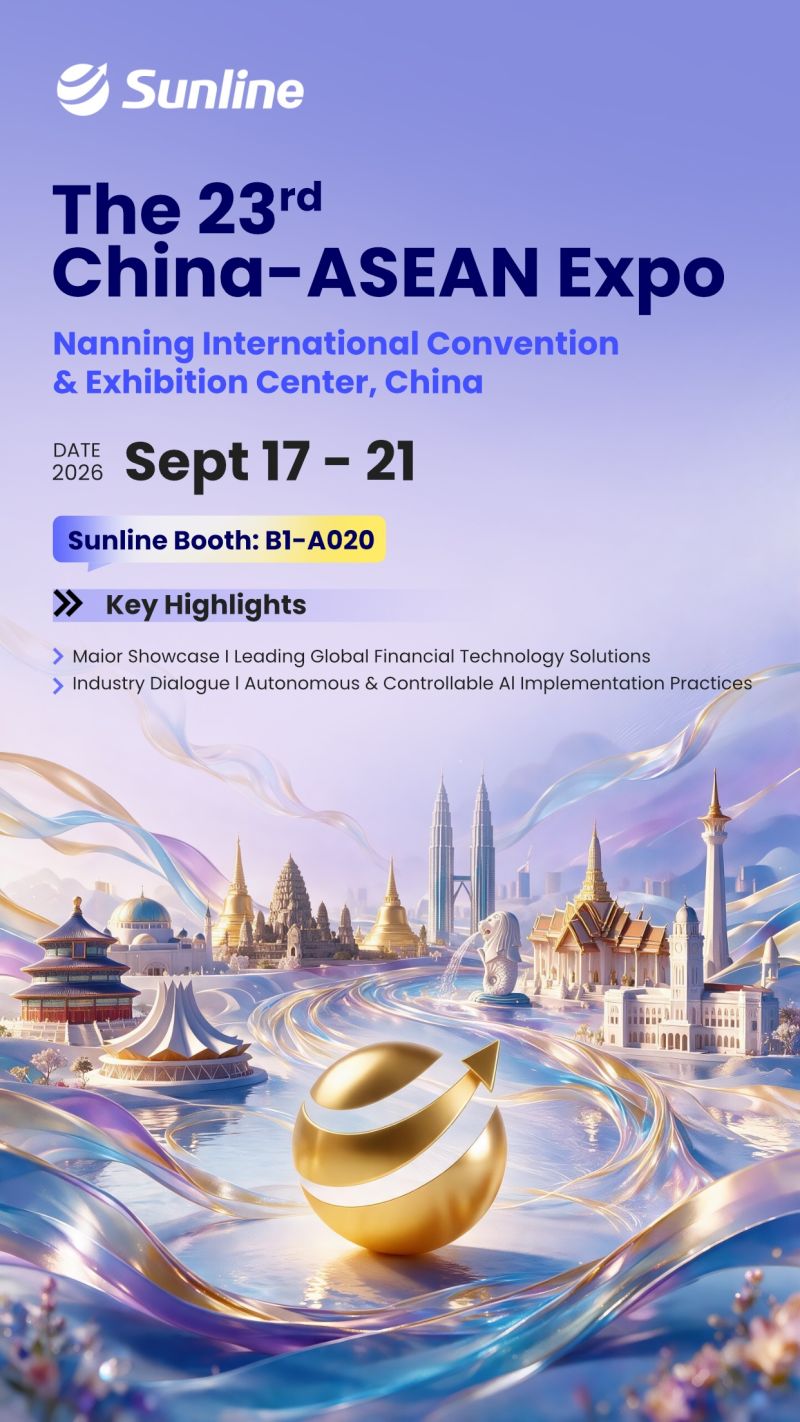
    Against this backdrop, Sunline will participate in the 23rd China-ASEAN Expo (CAEXPO) to showcase how domain-driven, composable architecture enables continuous transformation and real-time execution for modern financial institutions.

    A central challenge in core transformation is balancing rapid innovation with operational stability. Traditional monolithic migrations introduce high execution risks and lock institutions into rigid vendor roadmaps.

    Sunline addresses these structural limitations through SunCBS, acloud-native core banking system built on domain-driven, composable microservices. 


    Throughout the exhibition, Sunline will demonstrate its end-to-end technology portfolio designed for digital-first financial institutions, including the cloud-native core banking system, integarted date platforms, AI-native software engineering, and digital currency (e-CNY) infrastructure. 

    Alongside solution demonstrations, Sunline technical architects will present two briefings detailing practical AI deployment across core operations and data management:

    · Sept 17 | 16:40 – 17:00 DataMind: An Integrated Data Management Platform in the AI Era


    · Sept 18 | 11:20 – 11:40 Luban: AI-Native SDLC for SunCBS

    CAEXPO provides an opportunity to examine proven implementation models that balance agility with financial-grade resilience.

    Visiting the Sunline team at Booth B1-A020 offers practical insights into establishing flexible, scalable architectures tailored to the evolving demands of ASEAN financial markets.

    Event Details

    Date: September 17–21, 2026

    Location: Nanning International Convention and Exhibition Center, Nanning, China

    Sunline Booth: B1-A020

    See you in Nanning!

  • Sunline and AWS Advance Core Modernisation and AI Readiness Dialogue at The Asian Banker Thailand Awards 2026

    Sunline and AWS Advance Core Modernisation and AI Readiness Dialogue at The Asian Banker Thailand Awards 2026

    Banking leaders examine how resilience, legacy pressures and AI readiness are reshaping the technology agenda for the next generation of banking.


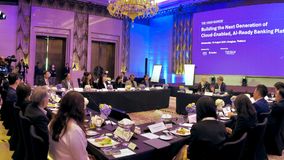
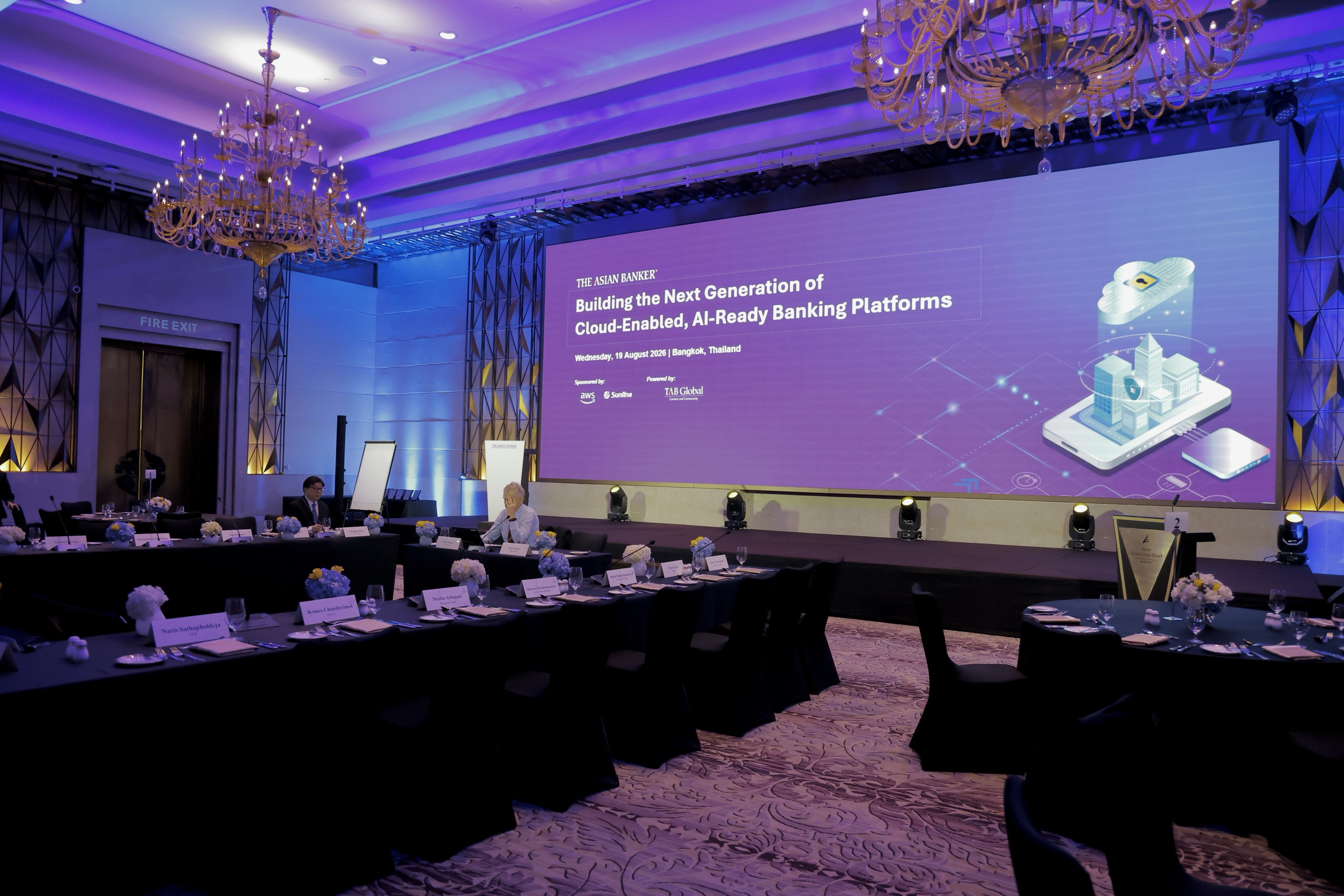
    BANGKOK, Thailand, 19 August 2026 – Amazon Web Services (AWS), in partnership with Sunline, convened banking leaders at The Asian Banker Thailand Awards 2026 for an Executive Roundtable on “Next-Gen Cloud-Enabled, AI-Ready Banking Platforms.”

    Moderated by Christian “Chris” Kapfer, Head of Research at The Asian Banker, and Axel Winter, International Resource Director, the discussion explored a question becoming increasingly consequential for financial institutions: how to build the capacity to evolve while preserving the resilience, control and continuity required of mission-critical banking.

    The conversation brought together perspectives on legacy technology, scalability, transformation risk and the foundations required for enterprise AI, pointing to a broader shift in how banks are approaching core modernisation.

    Legacy Pressure Is Becoming A Business Resilience Issue

    Legacy systems continue to underpin critical banking operations. The challenge is increasingly the environment around them.

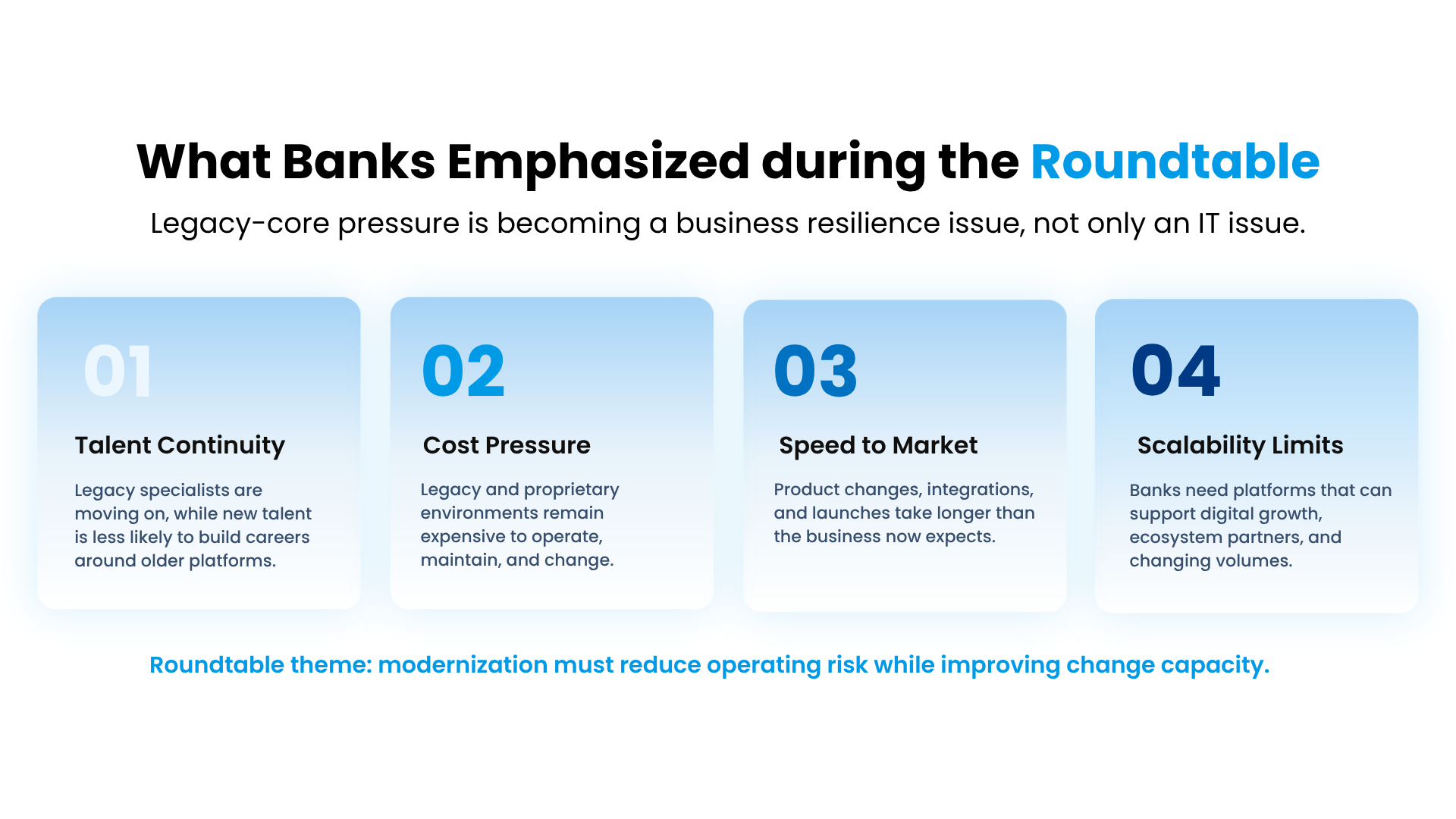
    Banking leaders highlighted four interconnected pressures: talent continuity, cost, speed to market and scalability. Legacy expertise is becoming harder to sustain, established environments remain costly to operate and change, while growing digital expectations are placing greater demands on how quickly banks can launch, integrate and scale.

    Figure 1. Key legacy-core pressures highlighted by banking leaders during the executive roundtable.


    Taken individually, these can appear to be separate operational challenges. Collectively, they point to a more structural question: whether the bank’s technology foundation can continue to support the pace and direction in which the institution needs to evolve.


    This is moving core modernisation beyond a conventional infrastructure renewal programme and closer to the strategic agenda of the bank.


    From System Replacement to Change Capacity

    For Sunline, the implications extend beyond the question of when to replace a legacy core. Stability and control remain fundamental to banking. But institutions increasingly need those qualities alongside greater adaptability, scalability and the ability to change continuously.


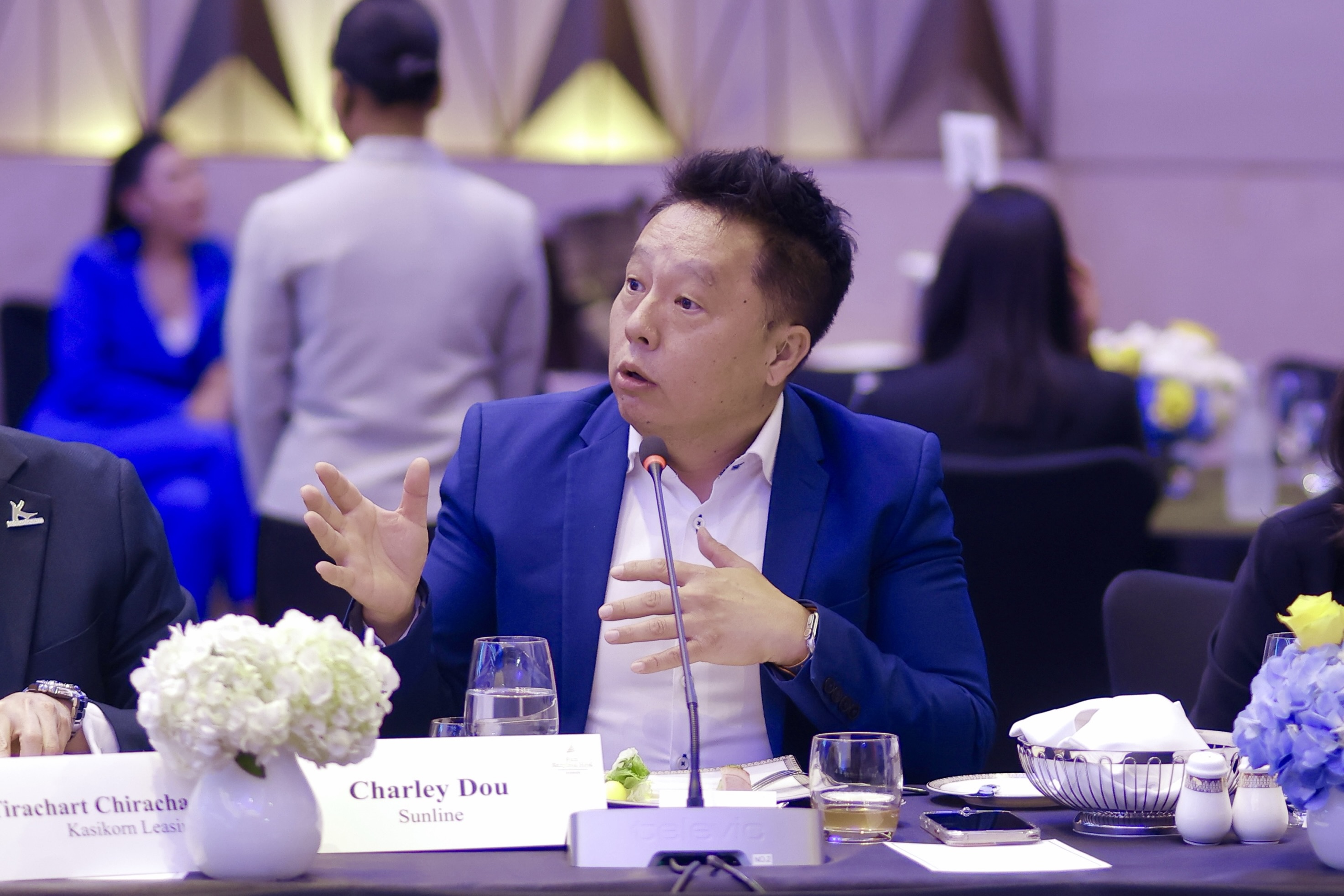
    Charley Dou of Sunline highlighted that this makes modernisation as much a question of long-term change capacity as technology architecture.


    “Modernisation is not one model for every institution. The strategic question is how banks create greater capacity to evolve without compromising the resilience on which their business depends. The right approach must reflect each institution’s complexity, risk appetite and business priorities.” 

    Charley Dou, Solutions Expert, Sunline


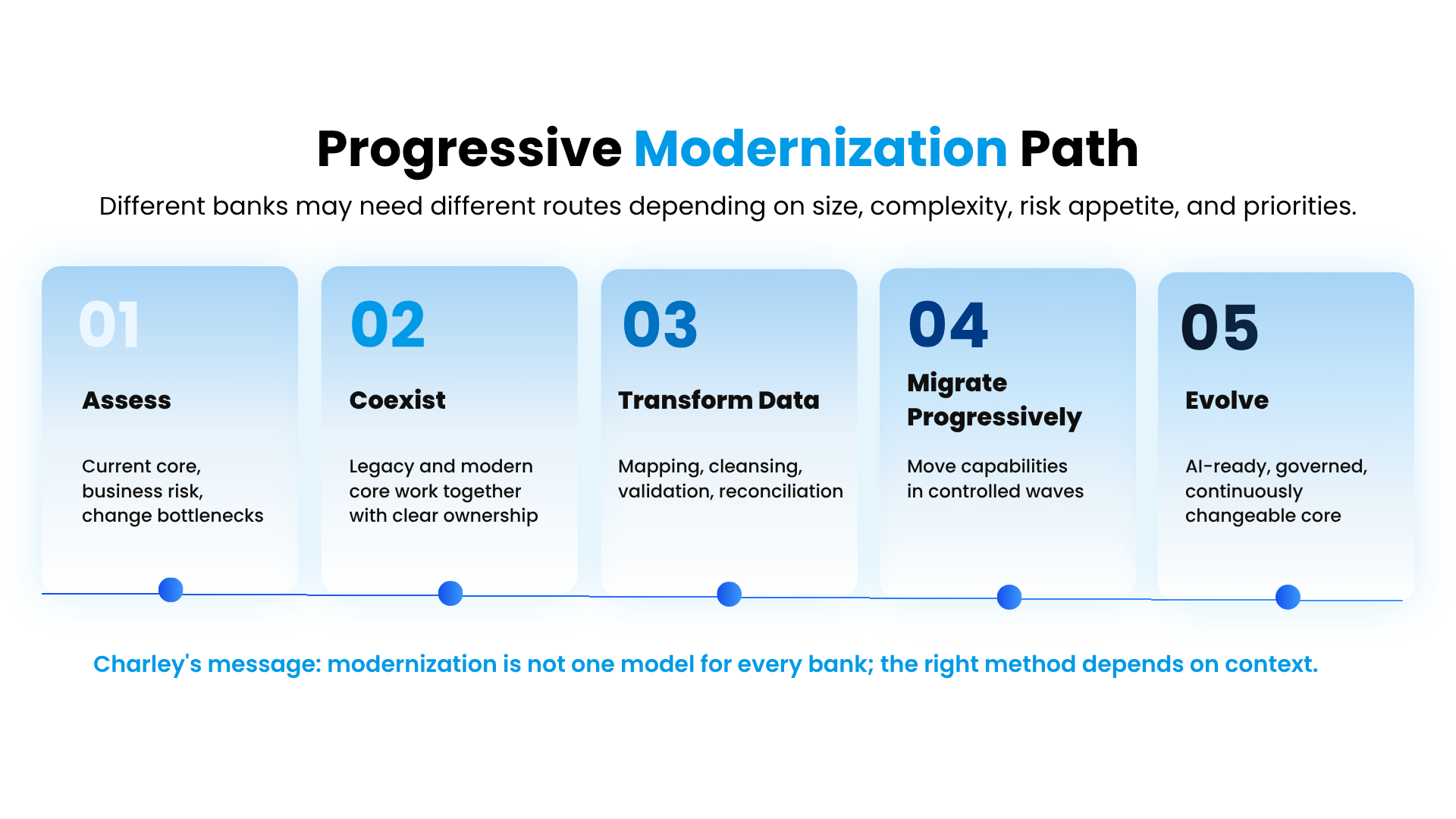
    Rather than forcing every institution towards the same transformation model, banks can consider different routes according to their starting point and priorities. Some may pursue a more direct replacement, while others may benefit from progressive migration or a period of coexistence between legacy and modern environments.

    Figure 2. A progressive modernisation approach can help banks manage transformation risk while building greater capacity for change.


    The significance of a progressive approach is not simply that transformation can happen in stages. It is that banks can align the pace of change with their operational readiness and risk profile. That places greater emphasis on how the transition is governed, not only on the target architecture.


    Execution Becomes Part of the Strategy

    Coexistence between legacy and modern environments introduces its own complexity. Clear architecture, reliable integration, data synchronisation, reconciliation and operational ownership become critical when two environments need to operate simultaneously.


    The same applies to data transformation. Migration cannot be reduced to the technical movement of data. Mapping, cleansing, validation, reconciliation, cutover planning and rollback readiness all contribute to whether the transition can be executed without compromising business continuity.


    Drawing on Sunline’s experience in Thailand, Sutee emphasised the importance of execution discipline in translating modernisation strategy into operational outcomes.


    “Successful modernisation depends on more than the technology itself. A clear roadmap, realistic migration stages, strong data governance and continuous business validation are essential to moving forward while maintaining control over business continuity, data integrity and customer impact.”

    Sutee Srivorapetch, Sunline Thailand


    This experience points to an important distinction: modernisation risk is not managed by slowing transformation, but by structuring transformation in a way that allows change to happen with control.


    AI Readiness Starts with the Foundations Beneath It

    AI adds greater urgency to this conversation. Banks are increasingly exploring how AI can improve productivity, customer insight, business intelligence and decision-making. Yet moving from experimentation to meaningful enterprise adoption places greater demands on the foundations beneath those capabilities.


    Trusted data, clear governance and reliable systems of record become more important as AI moves deeper into banking processes. Without those foundations, AI can introduce another layer of complexity rather than create sustainable value.


    This creates a direct connection between core modernisation, data modernisation and AI readiness. They are increasingly not separate technology agendas, but interconnected elements of how banks prepare their institutions for the next phase of change.


    Building the Capacity to Evolve

    The discussion in Bangkok underscored a broader shift in the modernisation agenda. Core transformation is no longer simply about replacing ageing technology. It is about reducing structural constraints while strengthening the resilience and adaptability of the institution.


    There is no universal path forward. Modernisation can be progressive, coexistence can be governed, and migration risk can be managed through clear methodology, strong governance and disciplined execution.


    Through its partnership with AWS, Sunline continues to engage financial institutions on how these foundations can support the next generation of resilient, scalable and AI-ready banking.


    Ultimately, the future of core banking will not be defined by technology replacement alone. It will be defined by whether banks have the capacity to evolve continuously, confidently and at the pace their markets demand.

  • Sunline Expands Core Banking Footprint Through Two New City Commercial Bank Projects

    Sunline Expands Core Banking Footprint Through Two New City Commercial Bank Projects

    Regional commercial banks are facing increasing pressure to modernize their technology foundations as digital transaction volumes rise and regulatory requirements evolve. Technology strategies are increasingly moving beyond system replacement towards broader business capability transformation. 


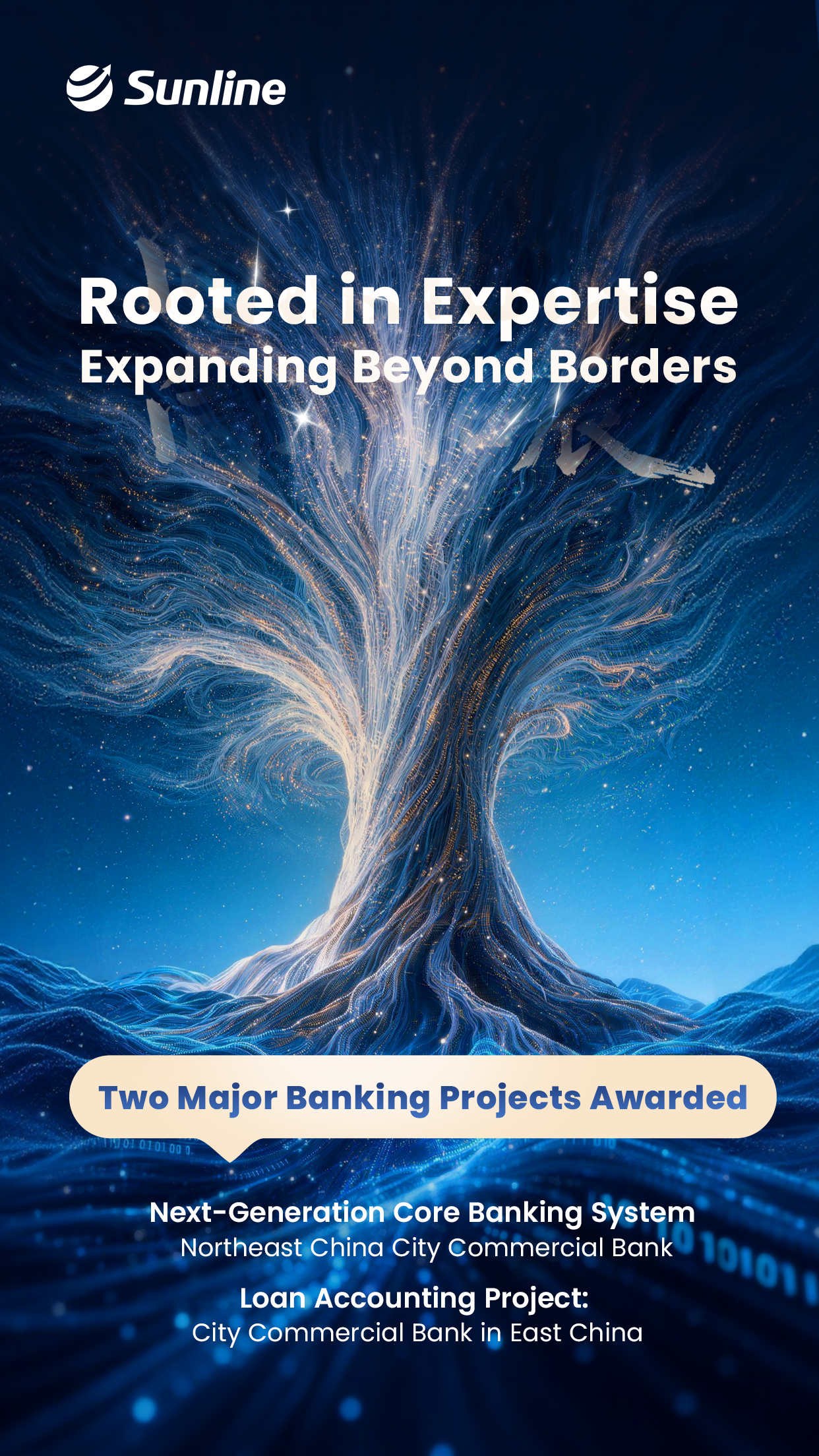
    Demonstrating this architectural shift, Sunline recently secured two core banking modernization projects across Chinese regional commercial banks: a full-scope next-generation core banking system deployment in Northeast China, and a specialized loan accounting platform project in East China.


    Consolidating Full-Scope Core Capabilities

    In the Northeast China deployment, the bank is expanding its technology relationship with Sunline, transitioning from an isolated credit core into a comprehensive, enterprise-grade next-generation core banking platform. While the bank previously operated a dedicated credit engine, its core architecture lacked integrated liability capabilities, such as deposits, payment settlement, and general accounting. 


    The upgraded system unifies these core banking functions while embedding four centralized enterprise capability centers: product, pricing, customer, and shared operations. Designed with horizontally scalable computing nodes, the platform incorporates an active-active disaster recovery architecture spanning two locations and three data centers to deliver continuous 24/7 processing and dynamic failover capabilities during unexpected operational disruptions.


    For regional banks modernizing their core infrastructure, the project reflects a broader shift from function-specific systems towards a unified architecture capable of supporting business growth, operational resilience and continuous product development.


    Specialized Loan Accounting and Architectural Expansion

    The engagement with a city commercial bank in East China represents a vertical capability extension built upon a next-generation core banking system previously implemented by Sunline – currently running stably in production – creating the foundation for a further expansion into loan accounting. 


    The new project represents Sunline’s third loan accounting engagement in the first half of 2026, following projects with a private bank and a provincial rural credit cooperative. The continued adoption across different types of financial institutions provides further evidence of the product’s applicability across varying business and technology environments.


    Engineered with a modular framework and parameterised configuration, this specialized engine manages full-lifecycle credit accounting from origination and servicing through to post-loan workflows without requiring extensive code-level updates. The underlying architecture is designed to support a tenfold growth in account volume over the next decade, ensuring long-term processing efficiency as digital lending scales.


    From Core Replacement to a Broader Banking Platform Strategy

    These dual deployments demonstrate how core banking modernization can evolve beyond a one-off system replacement, reflecting a broader approach to banking technology: building a modular product architecture in which core banking, lending accounting, digital currency and intelligent payments can be deployed independently while working together as part of a broader banking technology stack.


    With more than two decades of experience in financial core business systems, Sunline continues to develop its core solution suite including comprising next-generation core banking, standalone loan accounting engines, digital fiat payment modules, and intelligent transaction processing platforms, providing financial institutions with a scalable, cloud-native foundation designed to sustain enterprise operational resilience and long-term business growth. As financial institutions increasingly combine core modernization with data and AI initiatives, the ability to establish a stable, extensible transaction foundation will remain central to their digital transformation strategies.

  • Sunline Modernizing the Enterprise General Ledger: Transitioning Bank Finance from Post-Event Accounting to Real-Time Intelligence

    Sunline Modernizing the Enterprise General Ledger: Transitioning Bank Finance from Post-Event Accounting to Real-Time Intelligence

    Throughout the first half of 2026, Sunline expanded the deployment of its Enterprise Transaction-Level General Ledger (GL) across state-owned mega-banks, joint-stock commercial banks, regional institutions, and non-bank financial entities. Key operational milestones include a successful single-track production cutover at a major state-owned bank, alongside transaction-level GL go-lives across leading commercial banks. 


    Banking finance transformation is moving beyond regulatory compliance and financial reporting towards real-time accounting, integrated business-finance management and data-driven decision-making. As accounting standards evolve and banks accelerate technology modernization, traditional general ledger platforms are increasingly being challenged by fragmented business and finance data, delayed accounting processes and limited scalability.

    The combination of Sunline’s new project wins and production deployments reflects growing demand for modern GL architectures that can support the scale, regulatory requirements and operational complexity of contemporary banking.

    The Structural Limitations of Legacy General Ledgers

    Traditional general ledger architectures were designed primarily for post-event aggregation and end-of-day reporting. As digital payment channels and high-frequency transactions scale, this legacy model introduces significant operational friction, including fragmented business and accounting data, limited financial visibility, compute bottlenecks under peak load periods, and evolving compliance pressures. 

    Decoupling Transaction Execution from Accounting Logic

    Sunline pioneered the Enterprise Transaction-Level GL to eliminate these constraints by separating transaction execution from accounting rules. Built on a cloud-native, distributed microservices architecture, the platform shifts accounting logic directly to individual transaction events without degrading core banking processing speeds.

    By establishing a unified, bank-wide accounting data center, the platform enforces a single accounting standard across all operational channels. This framework supports both full-scale core modernization for Tier-1 institutions and targeted GL replacement or sovereign technology adoption for regional banks. Furthermore, insights gained from extensive deployment scale continuously inform product iterations-refining automated reconciliations, accounting validation engines, and unified regulatory reporting capabilities. 

    From Accounting Infrastructure to Intelligent Financial Management

    The next stage of GL modernization is increasingly connected to data and AI.

    As transaction-level accounting generates more granular and timely financial data, banks can move beyond retrospective bookkeeping towards automated reconciliation, intelligent accounting validation, integrated regulatory reporting and data-driven financial analysis.

    Sunline is therefore extending its general ledger capabilities towards AI-enabled financial management, with a focus on using accounting data not only for compliance and reporting, but also for analysis, governance and business decision support. The GL is no longer simply where transactions are recorded. It is becoming an important component of the bank’s enterprise data architecture and a foundation for more timely, transparent and intelligent financial management.

    With deployments spanning different types of financial institutions and technology environments, Sunline’s focus is to provide a scalable path from GL modernization and accounting standardization to intelligent financial management, helping banks strengthen their financial technology foundations while preparing for the next stage of digital transformation.

  • Sunline on Type 11 Readiness in Hong Kong: Five Core Capabilities for OTC Derivatives Businesses

    Sunline on Type 11 Readiness in Hong Kong: Five Core Capabilities for OTC Derivatives Businesses

    Following its recent support for MSCI’s Hong Kong Investment Risk Summit as the event’s exclusive partner, Sunline is extending the discussion to the practical capabilities firms need as they prepare for Type 11 and build OTC derivatives businesses in Hong Kong. As the market continues to develop, Type 11 readiness is prompting securities firms to reassess their data foundations, risk management, trade reporting and operating frameworks. For firms planning to launch or expand OTC derivatives businesses, readiness is not simply a licensing or reporting exercise; it requires coordinated development across data, risk, finance, operations and technology.


    Drawing on its technology and project experience in securities and capital markets, Sunline has developed five core capabilities spanning data governance, risk capital measurement, Financial Resources Rules (FRR) reporting, Hong Kong Trade Repository (HKTR) reporting, and margin and collateral management.


    1. Build a unified data foundation for granular data management

    OTC derivatives businesses rely on transaction, position, valuation, counterparty, margin and collateral data, often distributed across multiple business and management systems. Differences in data standards, data quality and management conventions can create inconsistencies across the operating chain.


    Firms need stronger data governance at source to improve consistency, completeness, accuracy and traceability, providing a reliable foundation for risk measurement, financial resources management and trade reporting.


    Sunline’s data governance and unified data foundation capabilities cover:

    • Data standards definition

    • Data-quality controls

    • Data mapping

    • Data lineage

    • Historical data reconstruction


    By establishing consistent data standards and governance mechanisms, Sunline helps firms reduce front-to-back data discrepancies and create a more consistent foundation for complex risk measurement and reporting workflows.


    2. Strengthen risk capital measurement across multiple risk dimensions

    OTC derivatives businesses are exposed to market risk, counterparty credit risk, credit valuation adjustment risk, concentration risk and liquidity risk.


    Sunline’s risk capital measurement engine supports relevant risk models and calculation approaches, including:

    • Standardized Market Risk Approach (SMRA)

    Built-in standardised calculation models cover specific and general interest-rate risk, equity risk, gold risk, commodity risk, continuous options, non-standard derivatives and concentration risk, supporting market risk capital charge calculations.


    • Standardized OTCD Counterparty Credit Risk Approach (SOCCRA)

    Covers counterparty credit risk charges, margin shortfall charges, credit valuation adjustment (CVA) risk charges, counterparty concentration charges and liquidity adjustment charges.


    • Internal Models Approach (IMA)

    Supports eligible firms in using internal models for risk measurement and incorporates independent price verification (IPV) to strengthen valuation independence and reliability and support fair-value measurement requirements.


    Bringing these approaches together enables firms to strengthen risk and capital management across their OTC derivatives businesses.


    3. Enhance FRR reporting and financial resources management

    FRR returns draw on risk, transaction, financial and capital data, including quick assets, ranking liabilities, paid-up share capital, tangible capital, OTC derivatives exposures, deductions and risk weights.


    Sunline’s FRR reporting module can automatically collect and calculate key indicators, map complex fields for OTC derivatives exposures, deductions and risk weights, and generate FRR returns in the prescribed format.


    Bringing data collection, calculation, mapping and report generation into a single workflow can shorten reporting cycles, reduce manual errors and improve consistency in financial resources management.


    4. Establish lifecycle HKTR reporting capabilities

    OTC derivatives reporting extends beyond trade inception. Terminations, corrections, valuation updates and collateral changes also need to be processed and reported throughout the trade lifecycle.


    Sunline’s HKTR reporting solution integrates with trading and valuation systems to standardise, cleanse, map and submit transaction data across:

    • Trade inception

    • Terminations

    • Corrections

    • Valuations

    • Collateral reporting


    The solution supports the generation of ISO 20022 XML messages in line with applicable HKTR technical specifications and provides automated resubmission and exception alerts for failed submissions.


    Automated data processing and exception management can improve the completeness, accuracy and operational control of trade reporting.


    5. Integrate margin and collateral management to improve capital efficiency

    Margin and collateral management spans initial margin, variation margin, margin calls, reconciliation and dispute management. It is an important component of OTC derivatives risk management and capital utilisation.


    Sunline’s margin and collateral management module incorporates the Standard Initial Margin Model (SIMM) to calculate initial margin across the following risk classes:

    • Interest rate risk

    • Qualifying credit risk

    • Non-qualifying credit risk

    • Equity risk

    • Commodity risk

    • Foreign exchange risk


    The solution covers initial and variation margin calculations, margin calls, reconciliation and dispute management, while bringing margin requirements and capital utilisation into a unified risk view.


    Integrating margin, collateral and capital data gives firms a clearer basis for balancing business growth and capital efficiency.


    From point solutions to long-term business capabilities

    Type 11 readiness should not be treated as a standalone licensing project. It requires coordinated capabilities across data governance, risk capital measurement, financial resources management, trade reporting, and margin and collateral operations.


    Starting with a unified data foundation and progressively connecting risk capital measurement, FRR reporting, HKTR trade reporting, and margin and collateral management can help firms build a more consistent, traceable and scalable operating framework for OTC derivatives.


    Sunline will continue to draw on its technology and implementation experience in securities and capital markets to support financial institutions in strengthening their data, risk, reporting and operational capabilities.


  • Sunline Supports MSCI Hong Kong Forum on Type 11 Readiness and OTC Derivatives Growth

    Sunline Supports MSCI Hong Kong Forum on Type 11 Readiness and OTC Derivatives Growth

    MSCI recently hosted “OTC Derivatives in Hong Kong: From License to Growth” as part of its Investment Risk Summit series, with support from Sunline, MSCI’s exclusive partner for the event. The summit brought together representatives from the Securities and Futures Commission (SFC), securities firms from Hong Kong, mainland China and other markets, professional advisers and technology providers. Discussions focused on the evolving Type 11 licensing regime and the regulatory, operational and commercial considerations facing firms building OTC derivatives businesses in Hong Kong.


    Tom Jenkins, Senior Director, Intermediaries, Securities and Futures Commission, delivered a keynote on supervisory expectations for OTC derivatives. He discussed the framework underpinning the Type 11 regime, the areas supervisors consider as firms prepare for licensing, and the characteristics of a well-structured OTC derivatives operation. Governance, risk management, operational capabilities and internal controls featured prominently in the session.


    For firms preparing for the Type 11 regime, starting early provides more time to assess their licensing, governance and operational readiness, and to identify the capabilities that may need to be strengthened.


    The panel discussion brought together securities practitioners, professional advisers and technology specialists to examine how firms are approaching Type 11 readiness in practice. The discussion covered preparation timelines, capital considerations, implementation priorities and the business implications of Swap Connect for equity derivatives activities, closely reflecting the practical focus set out in MSCI’s programme. Panellists noted that a comprehensive licensing programme may involve more than 40 regulatory documents and that preparation may take approximately eight to 12 months as established implementation approaches continue to develop. This reinforces the importance of starting early and allocating sufficient time and resources. The discussion also highlighted the need for clear ownership and cross-functional coordination. A CEO-led steering structure, supported by a dedicated project management office, can help align work across front-, middle- and back-office functions and coordinate the end-to-end readiness programme.


    Robust data governance is equally important. Firms need consistent, accurate and traceable data to support detailed reporting, risk measurement and day-to-day operations. As Swap Connect and related market access channels continue to develop, Type 11 readiness is increasingly relevant not only to licensing, but also to the ability of Chinese securities firms to expand their cross-border derivatives businesses.


    The discussions reinforced that Type 11 readiness is an enterprise-wide undertaking spanning governance, financial management, risk, operations, data and technology. Firms need to coordinate data governance, risk management, trade reporting and operational capabilities to support the long-term development of their OTC derivatives businesses.


    Sunline will continue to contribute to industry dialogue and draw on its project experience in Hong Kong’s securities and capital markets industry to support financial institutions in strengthening their OTC derivatives capabilities.


    Disclaimer: This article summarises discussions from the event and is provided for general information only. It does not constitute legal, regulatory, investment or other professional advice. Firms should assess the application of any rules or requirements considering their own circumstances and consult legal counsel, professional advisers or relevant authorities where appropriate.

  • Sunline on Type 11 Readiness in Hong Kong: Five Core Capabilities for OTC Derivatives Businesses

    Following its recent support for MSCI's Hong Kong Investment Risk Summit as the event's exclusive partner, Sunline is extending the discussion to the practical capabilities firms need as they prepare for Type 11 and build OTC derivatives businesses in Hong Kong. As the market continues to develop, Type 11 readiness is prompting securities firms to reassess their data foundations, risk management, trade reporting and operating frameworks. For firms planning to launch or expand OTC derivatives businesses, readiness is not simply a licensing or reporting exercise; it requires coordinated development across data, risk, finance, operations and technology.


    Drawing on its technology and project experience in securities and capital markets, Sunline has developed five core capabilities spanning data governance, risk capital measurement, Financial Resources Rules (FRR) reporting, Hong Kong Trade Repository (HKTR) reporting, and margin and collateral management.


    1. Build a unified data foundation for granular data management

    OTC derivatives businesses rely on transaction, position, valuation, counterparty, margin and collateral data, often distributed across multiple business and management systems. Differences in data standards, data quality and management conventions can create inconsistencies across the operating chain.


    Firms need stronger data governance at source to improve consistency, completeness, accuracy and traceability, providing a reliable foundation for risk measurement, financial resources management and trade reporting.


    Sunline's data governance and unified data foundation capabilities cover:

    • Data standards definition

    • Data-quality controls

    • Data mapping

    • Data lineage

    • Historical data reconstruction


    By establishing consistent data standards and governance mechanisms, Sunline helps firms reduce front-to-back data discrepancies and create a more consistent foundation for complex risk measurement and reporting workflows.


    2. Strengthen risk capital measurement across multiple risk dimensions

    OTC derivatives businesses are exposed to market risk, counterparty credit risk, credit valuation adjustment risk, concentration risk and liquidity risk.


    Sunline's risk capital measurement engine supports relevant risk models and calculation approaches, including:

    • Standardized Market Risk Approach (SMRA)

    Built-in standardised calculation models cover specific and general interest-rate risk, equity risk, gold risk, commodity risk, continuous options, non-standard derivatives and concentration risk, supporting market risk capital charge calculations.


    • Standardized OTCD Counterparty Credit Risk Approach (SOCCRA)

    Covers counterparty credit risk charges, margin shortfall charges, credit valuation adjustment (CVA) risk charges, counterparty concentration charges and liquidity adjustment charges.


    • Internal Models Approach (IMA)

    Supports eligible firms in using internal models for risk measurement and incorporates independent price verification (IPV) to strengthen valuation independence and reliability and support fair-value measurement requirements.


    Bringing these approaches together enables firms to strengthen risk and capital management across their OTC derivatives businesses.


    3. Enhance FRR reporting and financial resources management

    FRR returns draw on risk, transaction, financial and capital data, including quick assets, ranking liabilities, paid-up share capital, tangible capital, OTC derivatives exposures, deductions and risk weights.


    Sunline's FRR reporting module can automatically collect and calculate key indicators, map complex fields for OTC derivatives exposures, deductions and risk weights, and generate FRR returns in the prescribed format.


    Bringing data collection, calculation, mapping and report generation into a single workflow can shorten reporting cycles, reduce manual errors and improve consistency in financial resources management.


    4. Establish lifecycle HKTR reporting capabilities

    OTC derivatives reporting extends beyond trade inception. Terminations, corrections, valuation updates and collateral changes also need to be processed and reported throughout the trade lifecycle.


    Sunline's HKTR reporting solution integrates with trading and valuation systems to standardise, cleanse, map and submit transaction data across:

    • Trade inception

    • Terminations

    • Corrections

    • Valuations

    • Collateral reporting


    The solution supports the generation of ISO 20022 XML messages in line with applicable HKTR technical specifications and provides automated resubmission and exception alerts for failed submissions.


    Automated data processing and exception management can improve the completeness, accuracy and operational control of trade reporting.


    5. Integrate margin and collateral management to improve capital efficiency

    Margin and collateral management spans initial margin, variation margin, margin calls, reconciliation and dispute management. It is an important component of OTC derivatives risk management and capital utilisation.


    Sunline's margin and collateral management module incorporates the Standard Initial Margin Model (SIMM) to calculate initial margin across the following risk classes:

    • Interest rate risk

    • Qualifying credit risk

    • Non-qualifying credit risk

    • Equity risk

    • Commodity risk

    • Foreign exchange risk


    The solution covers initial and variation margin calculations, margin calls, reconciliation and dispute management, while bringing margin requirements and capital utilisation into a unified risk view.


    Integrating margin, collateral and capital data gives firms a clearer basis for balancing business growth and capital efficiency.


    From point solutions to long-term business capabilities

    Type 11 readiness should not be treated as a standalone licensing project. It requires coordinated capabilities across data governance, risk capital measurement, financial resources management, trade reporting, and margin and collateral operations.


    Starting with a unified data foundation and progressively connecting risk capital measurement, FRR reporting, HKTR trade reporting, and margin and collateral management can help firms build a more consistent, traceable and scalable operating framework for OTC derivatives.


    Sunline will continue to draw on its technology and implementation experience in securities and capital markets to support financial institutions in strengthening their data, risk, reporting and operational capabilities.


  • Sunline Supports MSCI Hong Kong Forum on Type 11 Readiness and OTC Derivatives Growth

    MSCI recently hosted “OTC Derivatives in Hong Kong: From License to Growth” as part of its Investment Risk Summit series, with support from Sunline, MSCI’s exclusive partner for the event. The summit brought together representatives from the Securities and Futures Commission (SFC), securities firms from Hong Kong, mainland China and other markets, professional advisers and technology providers. Discussions focused on the evolving Type 11 licensing regime and the regulatory, operational and commercial considerations facing firms building OTC derivatives businesses in Hong Kong.


    Tom Jenkins, Senior Director, Intermediaries, Securities and Futures Commission, delivered a keynote on supervisory expectations for OTC derivatives. He discussed the framework underpinning the Type 11 regime, the areas supervisors consider as firms prepare for licensing, and the characteristics of a well-structured OTC derivatives operation. Governance, risk management, operational capabilities and internal controls featured prominently in the session.


    For firms preparing for the Type 11 regime, starting early provides more time to assess their licensing, governance and operational readiness, and to identify the capabilities that may need to be strengthened.


    The panel discussion brought together securities practitioners, professional advisers and technology specialists to examine how firms are approaching Type 11 readiness in practice. The discussion covered preparation timelines, capital considerations, implementation priorities and the business implications of Swap Connect for equity derivatives activities, closely reflecting the practical focus set out in MSCI’s programme. Panellists noted that a comprehensive licensing programme may involve more than 40 regulatory documents and that preparation may take approximately eight to 12 months as established implementation approaches continue to develop. This reinforces the importance of starting early and allocating sufficient time and resources. The discussion also highlighted the need for clear ownership and cross-functional coordination. A CEO-led steering structure, supported by a dedicated project management office, can help align work across front-, middle- and back-office functions and coordinate the end-to-end readiness programme.


    Robust data governance is equally important. Firms need consistent, accurate and traceable data to support detailed reporting, risk measurement and day-to-day operations. As Swap Connect and related market access channels continue to develop, Type 11 readiness is increasingly relevant not only to licensing, but also to the ability of Chinese securities firms to expand their cross-border derivatives businesses.


    The discussions reinforced that Type 11 readiness is an enterprise-wide undertaking spanning governance, financial management, risk, operations, data and technology. Firms need to coordinate data governance, risk management, trade reporting and operational capabilities to support the long-term development of their OTC derivatives businesses.


    Sunline will continue to contribute to industry dialogue and draw on its project experience in Hong Kong’s securities and capital markets industry to support financial institutions in strengthening their OTC derivatives capabilities.


    Disclaimer: This article summarises discussions from the event and is provided for general information only. It does not constitute legal, regulatory, investment or other professional advice. Firms should assess the application of any rules or requirements considering their own circumstances and consult legal counsel, professional advisers or relevant authorities where appropriate.

  • Downstream Data Modernization: Sunline Dual-Agent AI Framework Accelerates Lakehouse Pipeline Refactoring

    Core banking modernization represents one of the most critical structural transformations a financial institution can undertake. However, upgrading the central transaction engine is only half the battle. Upstream modifications to schema architecture, field structures, and business logic effects across downstream data lakehouses, risk modules, and analytical engines.


    During the strict cutover windows, data engineering teams are tasked with manually refactoring thousands of downstream data processing scripts and conducting exhaustive cross-system data reconciliations. Faced with severely compressed testing timelines, banks are often forced to streamline or shortcut verification steps—introducing hidden data discrepancies that threaten regulatory reporting, analytical accuracy, and operational stability.


    To eliminate this downstream migration bottleneck, Sunline has introduced its Dual-Agent Collaborative Framework. Driven by a unified Single Source of Truth (SSOT) mapping specification, the multi-agent system automates script refactoring and data validation in a closed loop, accelerating end-to-end lakehouse modernization workflows by 80%.

    Solving Cross-Engine Bottlenecks 

    The framework pairs two specialized autonomous AI agents that operate off a single standardized rule repository, ensuring script conversion logic perfectly matches data validation criteria without human misinterpretation.


    Quantifiable Operational Impact and Governance


    By replacing manual downstream engineering tasks with AI-assisted automation, financial institutions achieve measurable delivery and governance benefits:


    • 80% reduction in overall downstream migration effort: Compresses script refactoring from days to minutes, enables batch processing of hundreds of scripts within hours, and reduces single-table reconciliation from half a day to minutes—shortening overall lakehouse validation cycles from weeks to days.

    • 100% Rule Coverage: Guarantees comprehensive rule application across complex horizontal, vertical, and row-expansion split patterns without omitting secondary field relationships or sub-tables.

    • Unified Governance: Operating off a shared SSOT rule set, the rewriting and testing agents maintain strict consistency between code translation and validation, establishing a complete chain of auditability for regulatory compliance.


    Core banking replacement creates significant operational risk if downstream analytical engines lose synchronization with the central ledger. By combining AI-driven script rewriting with intelligent data validation under a unified governance framework, Sunline's Dual-Agent Collaborative Framework provides financial institutions with a more controlled, efficient, and auditable approach to downstream data processing—helping reduce migration risk while accelerating core banking transformation.