Author: sunline

  • Sunline Launches AI-Native SDLC Platform Luban for Governed Core Banking Modernization

    Sunline Launches AI-Native SDLC Platform Luban for Governed Core Banking Modernization

    Core banking modernization remains one of the most complex operational challenges in financial technology. As financial institutions seek to accelerate digital transformation and improve market responsiveness, legacy infrastructure introduces significant engineering friction. 


    Much of a bank’s critical business logic-such as business rules, product configurations, transaction flows, parameter logic, and exception handling remains trapped within legacy codebases and dependent on the tacit understanding of senior engineers. This concentration of tribal knowledge creates key-person risk, elevates the cost of change, and increases operational risk during platform updates. While generic AI coding assistants have improved individual developer velocity, they lack the domain context, end-to-end traceability, and governance required for mission-critical financial infrastructure. 


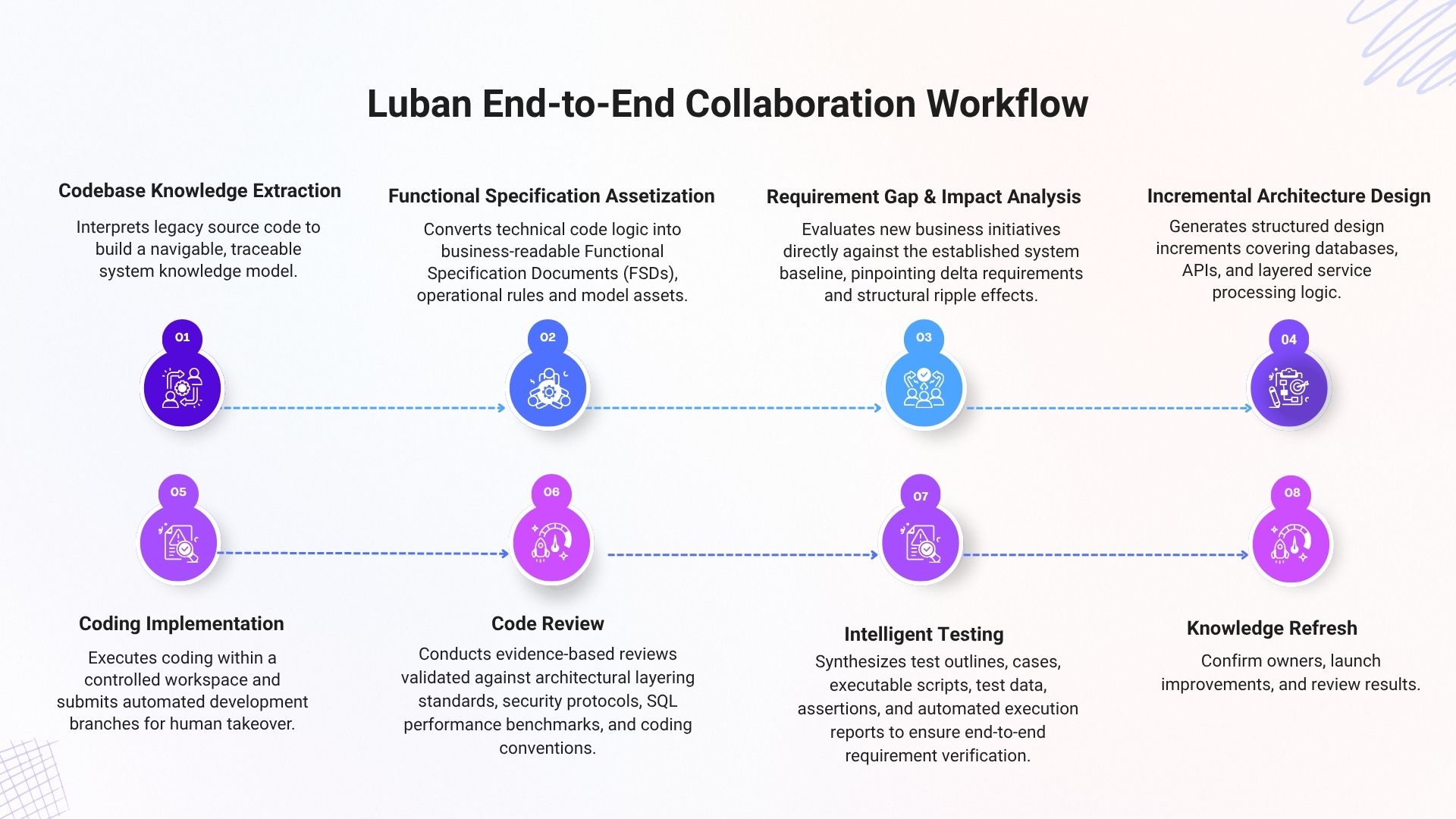
    Addressing this bottleneck, Sunline has introduced Luban, an AI-Native Software Development Life Cycle (SDLC) platform engineered specifically for core banking and enterprise financial systems. Rather than acting as a standalone coding assistant, Luban provides an AI-native engineering workspace across the full SDLC. It coordinates agent-driven execution, human oversight gates, and continuous knowledge institutionalization, helping banks convert dispersed tribal knowledge into standardized, traceable, and reusable engineering assets.


    Implementing Human-Agent Collaborative Operations Across Four SDLC Stages

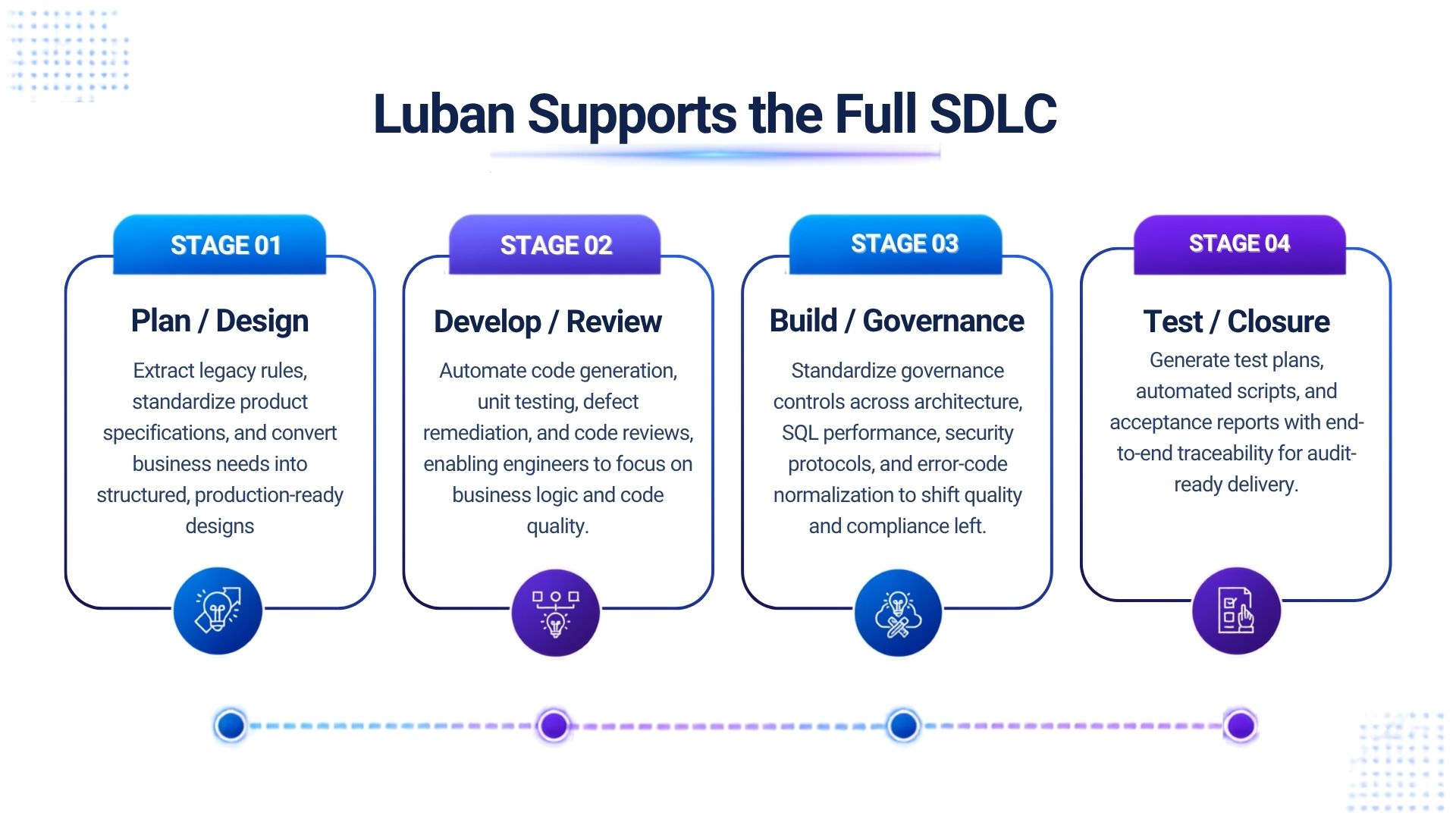
    Sunline encapsulates two decades of core banking domain expertise, technical standards, and quality governance frameworks into Luban’s reusable agent matrix. The platform embeds human-in-the-loop (HITL) collaboration across the software delivery lifecycle:


    Plan / Design: The platform automatically extracts legacy business rules, standardizes product specifications, and performs requirement elicitation and gap analysis. It formalizes application, database, and API contract designs, converting ambiguous business needs into structured, production-ready delivery assets.

    Develop / Review: Luban automates repetitive engineering tasks including code generation, unit testing, defect remediation, and code review. This allows engineers to focus on validating deliverables, optimizing business logic, and managing code merges, improving both productivity and code quality.

    Build / Governance: Luban standardizes governance controls across architectural layering, SQL performance, resource scheduling, security protocols, and error-code normalization. This shifts quality assurance, security, and regulatory compliance left across the development pipeline.

    Test / Closure: The system generates comprehensive test plans, cases, automated scripts, and acceptance reports. By establishing end-to-end traceability from business requirements to test execution, it ensures deliverables remain fully verifiable and audit-ready.
    From Tribal Knowledge to Institutional Assets

    By connecting requirements, code, configuration and test artefacts, Luban creates a continuously updated knowledge base that can support software analysis and development across the R&D lifecycle, reducing dependence on individual experts while making existing system knowledge more accessible to engineering teams.


    The platform also introduces multi-agent orchestration across activities including AutoBA, AutoTA, AutoDev, and AutoQA. Instead of relying on a single general-purpose AI assistant, specialized agents can perform different tasks within a structured engineering workflow, achieving highly efficient cross-functional collaboration.


    Human oversight remains part of this process. AI execution is constrained by standard operating procedures (SOPs), visual task boards, and mandatory human oversight gates. All design, code, and test artefacts are automatically reconciled and fed back into the central knowledge pool, ensuring continuous institutional learning.


    A Governed, Knowledge-Centric Architecture

    The platform is built on a three-tiered architecture designed to balance automated execution with risk management. Validated in the core deposit account opening transaction scenario, this layered architecture demonstrates the capability to enhance R&D efficiency, while improving traceability and sustainable knowledge reuse. 


    • SunTCR (Taishan Code Reader): The platform reverse-engineers legacy code, configurations, and historical artefacts into a structured, machine-readable institutional knowledge graph, effectively eliminating information silos.

    • AIS Agent Foundation: Acts as the orchestration layer, managing context memory, process orchestration, and agent coordination across complex tasks.

    • Luban Application Layer: Luban encapsulates domain-specific application capabilities and a specialized multi-agent matrix designed for end-to-end software R&D delivery.
    For banks undertaking long-term platform modernization, the ability to preserve institutional knowledge, standardize engineering processes, and establish governed AI workflows can become an important component of technology resilience.


    Luban positions AI-Native SDLC as an engineering model in which knowledge, agents and governance work together across the software lifecycle. For financial institutions, this provides a potential path from developer productivity gains towards a more sustainable engineering capability-one that is less dependent on fragmented expertise and better equipped to manage the complexity of continuously evolving banking platforms.
  • Data Migration Agent: How Sunline Engineers Audit-Ready Data Migrations for Core Modernization

    Data Migration Agent: How Sunline Engineers Audit-Ready Data Migrations for Core Modernization

    For banks modernizing core platforms, successful data migration is not simply a matter of getting converted code to run. The true operational risk lies in data integrity- guaranteeing that data assets like financial balances, historical transactions, and customer records remain precise, consistent, and fully traceable across environments. 


    Traditional data validation frequently relies on surface-level record counts, manual SQL queries, and fragmented sampling. These manual methods, which heavily rely on individual engineering experience, often fail to detect field-level corruption and trace hidden risks, leaving financial institutions vulnerable to silent data discrepancies discovered only after production cutover.

    Addressing this structural gap, Sunline has standardized and automated its Data Migration Agent to encompass a closed-loop mechanism that combines multi-dimensional validation, end-to-end audit, and risk visibility that enables data migration results to be controllable, verifiable, and credible throughout the entire process.

    A Governed Migration Architecture

    Sunline enhanced its Data Migration Agent by replacing manual verification with a structured, four-pillar validation architecture: 


    Dual Validation Mechanism

    The platform applies row-count validation as an initial filter, followed by MD5 hash-based fingerprint comparison. After concatenating fields to be validated by primary keys, the engine calculates row-level MD5 hashes to pinpoint discrepancies down to specific tables, keys, and fields, generating exportable reconciliation reports without manual validation SQL scripting.


    Stage-Gate Governance and Independent Audit Trail

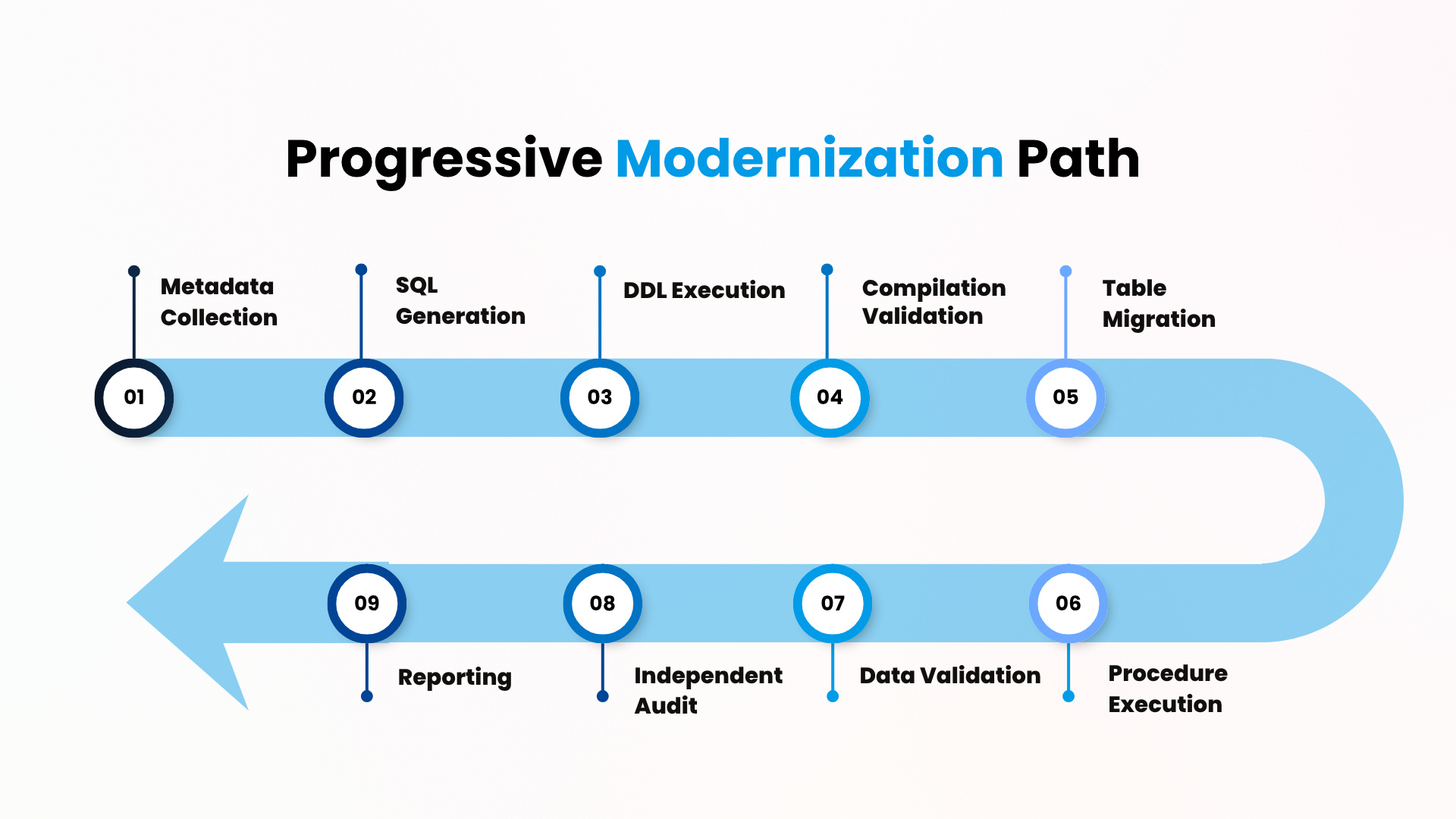
    Migration is orchestrated through a strict nine-stage pipeline, and each phase operates under automated state-machine controls. Each stage has an independent gate. If a required check fails, the workflow will not progress to the next stage. Upon completion, an independent audit module reviews the complete evidence chain, including converted SQL, execution logs, validation results, and gate records. Cutover approval is thus based on verifiable evidence rather than subjective judgment, ensuring comprehensive audit trail coverage.


    Automated Exception Remediation

    The engine parses SQL compilation logs and error outputs to execute rule-based script adjustments and scenario-specific retries, preserving a fully auditable recovery history while reducing manual intervention.


    Proactive Risk Classification

    Conversion outputs are automatically tagged into four risk tiers (OK/LOW/MEDIUM/HIGH) to help engineers prioritize high-risk items. Through fingerprint comparison, execution failures or reconciliation gaps trigger blocking controls accompanied by specific error codes and remediation guidance, surfacing risks well before production cutover.

    From Code Conversion to Migration Assurance

    While the SQL Conversion resolves code execution, the closed-loop data validation and audit mechanism ensures data accuracy. Sunline’s Data Migration Agent fundamentally alters the economics and risk profile of core modernization projects. 


    Based on controlled implementation benchmarks, this automated migration framework delivers verifiable operational improvements:

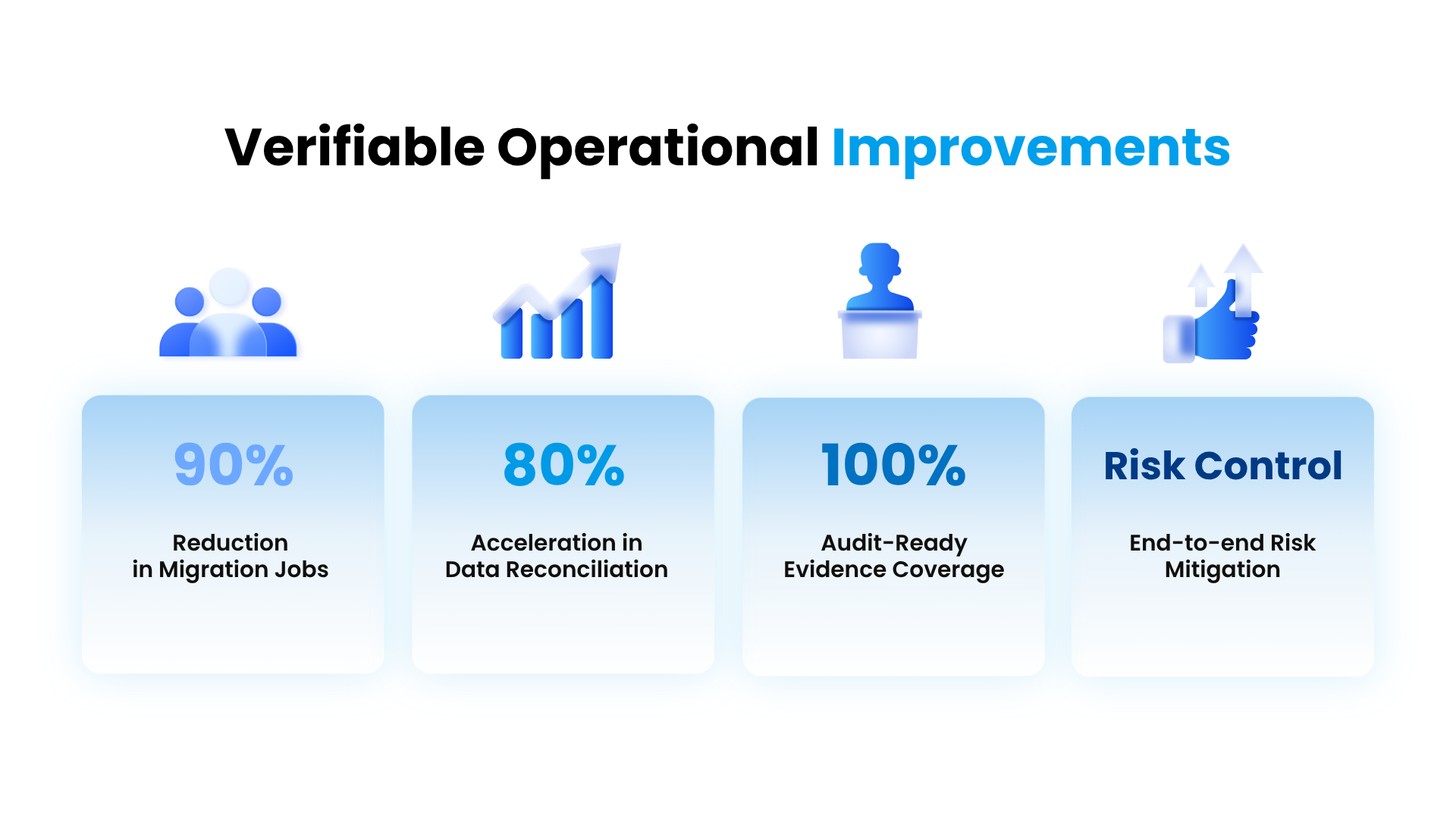
    • Up to 90% Reduction in Migration Jobs: Automated field mapping, rule conversion, and script generation streamline development workflows.


    • Up to 80% Acceleration in Data Reconciliation Efficiency: Replace manual sampling and verification with automated source-to-target cross-table comparisons.


    • 100% Audit-Ready Evidence Coverage: Retain stage-gate logs, validation results, and execution metrics automatically to generate a complete, traceable chain of custody for compliance and IT audit teams, requiring no manual intervention.


    • End-to-end Risk Mitigation: Stage gates, dual validation, and audit tracing isolate data issues in advance, protecting operational resilience during platform cutover.

    Data platform modernization is not merely a technology upgrade – it is a profound exercise in risk management. By ensuring that every deterministic conversion and migration outcome can withstand rigorous row-level reconciliation and business verification, Sunline’s Data Migration Agent empowers banks to execute complex transformations with trusted verification and full-process traceability in today’s highly regulated financial landscape.

  • Sunline Advances Core Banking Modernisation in the Philippines at CTB Convention 2026

    Sunline Advances Core Banking Modernisation in the Philippines at CTB Convention 2026

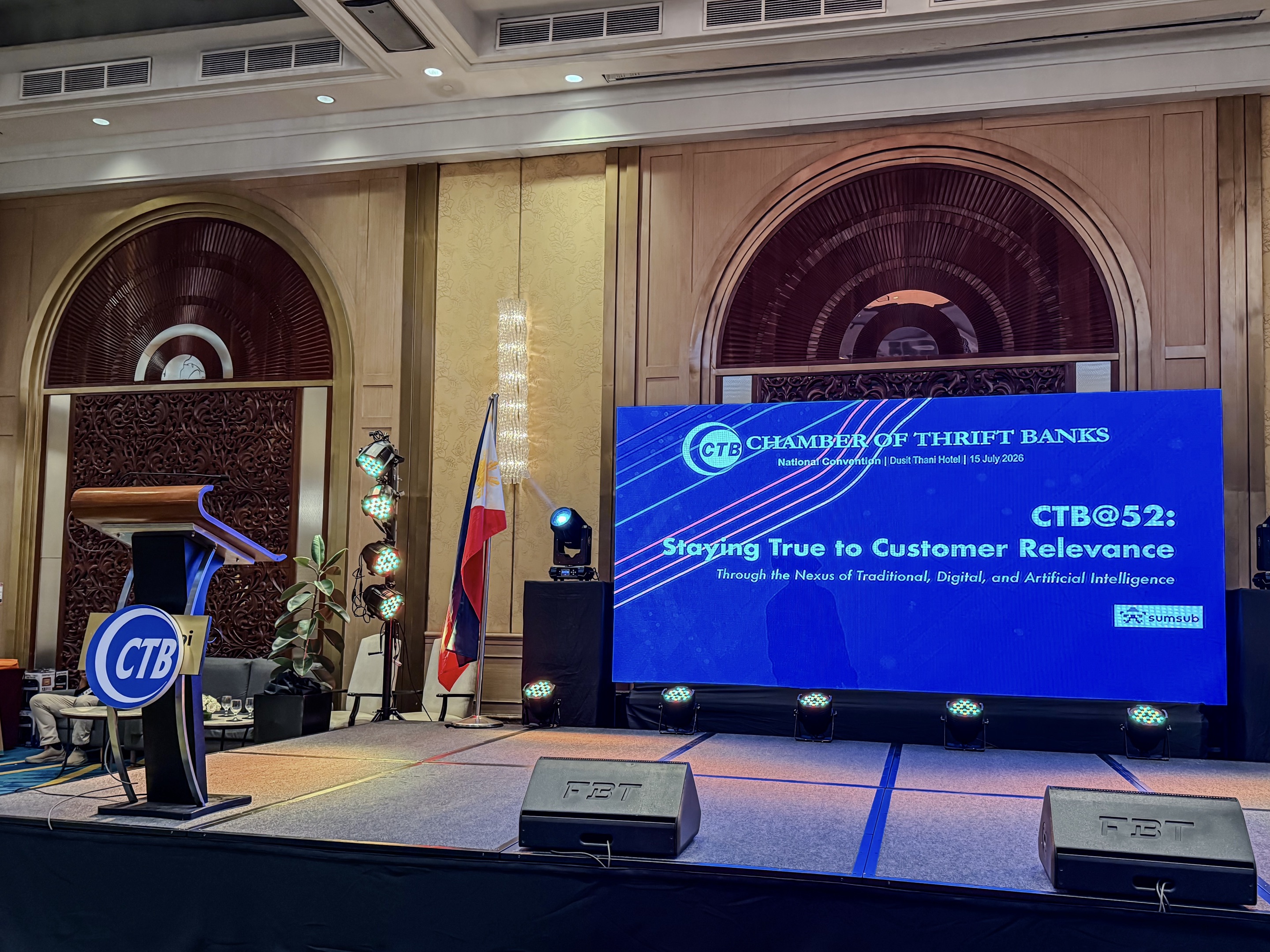
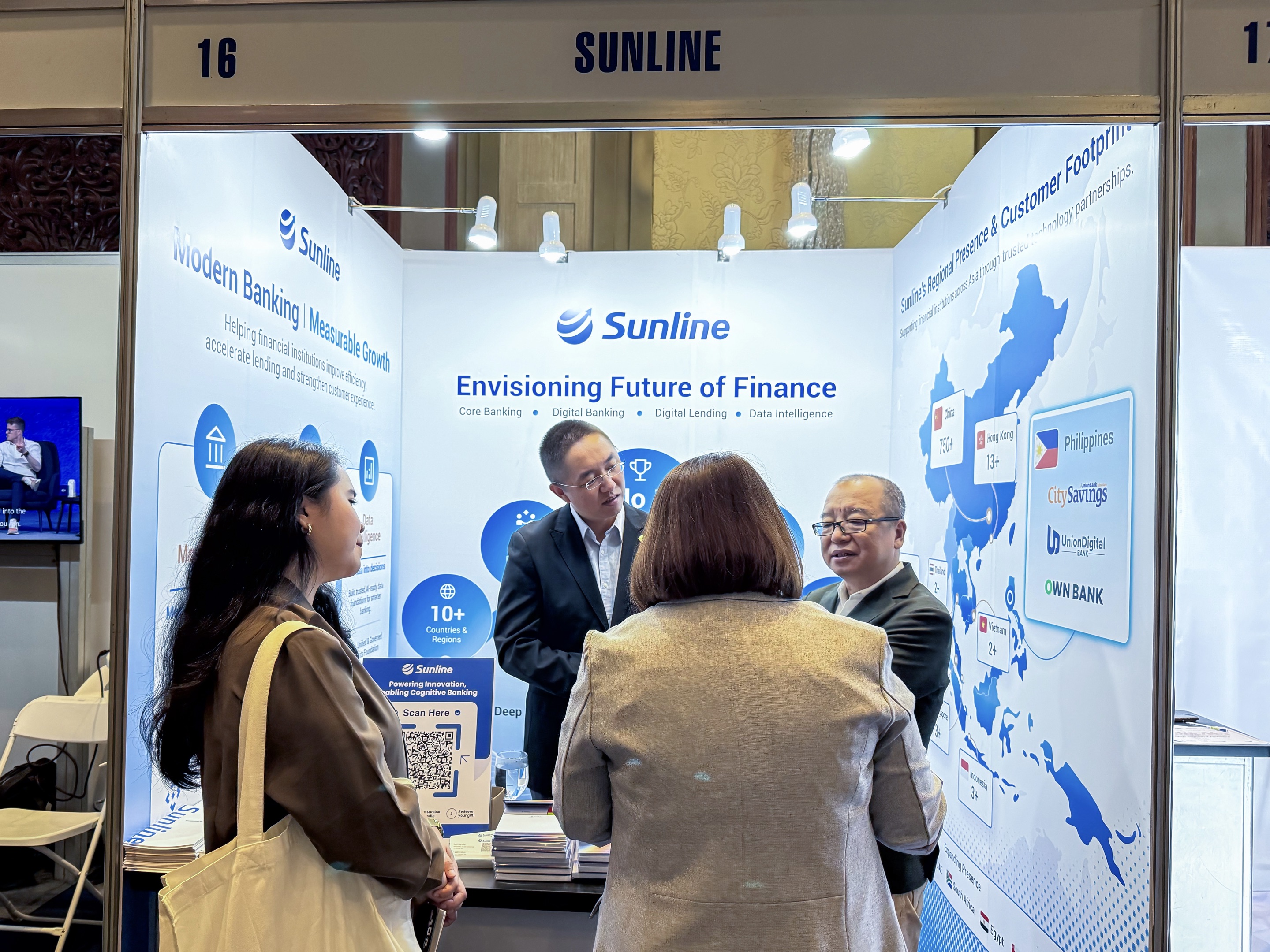
    MANILA, Philippines, 15 July 2026 – Sunline joined more than 150 delegates representing over 50 banks and financial institutions at the 52nd Chamber of Thrift Banks Convention 2026 to examine how banks can maintain customer relevance as traditional banking, digital services, and artificial intelligence increasingly converge.


    Held under the theme “Staying True to Customer Relevance Through the Nexus of Traditional, Digital and Artificial Solutions,” the convention framed customer relevance around three priorities: understanding customer realities, building digital trust, and adopting responsible AI. Guided by the Filipino value of malasakit, the discussions reinforced the importance of resilient, responsible, and human-centred banking innovation.


    Modern Banking Foundations for Scalable Growth in the Philippines


    Customer relevance increasingly depends on the ability of banks to scale digital services without weakening operational resilience or trust. Preliminary data from the Bangko Sentral ng Pilipinas showed that total banking assets reached a record ₱30.442 trillion at the end of May 2026, up 11.69% year on year, alongside continued growth in lending and deposits. This expansion is increasing pressure on banks to add capacity, accelerate lending and digital service delivery, and strengthen regulatory readiness without compromising operational stability or customer experience.


    Addressing these priorities requires more than individual system upgrades. SunCBS, Sunline’s modern core banking platform, provides a modular foundation built on microservices and domain-driven design principles to support high-volume, real-time operations. Together with Sunline’s Loan Origination Solution and digital lending capabilities, Sunline provides an integrated flow, including customer onboarding, product recommendation, and full loan lifecycle covering loan application, approval, and post-loan processing that would help banks to reduce fragmented workflows and improve lending efficiency.


    Sunline’s experience in the Philippines and across Asia-Pacific includes digital-first banking development and complex core modernisation programmes. The company supports greenfield deployment, progressive migration through multi-core coexistence and full core replacement, allowing banks to align transformation with their business priorities, existing technology environments, and risk appetite rather than commit to a single modernisation model. In progressive programmes, legacy and new core platforms can operate in parallel, supporting controlled transaction routing, reconciliation, and domain-by-domain migration while maintaining operational continuity. These technology capabilities are complemented by migration planning, operational readiness, and programme governance to manage execution risk across complex banking environments.


    Complementing these foundations, a data intelligence layer strengthens data quality, regulatory reporting, and analytics, creating a trusted base for future AI-powered banking use cases. By combining banking domain expertise, modern technology architecture and practical transformation experience, Sunline continues to help financial institutions in the Philippines modernise with greater control, expand digital and lending services, and build resilient platforms for long-term growth.

  • Sunline Brings AI-Powered Core Banking Intelligence to NCS Impact 2026

    Sunline Brings AI-Powered Core Banking Intelligence to NCS Impact 2026

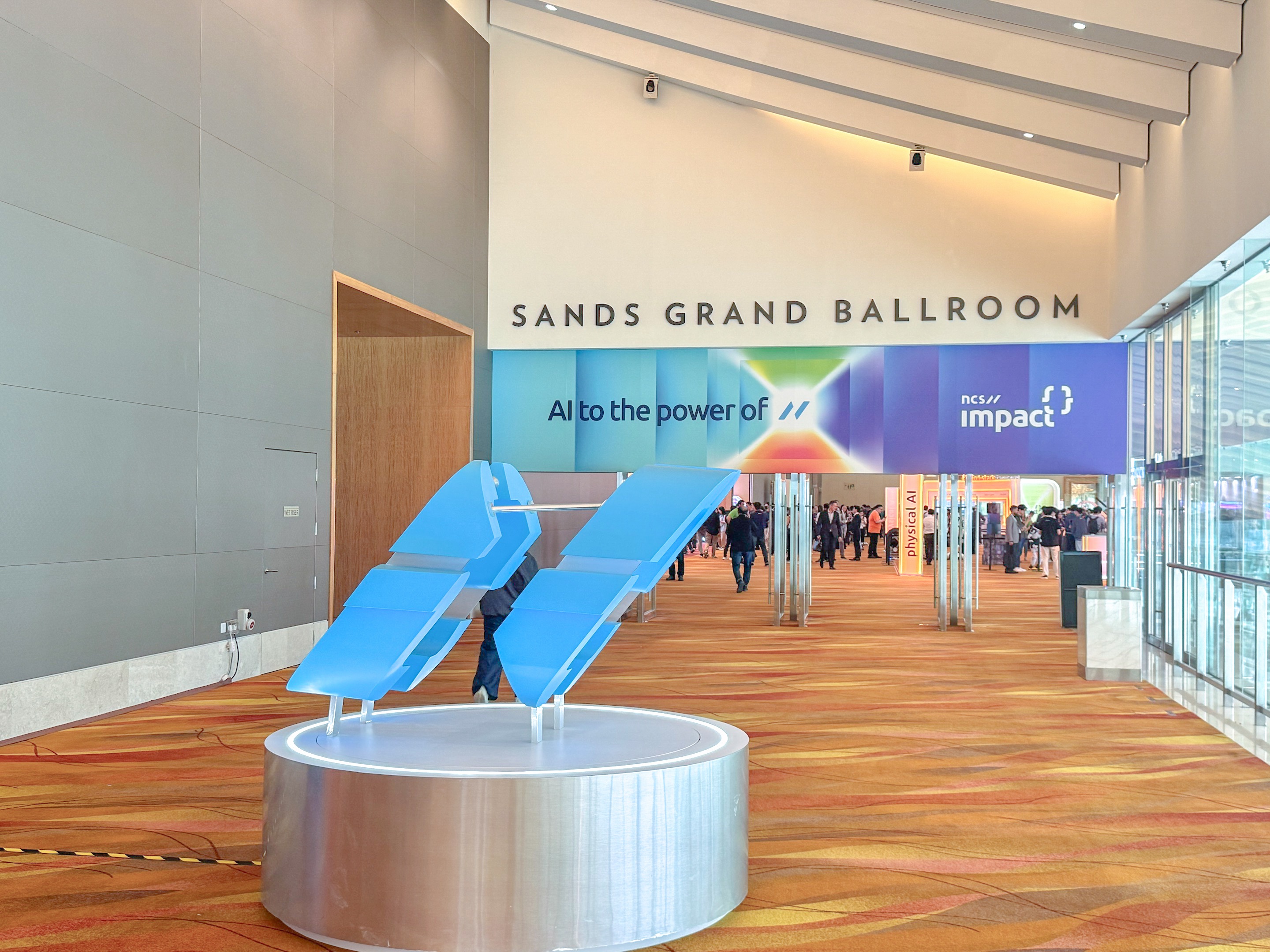
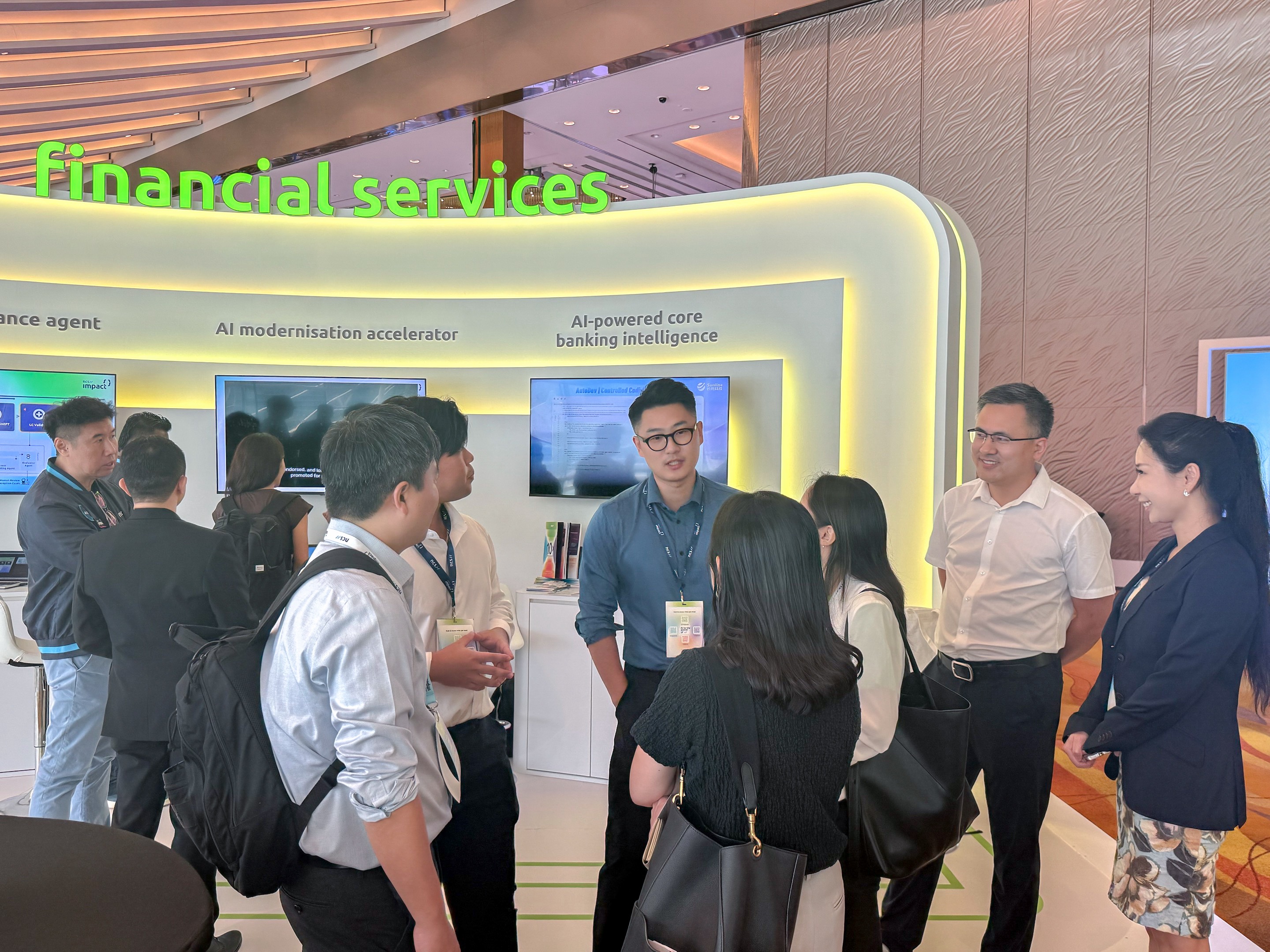
    SINGAPORE, 9 July 2026 – At NCS Impact 2026, Sunline, as a strategic partner of NCS, brought AI-powered core banking intelligence to the conversation, featuring SunCBS, DataMind, and the overseas debut of Luban Intelligent Workbench. The showcase connected core banking modernisation, trusted data intelligence, and AI-enabled technology delivery for financial institutions in Singapore and across the Asia-Pacific.

    As banks across Asia-Pacific move into a more execution-driven phase of digital transformation, modern core architecture, real-time data capability, and trusted AI adoption are becoming strategic priorities. The focus is shifting from isolated AI experimentation to building the digital core, trusted data foundation, and delivery capabilities required for resilient, governed, and scalable banking transformation.

    1 Platform, 2 Cores: Building an AI-Ready Banking Foundation with SunCBS

    Sunline’s 1 Platform, 2 Cores (1P2C) approach is built within SunCBS, combining Transaction Core and Data Core capabilities, with DataMind serving as the Data Core. This architecture enables banks to connect mission-critical transaction processing with trusted data intelligence, supporting a more integrated model of digital core transformation, real-time data usage, and intelligent banking operations.


    The strategic value of 1P2C lies in building a core technology foundation that supports business agility, operational resilience, and long-term innovation, while establishing the trusted data environment required for enterprise AI adoption at scale.

    Luban: Sunline’s Banking Intelligent Workbench for Technology Delivery

    Building on the 1P2C foundation, Luban extends AI into the way banking systems are designed, delivered, governed, and continuously enhanced. As Sunline’s Banking Intelligent Workbench, Luban supports human-AI collaboration across the software delivery lifecycle, helping financial institutions improve delivery efficiency, engineering governance, traceability, and software quality across complex transformation programmes.


    For complex banking core system development and delivery, Luban focuses on knowledge asset development, human-AI collaboration, and governed delivery. This helps banks move from point-based AI assistance towards an organisation-level AI:

    1. Knowledge asset development: Luban helps transform code, documentation, parameters, requirements, design assets, testing assets, and governance rules into searchable, traceable, and reusable knowledge assets. This enables banking technology teams to better understand existing systems, reduce knowledge fragmentation, and preserve institutional knowledge across long-term transformation programmes.

    2. Human-AI collaboration: Luban supports professional AI agents across the software delivery lifecycle, including requirements analysis, gap analysis, application design, coding, code review, testing, and governance. Through collaborative kanban, task orchestration, and AI agent delegation, business analysts, architects, developers, testers, and governance teams can work within a unified delivery process when handling complex system changes.

    3. Governed delivery: Luban brings kanban tasks, SOPs, tool invocation, artefact feedback loops, and human confirmation into a governed workflow. While improving engineering efficiency, it preserves sources, evidence, permissions, processes, and review mechanisms, helping banks improve delivery consistency, traceability, auditability, and software quality.

    Building on the strategic partnership established between Sunline and NCS in 2025, Sunline’s engagement at NCS Impact 2026 reflects the continued collaboration between both organisations in advancing digital transformation and innovation for the financial services sector. Through this engagement, Sunline demonstrated how its core banking expertise, trusted data intelligence, and AI-enabled engineering capabilities can support banks in Singapore and the wider Asia-Pacific region in advancing banking technology modernisation with greater agility, governance, and operational confidence.

    With extensive experience in core banking technology and a global client base of more than 800 financial institutions, Sunline continues to position core banking modernisation as a foundation for future-ready banking. Through SunCBS’ Transaction Core, DataMind Data Core, and Luban Intelligent Workbench, the company brings together platform modernisation, trusted data intelligence, and intelligent delivery capabilities to help banks in Singapore and across Asia-Pacific move from transformation strategy to practical execution.

  • Data Warehouse Migration: How Sunline’s SQL Conversion Agent Accelerates Database Moderniszation from Months to Days

    Data Warehouse Migration: How Sunline’s SQL Conversion Agent Accelerates Database Moderniszation from Months to Days

    As financial institutions advance platform modernization and sovereign cloud strategies, migrating enterprise data warehouses from legacy proprietary engines to open-source and native database architectures has become an operational priority. However, data warehouse migrations frequently stall during the code adaptation phase. High data volumes, intricate business logic, and heterogeneous syntax differences create extended execution timelines, significant manual remediation, and operational risk.


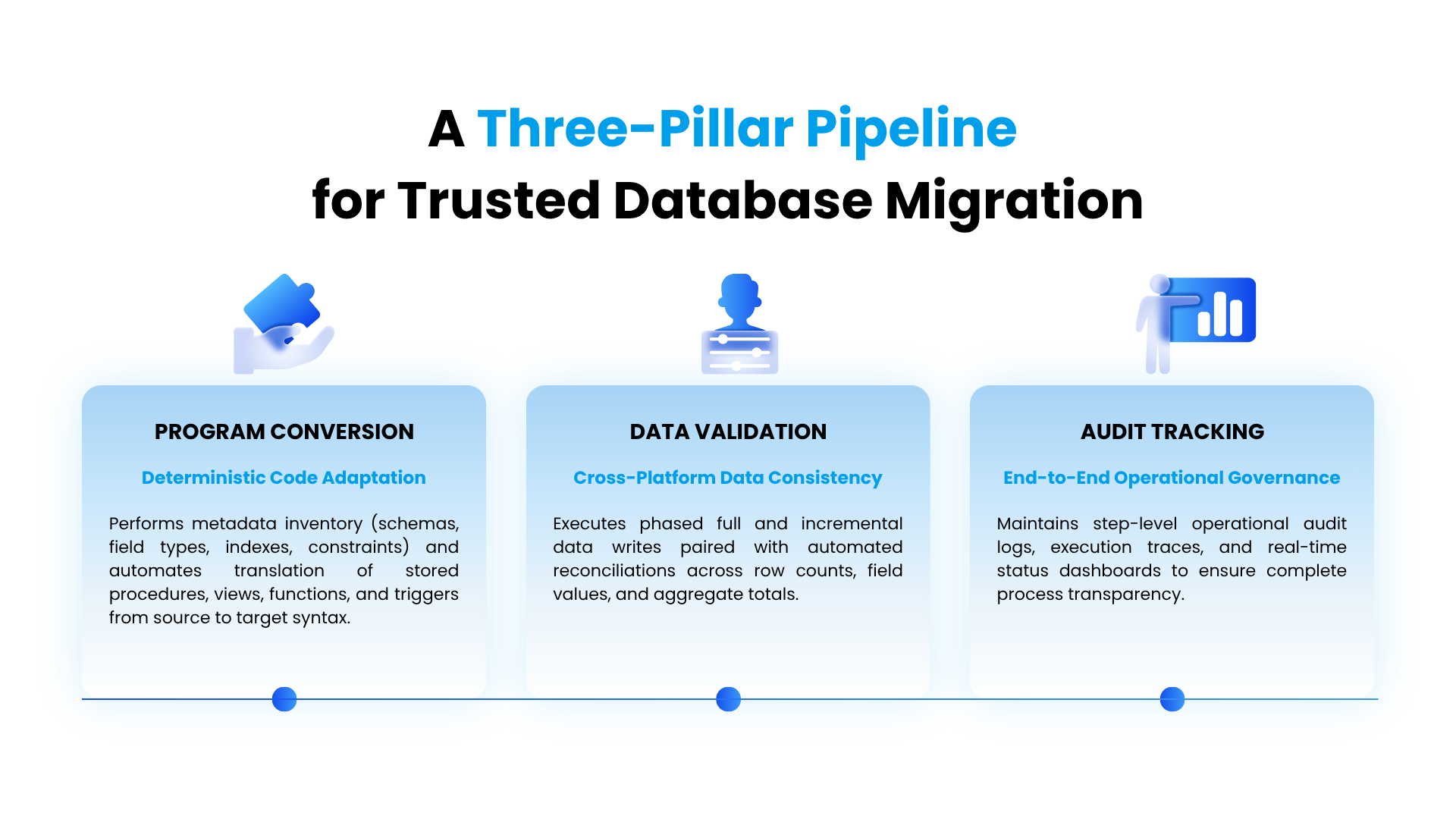
    Sunline structures its data warehouse solution as an end-to-end engineering pipeline spanning three core phases: Program Conversion, Data Validation, and Audit Tracking, among which Program Conversion represents the most complex and resource-intensive bottleneck, as it requires adapting and refactoring extensive business logic across heterogeneous database engines


    A Three-Pillar Pipeline for Trusted Database Migration

    A successful database modernization effort requires a structured, multi-phase methodology to guarantee operational continuity and data integrity:

    The Core Challenge: Data Migration Requires More Than Data Transfer

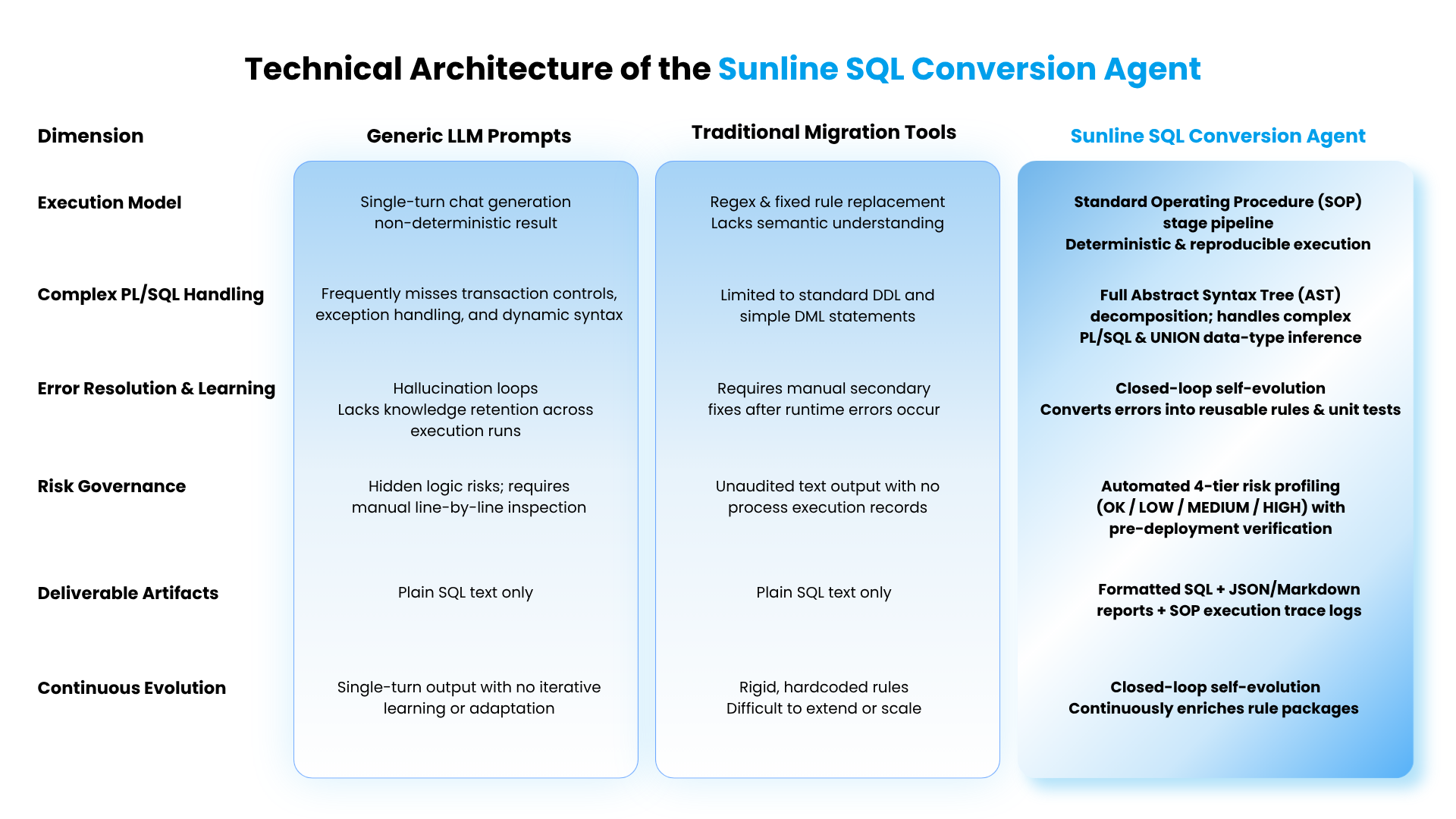
    Heterogeneous database engines possess inherent dialect and structural differences. Traditional database migration tools and generic LLMs are not designed to address the complexity of financial database environments, including dynamic SQL, transaction controls, exception handling, UNION type inference, and vendor-proprietary syntax. Without deterministic execution and contextual memory, they often produce unreliable conversions, leaving engineering teams to resolve manual code issues and identify hidden logical errors during testing.


    To address these migration bottlenecks, Sunline has introduced its proprietary SQL Conversion Agent – an AI-engineered, rule-driven automation platform designed to streamline complex SQL and stored procedure translation for enterprise financial databases, which compresses project execution timelines and delivers unmatched efficiency without compromising engineering quality.


    Technical Capabilities of Sunline SQL Conversion Agent

    Compared to the unpredictability of generic large language models and the adaptation of legacy pattern-matching tools, the SQL Conversion Agent delivers higher stability, domain specialization, and operational control:

    • Abstract Syntax Tree (AST) Parsing: Bypasses superficial text replacement by constructing a structural AST representation of source scripts. The engine accurately identifies nested functions, cross-database references, and procedural control flows, preventing syntax corruption.

    • Modular Skill Packaging: Standardizes data-type mappings, function conversions (e.g., mapping NVL to COALESCE), and syntax transformations (e.g., converting DECODE to CASE WHEN) into auditable rule packages. Shared syntax rules are reused across workloads, while isolated edge cases are addressed through dedicated sub-routines.

    • Automated Risk Profiling and Traceability: Every converted script passes through an eight-stage Standard Operating Procedure (SOP) pipeline. The agent generates a comprehensive four-tier risk report (OK, LOW, MEDIUM, HIGH), allowing engineers to focus manual intervention strictly on high-risk items.

    Accelerating Modernization Timelines While Eliminating Silent Errors

    By replacing manual review cycles with an automated, deterministic translation engine, the SQL Conversion Agent resolves the primary bottleneck in data warehouse modernizations:

    • Timeline Compression: Automates up to 99% of syntax adaptation details, reducing overall migration timelines from months to weeks or days.

    • Risk Mitigation: Early risk profiling shifts issue detection to the pre-deployment phase, preventing silent logic failures in production data pipelines.

    • Resource Efficiency: Minimizes manual code refactoring costs, allowing enterprise data teams to focus on platform architecture, data governance, and analytics delivery.


    Establishing a deterministic program conversion mechanism forms the foundation for secure database modernization. By replacing manual trial-and-error with an AI-engineered, rule-guarded pipeline, Sunline transforms high-risk code refactoring into a fast, repeatable, and fully audited enterprise capability.

  • Sunline Scales Kunpeng-Optimized Architecture to Set Benchmark in Core Banking Modernization

    Sunline Scales Kunpeng-Optimized Architecture to Set Benchmark in Core Banking Modernization

    As commercial banks accelerate the migration of mission-critical core banking workloads to sovereign and cloud-native computing infrastructure, compatibility bottlenecks, high validation costs, and performance risks continue to delay enterprise platform modernization.


    To address these systemic challenges, Sunline and the Shenzhen Financial Technology Innovation Base (the Base)-a public testing and verification platform focused on core financial technologies-have expanded their multi-year initiative, successfully commercialising a co-optimized core banking architecture built on the Kunpeng enterprise computing ecosystem. Now live across 20 commercial banks, the joint initiative provides a verified engineering blueprint for hardware-software co-optimization, demonstrating how deeply integrated platform architectures can de-risk core system replacement while delivering measurable performance gains.

    Addressing Technical Bottlenecks in Core Systems Migration

    The transition from legacy monolithic cores to modern, independent architecture is often hampered by the gap between software logic and underlying hardware compute layers. Financial institutions frequently encounter long validation cycles, high parallel-running costs, and unpredictable transaction latency during stress testing on heterogeneous hardware. These operational hurdles make full-scale cutovers a high-risk proposition for IT decision-makers.


    Operating through a co-established Financial Industry Laboratory, Sunline and the Base addressed these friction points by co-developing a full-stack, cloud-native core banking architecture. Rather than relying on superficial software emulation or unoptimized middleware, the initiative embeds core transactional logic directly into the native hardware layer.


    Quantifiable Benchmarks: The APStack Integration

    A primary driver of this architecture is the integration of Sunline’s APStack technical framework with the Kunpeng native development environment. By refining software compilation, testing, and execution pathways, the co-optimized platform delivers quantifiable improvements across key operational metrics:


    • Development Acceleration: Standardized development toolkits and optimized build pipelines reduce core transaction application development lifecycles by 20%.

    • System Throughput: Co-optimized runtime engines yield a 20% increase in overall system performance and transaction processing speed, ensuring operational resilience during peak concurrency periods.

    • Security Baseline: Automated compatibility and compliance verification frameworks enhance system baseline security controls by 30%.

    This full-stack approach covers core ledger management, account processing, and clearing functions, having completed production-level commercial verification at major joint-stock and commercial banks.


    Strategic Implications for Global Banking Technology

    The commercialization of this architecture highlights a shift in how financial institutions approach platform modernisation. By utilizing a pre-validated, hardware-optimized software stack, banks can reduce total cost of ownership (TCO) and avoid extended testing cycles.


    Furthermore, establishing a stable, high-throughput core foundation serves as a key prerequisite for broader digital transformation goals, including AI readiness. The joint development roadmap includes extending this architecture to support generative AI models, intelligent compute scheduling, and real-time data analytics. As cross-border banking operations expand, verified sovereign infrastructure models offer a repeatable framework for institutions seeking to maintain system stability, regulatory compliance, and operational autonomy across global operations.

  • Governed Conversational Analytics: Sunline ChatSQL Bridges the Accuracy Gap in Enterprise Banking Tech

    Governed Conversational Analytics: Sunline ChatSQL Bridges the Accuracy Gap in Enterprise Banking Tech

    As financial institutions pursue more granular, data-driven management, democratizing self-service data access across business lines has become a key operational priority. However, enterprise data teams face persistent friction with traditional ad-hoc retrieval models. When banks attempt to deploy conversational AI or generic Text-to-SQL solutions to accelerate data access, they frequently run into significant structural barriers:

    • Algorithmic Hallucinations and Query Inaccuracy: Direct, unconstrained translation of natural language into executable SQL yields low accuracy when applied to complex banking schemes.

    • Fragmented Metric Definitions: Core key performance indicators (KPIs) and business definitions often reside in implicit logic, preventing AI models from resolving true business context.

    • Governance and Security Risks: Black-box SQL generation risks producing field disorders, invalid table joins, or unauthorized data access.

    • Data Heterogeneity: Enterprise data remains distributed across diverse, multi-platform database environments, creating navigation barriers for business users.

    The Solution Architecture: A Three-Tiered Semantic Foundation

    Sunline is addressing challenges by introducing ChatSQL, a natural language querying component built on the DataMind platform. Rather than relying on the direct, black-box natural-language-to-SQL translation, ChatSQL innovatively introduces a semantic layer between natural language processing and SQL generation, allowing field definitions, metric logic, table relationships, and access rules to be explicitly modelled before a query reaches the underlying databases. The platform operates on a three-tiered deduction model:

    Natural Language (NL)→Semantic Query→Executable SQL

    Under this model, ChatSQL established an end-to-end governed query pipeline: 

    Natural Language Input → NL-to-MQL Parsing→ MQL Compilation →SQL Generation → Database Execution → Result Return 

    As an intermediate abstraction layer, MQL isolates physical database complexity and disparate table structures, enabling business personnel to query specified metrics without knowledge of underlying data schemas or physical storage locations. It also embeds unified metric definitions, SQL injection protection, and field-level access control within the semantic tier, applying validation at the point a query is initiated and balancing ease of use with the data-security requirements of financial scenarios.

    Governance Built into the Query Lifecycle

    ChatSQL’s semantic model is maintained as a two-layer knowledge engine:

    • Definition Layer: Standardizes metric formulas, target business contexts, and contextual relationships.

    • Mapping Layer: Maps business definitions directly to underlying physical tables, database attributes, join pathways, and filter parameters.

    As definitions are updated through configuration rather than code, business experts can participate directly in metric governance.

    The platform agents invoke these semantic services through the Model Context Protocol (MCP), connecting intent recognition to SQL generation, with precise semantic matching, field-level permission isolation, automatic service fallback, and canary release, ensuring every query is evidenced and fully traceable.

    Financial-Grade Controls by Design

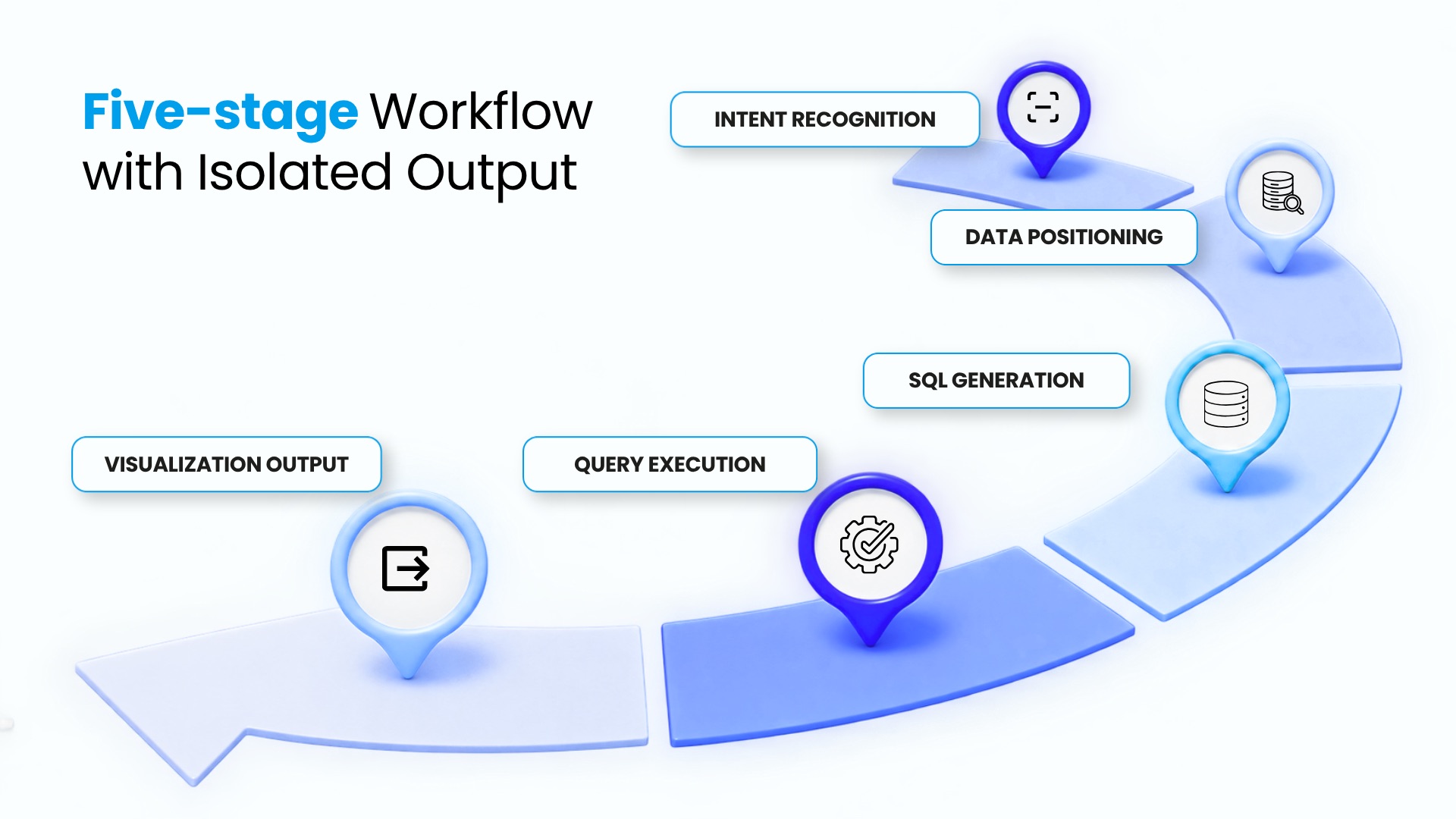
    To maintain data integrity and regulatory compliance, ChatSQL enforces a five-stage workflow with each stage’s outputs isolated and retained for audit: 

    If query ambiguity or conflicting metric pathways are detected, the system prompts the user for clarification rather than allowing unverified assumptions. 


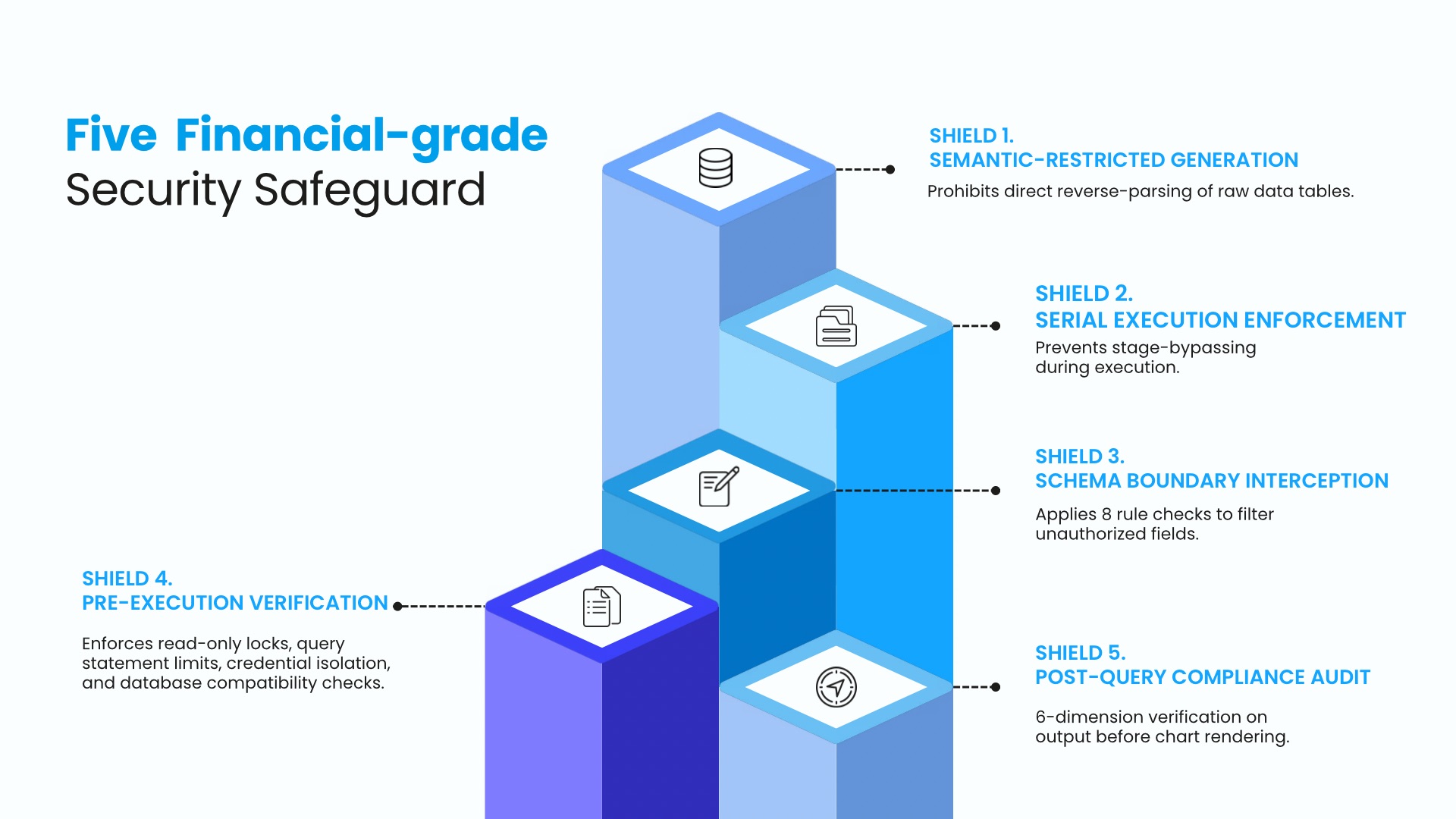
    This workflow is reinforced by five financial-grade security safeguards:


    1. Semantic-Restricted Generation: All SQL outputs are strictly generated from the semantic layer; direct reverse-parsing of raw data tables is prohibited.

    2. Serial Execution Enforcement: The five-stage pipeline operates in a non-bypassable serial sequence.

    3. Schema Boundary Interception: Eight standard query validation rules intercept fields outside the established semantic model.

    4. Pre-Execution Verification: Enforces read-only database locks, query statement limits, credential isolation, and database compatibility checks prior to execution.

    5. Post-Query Compliance Audit: Conducts a six-dimension audit on query outputs before rendering visual charts to end users.


    Turning Self-Service Analytics into an Operating Model


    In live production deployments, ChatSQL delivers validated operational performance enhancement with 95.2% query accuracy across core natural language analytics scenarios in banking operations, alongside an 80% improvement in self-service data retrieval efficiency. 


    The significance extends beyond query speed and accuracy. By enabling business teams to retrieve standardized metrics independently, ChatSQL reduces routine data requests. Data engineers can consequently move from repetitive ad-hoc extraction toward data governance, data modelling, and deeper analysis.


    The broader direction is a shift from simply making data available to establishing a governed framework through which more personnel can use it safely and consistently. For banks building AI-ready data foundations, the combination of semantic modelling, controlled query execution, and self-service analytics provides a practical layer between enterprise data infrastructure and business users.


    ChatSQL represents an application of Sunline’s broader DataMind architecture: using AI not simply to generate outputs, but to connect business context with governed data execution.


  • Sunline Connects China Banking Technology Ecosystem to Malaysia Intelligent Banking Transformation

    Sunline Connects China Banking Technology Ecosystem to Malaysia Intelligent Banking Transformation

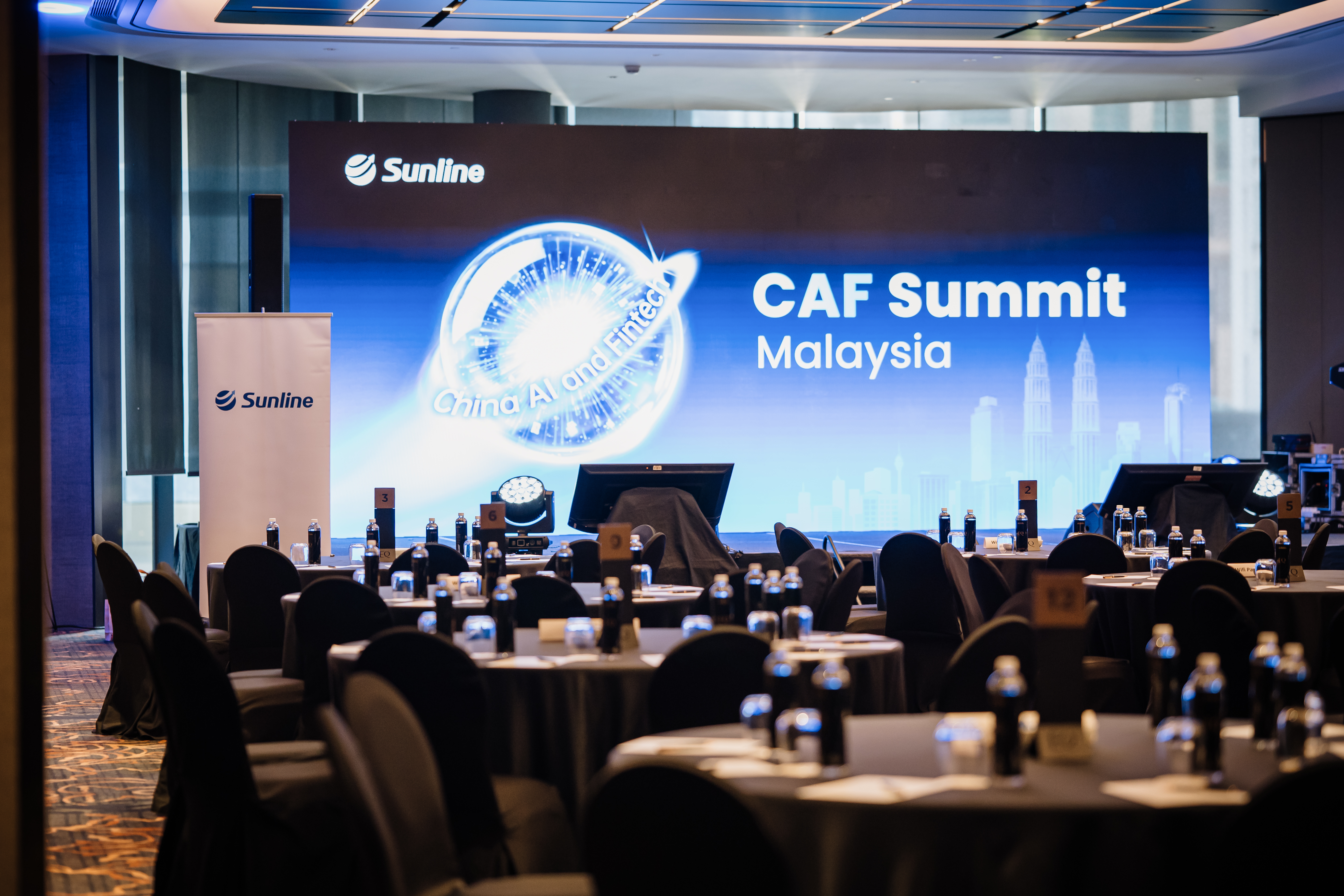
    KUALA LUMPUR, Malaysia, 26 June 2026 – Sunline positioned intelligent banking as an ecosystem-led transformation agenda at the China AI & Fintech Summit Malaysia 2026, also known as CAF Summit Malaysia 2026, bringing together banking leaders, China-based technology providers and local integration experts to examine how Malaysia’s financial institutions can build the next generation of intelligent, resilient and data-driven banking.


    Held in Kuala Lumpur under the theme “Building Intelligent Banking Platforms: Core. Data. AI.”, the by-invitation-only executive summit addressed a critical question facing banks today: whether existing technology architectures are sufficiently agile, resilient and governed to support the next phase of AI-enabled banking.


    As financial institutions across Southeast Asia move from digitalisation to AI-enabled operating models, the industry conversation is shifting from experimentation to production-scale readiness. For banks, the challenge has moved beyond access to AI tools. The greater priority is whether their core platforms, data architecture, infrastructure resilience and governance controls are mature enough to support real-time, compliant and scalable execution.


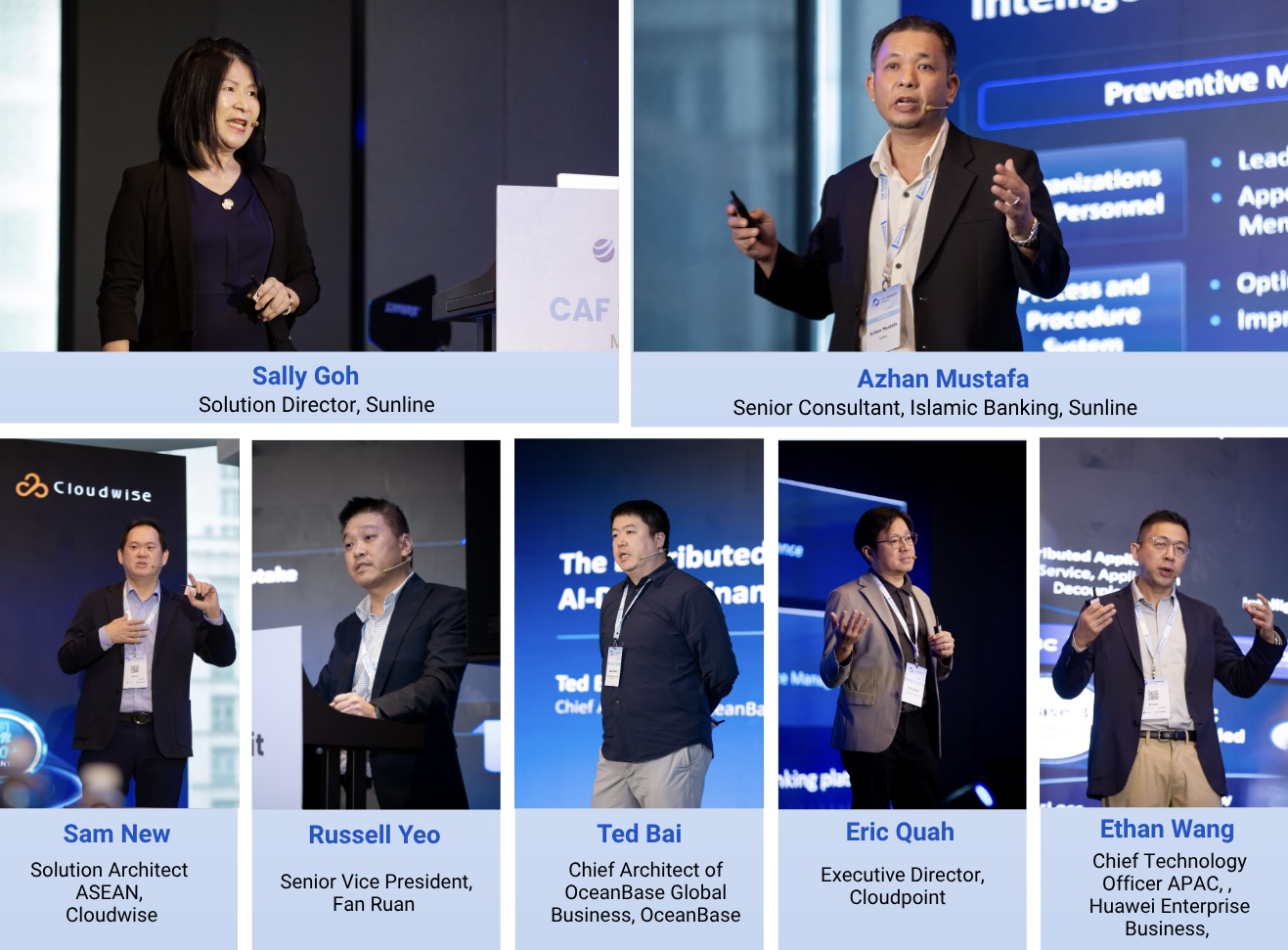
    Against this backdrop, CAF Summit Malaysia 2026 connected China’s banking technology ecosystem with Malaysia’s local delivery environment. The summit brought together complementary perspectives across core banking, distributed data infrastructure, enterprise analytics, observability, infrastructure modernisation and implementation support, reflecting the increasingly integrated nature of banking transformation.


    For Sunline, this approach reflects a partnership-led model for regional market development. Sunline contributes banking domain expertise, core modernisation experience and regional financial services engagement, while its ecosystem partners bring specialised capabilities across adjacent technology areas. The objective is not to present individual systems in isolation, but to show how different strengths can support a more coherent operating blueprint for financial institutions.


    The key areas highlighted at the summit included:

    • Core platform modernization: Sunline anchors the banking application layer, helping institutions move towards more agile, scalable and integration-ready core platforms.

    • Enterprise intelligence: FanRuan connects banking data with BI and AI-enabled analytics to support reporting, decision-making and business insight.

    • Distributed data infrastructure: OceanBase supports high-availability, real-time and large-scale database requirements for mission-critical banking workloads.

    • Operational resilience: Cloudwise addresses the observability and response capabilities required in increasingly distributed technology environments.

    • Infrastructure readiness: Huawei brings perspectives on mainframe core modernisation, cloud capability, and AI-ready infrastructure for financial services.

    • Local execution: Cloudpoint Technology Berhad provides Malaysia-based integration, regulatory understanding, and service continuity to translate technology propositions into implementation.

    Taken together, these areas reflect the breadth of Sunline’s partnership network rather than a single packaged solution. The value lies in connecting banks with relevant technology perspectives across core systems, data architecture, enterprise intelligence, operational control, infrastructure modernisation and local delivery. For Sunline, this reinforces its role as an ecosystem connector, helping align China-developed financial technology capabilities with the priorities and delivery realities of the Malaysian banking market.


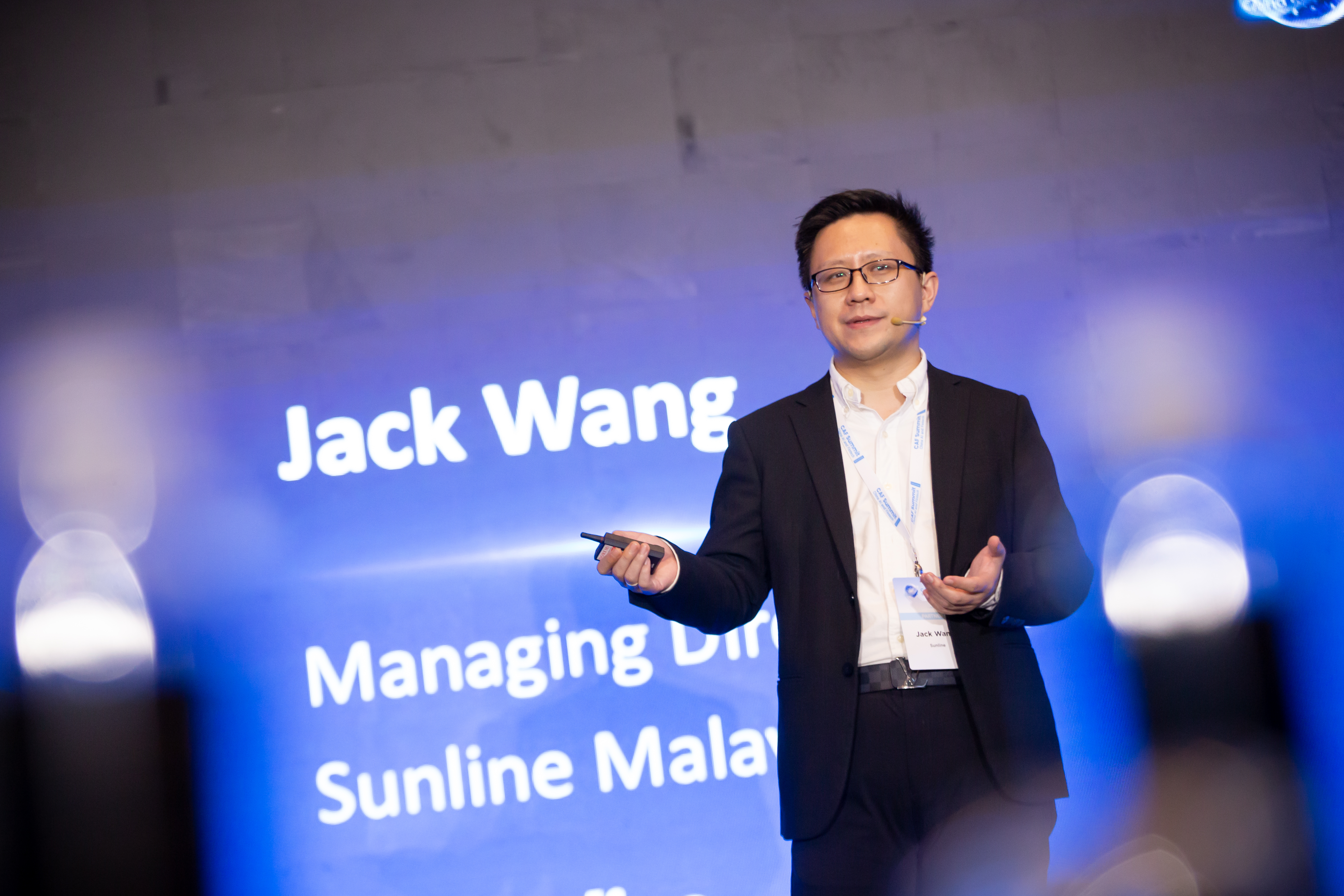
    The summit opened with remarks by Jack Wang, Managing Director, Sunline Malaysia, who highlighted the importance of bridging China’s fintech innovation ecosystem with Malaysia’s banking sector. His remarks set the tone for a programme focused on the balance between innovation ambition and execution discipline.


    The summit gathered over 80 banking leaders, technology executives and ecosystem partners, reflecting strong industry interest in how Malaysia’s financial institutions can move beyond digital initiatives towards more scalable and resilient operating models. Key areas of exchange included core banking modernisation, trusted data quality, AI-driven observability, next-generation distributed databases, BI and AI-enabled data value, mainframe core modernisation and local execution.


    A clear message emerged from the summit: AI adoption will not be defined by models alone. Sustainable value will depend on the readiness of core platforms, the quality of enterprise data, the resilience of technology operations and the ability of partners to translate capability into execution.


    Sunline extends its appreciation to all participating banks, speakers, ecosystem partners and guests for contributing to CAF Summit Malaysia 2026. The participation of OceanBase, FanRuan Software, Cloudwise, Huawei and Cloudpoint Technology Berhad helped shape a focused industry exchange on how Malaysia’s banking sector can approach modernisation with greater clarity, resilience and delivery confidence.


    CAF Summit Malaysia 2026 forms part of Sunline’s ongoing regional engagement with banks and technology partners across Southeast Asia. Through collaboration with China-based technology providers and local integration partners, Sunline continues to support industry dialogue and practical execution around core banking modernisation, data-driven transformation and AI-ready banking platforms.

    About Sunline

    Sunline is a banking software and technology services provider serving financial institutions across core banking, digital banking, big data, financial management and intelligent finance domains. With experience in financial technology innovation and implementation, Sunline works with banks and financial institutions to support digital transformation, platform modernisation, and data-driven business development.

  • Sunline DataMind Integrates Agents and Semantic Modelling to Reshape Intelligent Data Development

    Sunline DataMind Integrates Agents and Semantic Modelling to Reshape Intelligent Data Development

    As banks move from experimentation with generative AI towards production use, the challenge is shifting from what AI can generate to whether it can operate reliably within enterprise data environments. For financial institutions, an AI response is only useful when it reflects the right business definitions, follows governed processes, and can be traced back to an auditable execution path.

    Sunline’s DataMind data intelligence platform addresses this challenge by combining semantic modelling with an enterprise Agent framework, embedding Agent capabilities directly into the platform foundation rather than treating them as standalone tools. The approach is designed to connect business context, data assets, and execution, eliminating hallucinations in large language models (LLMs) and creating a more controlled foundation for AI-enabled data operations.

    From Data Storage to Domain Knowledge

    A common limitation in data lakehouse environments is that models often describe physical tables rather than business meaning. Metrics, dimensions, and entities may exist in technical structures, but the business logic connecting them is not always explicit. This creates ambiguity when AI systems interpret financial concepts or generate queries.


    • Entity-Centric Semantic Layer: DataMind constructs multi-dimensional knowledge graphs centered on core financial entities. By mapping business terminology (such as net interest margin or non-performing loan ratios) directly to physical data execution logic, the platform provides explicit context to the underlying models. This structural alignment eliminates derivation ambiguities and ensures explainable output for every query.


    • Bridging the Knowledge Gap: DataMind addresses model hallucinations at the architectural level by combining a domain-specific semantic layer with deterministic execution protocols. By mapping business terminology directly to physical data execution logic, the platform provides explicit context to the underlying models, eliminates derivation ambiguities, and ensures explainable output for every query.

    From AI Assistance to Governed Execution

    Semantic context addresses what AI needs to understand; the Agent framework addresses how tasks are executed.

    DataMind incorporates six core architecture features for enterprise AI operations, advancing the platform from a conversational tool into an enterprise-grade intelligent workbench:

    • Multi-Tenant Governance: Centralized management of agent assets, knowledge bases, and scheduled workflows across enterprise teams throughout the asset lifecycle.


    • Two-Tier Knowledge Base and Intelligent Retrieval Architecture: Connector-driven integration with existing IT assets utilizing the two-tier architecture to balance knowledge sharing with strict data isolation, while dual-path retrieval ensures the accuracy of financial-grade Q&A. 


    • Plan-Based Execution Framework: Complex tasks are decomposed into defined steps, checked before progression, and recorded for audit purposes. This approach is intended to make AI behavior more deterministic and suitable for production environments.


    • Standardized Capability Packaging: DataMind supports modular packaging of Agent capabilities, enabling standardized circulation and dynamic loading of Agent assets. 


    • Seamless Resource Integration: Support from Agent-Mode-Package specification and the Model Context Protocol (MCP) enables agents to connect with external tools and resources in a standardised way, supporting broader integration across the banking technology infrastructure.


    • Secure Sandbox Runtime Environment: Execution of sensitive data tools within MicroVM sandbox environments, ensuring isolated, policy-compliant execution boundaries.

    Moving Data Operations Towards Automation

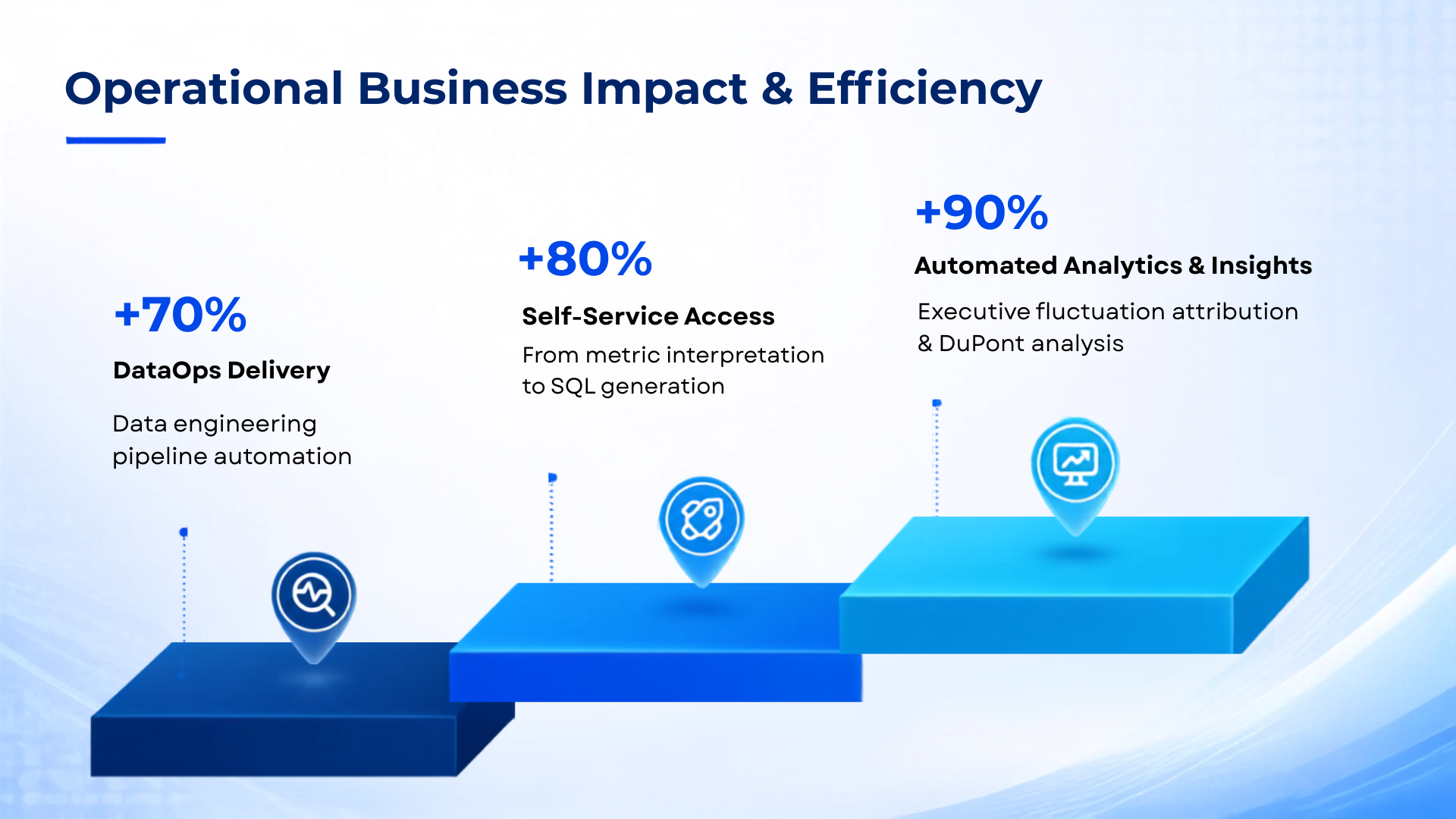
    Deployed within multiple banking environments, DataMind demonstrates measurable productivity gains across three core operational scenarios:


    • DataOps Delivery: DataMind establishes a collaborative mechanism consisting of a Master Control Agent, five categories of Agents covering offline development, real-time development, batch scheduling, data services, and intelligent operations, and an Audit Agent. This mechanism automates an end-to-end closed-loop pipeline creation from natural-language requirements to production deliverables, achieving a 70% increase in data engineering efficiency.


    • Self-Service Data Access: Semantic modelling supports the process from metric interpretation to SQL generation and visualization, with a reported 80% improvement in self-service data access efficiency. 


    • Automated Analytics & Insights: Agents support tasks such as metric fluctuation attribution and DuPont analysis, generating visual reports and accelerating executive insight generation by 90%.

    These results point to a broader shift in enterprise data operations: AI is moving beyond an interface for individual tasks and becoming part of the underlying development and execution workflow.

    Building a More Governed Foundation for AI in Banking

    By integrating semantic modeling with enterprise agent orchestration, Sunline DataMind provides a deterministic bridge between complex raw data assets and strategic decision-making, delivering operational resilience, strict regulatory alignment, and verifiable engineering efficiency. 

    As banks progress towards more AI-enabled operating models, these foundations will become increasingly important in determining whether AI can move from individual productivity use cases into repeatable, enterprise-scale data operations.

  • Sunline Banking Summit Shanghai 2026 Explores the Next Phase of Intelligent Banking

    Sunline Banking Summit Shanghai 2026 Explores the Next Phase of Intelligent Banking

    Shanghai, China, May 19, 2026 – Under the theme “Building Intelligent Banking Platforms”, the Sunline Banking Summit Shanghai 2026 took place in Shanghai Zhujiajiao, gathering senior financial leaders, technology executives, ecosystem partners and industry experts from the Middle East, Central Asia, Singapore, Malaysia, Indonesia, Thailand, Vietnam, Hong Kong and other key markets for cross-regional dialogue on the next phase of intelligent banking.


    Returning to Shanghai for its second year, the gathering underscored Sunline’s growing role as a regional platform where banking leaders and ecosystem partners examine the next stage of technology-led transformation. As banks continue to modernise mission-critical systems, strengthen data foundations and explore the practical adoption of AI, the focus is shifting from isolated digital initiatives to integrated platforms that can support real-time operations, trusted decision-making and long-term resilience.


    Centred on the architecture of intelligent banking, Sunline articulated a platform vision where modern core systems, AI-ready data foundations and governed execution capabilities form the backbone of a more connected financial institution. Its capabilities across future-proof core banking architecture, intelligent automation, trusted AI adoption, data quality management, integrated loan lifecycle management and mainframe offloading reflected how banks can move beyond fragmented transformation efforts towards operating models built for resilience, intelligence and scale.


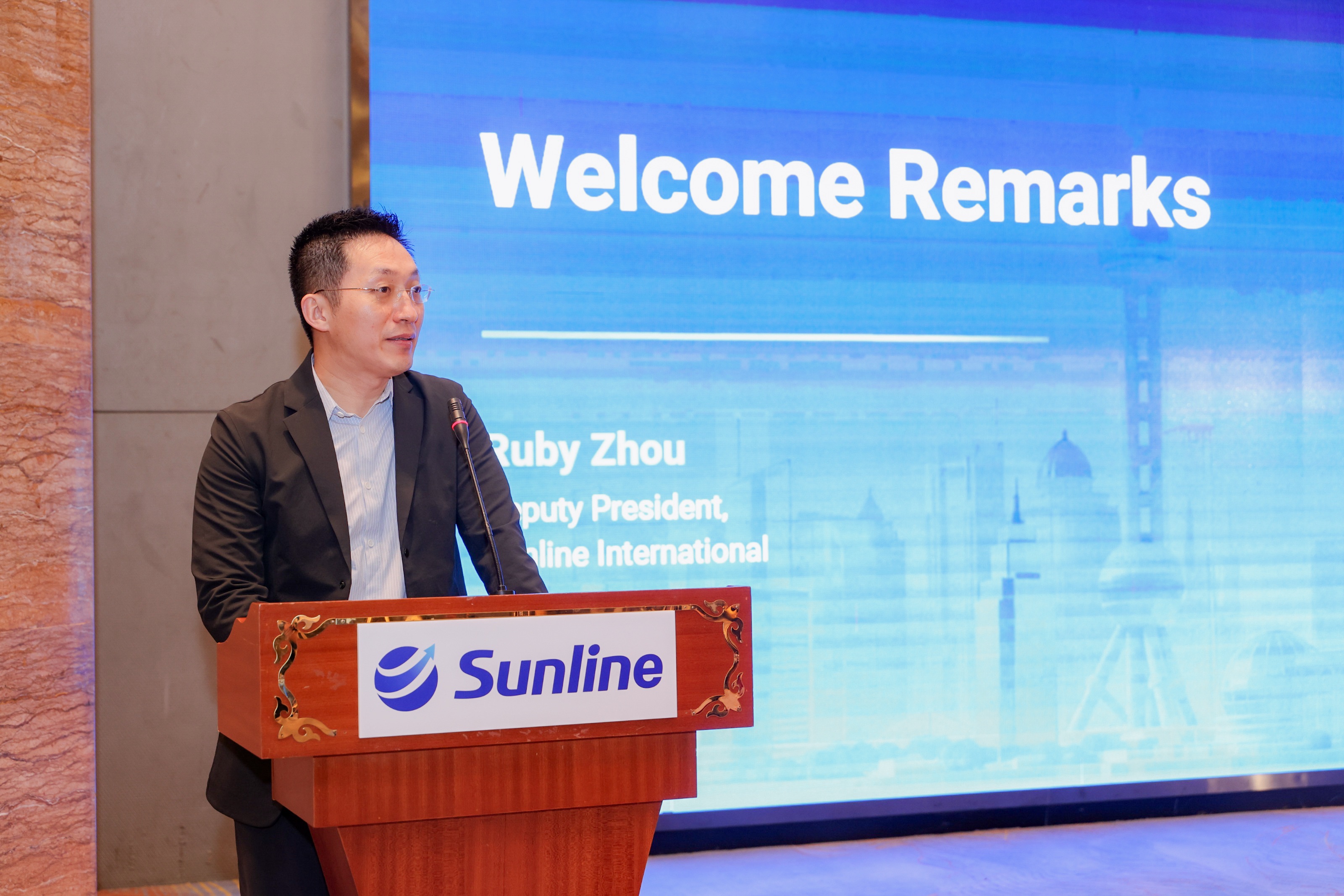
    “Banks have reached a critical point where incremental technology additions can no longer address the structural limitations of legacy systems,” said Ruby Zhou, Deputy President of Sunline International. “The future of banking will be shaped not by the volume of digital tools deployed, but by the strength of the architecture that connects them. Through core modernisation and AI-ready data foundations, we believe banks can move beyond technical debt and build the resilience, intelligence and agility required for the next era of finance.”


    As the banking industry moves into a more intelligent and architecture-led era, the ability to connect core systems, data foundations and AI capabilities will increasingly define institutional competitiveness. Sunline will continue to work with financial institutions and ecosystem partners to shape this next phase of banking transformation, helping banks build the resilience, intelligence and execution capacity required for the future of finance.