Author: sunline

  • Sunline Invited to Digital Banking Symposium 2020 and Shared Insights on How Banks Can Thrive through Collaborative Banking

    Sunline Invited to Digital Banking Symposium 2020 and Shared Insights on How Banks Can Thrive through Collaborative Banking

    The Digital Banking Symposium 2020 was co-organised by the Singapore FinTech Association (SFA) and Banking and Financial Services Union (BFSU) to help attendees deep dive and explore the impact of Digital Banks to Singapore and the ASEAN region over the two-day symposium. 

    In collaboration with Huawei Cloud Singapore, Sunline was invited to join in a virtual presentation during the symposium. Matthew Chen, Chief Executive Officer of Sunline’s Overseas Business Group shares his insights on Banking 4.0 and how banks can make use of the technologies to achieve collaboration banking, quoting a few successful cases.

    If you miss Sunline’s session at Digital Banking Symposium 2020 on how banks can thrive in the Digital Era, you can watch the full presentation video below:


  • Sunline Implemented Ping An Bank’s New ‘A+’ Credit Card Core System Launched, Marking China’s First Core Switch

    Sunline Implemented Ping An Bank’s New ‘A+’ Credit Card Core System Launched, Marking China’s First Core Switch

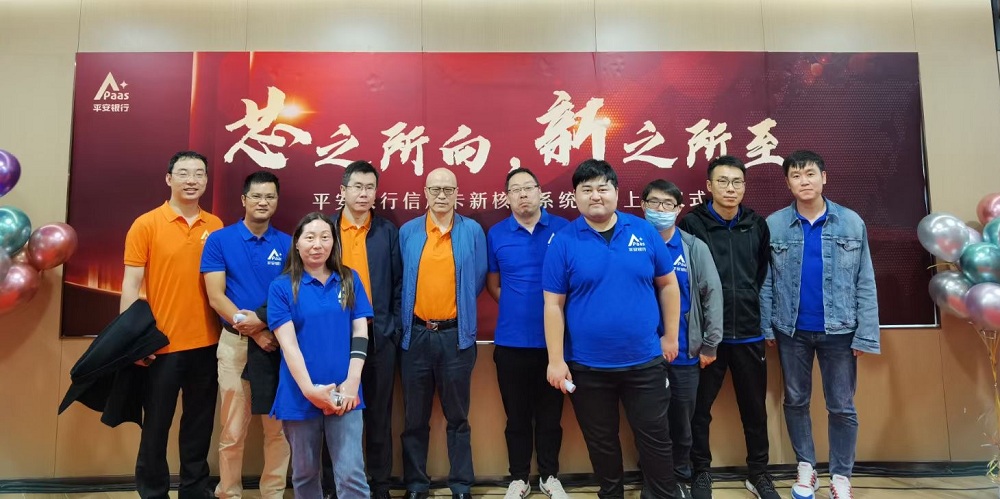
    At 5 a.m. on October 31, Ping An Bank’s new ‘A+’ credit card core system was officially launched, replacing its legacy core. This marked the first successful switch of the industry’s first mainframe based centralized architecture to a server based distributed architecture credit card core system, opening up China’s new chapter in the independent and controllable bank credit card core system.

    Sunline has assisted Ping An Bank in successfully launching the bank’s Tenglong core system (‘D+’ system). Ping An Bank is the first domestic joint-stock bank to successfully adopt Internet architecture and technology, independently designed and developed the bank’s core business system in 2016. With Sunline as an important partner, the company also participated actively in the construction of the bank’s new ‘A+’ credit card core system throughout the entire process, helping Ping An Bank build the industry’s first new core to realize ‘uninterrupted transactions and unaffected customers’.

    The new ‘A+’ credit card core system fully applies the advanced design and functions of Sunline in the credit card authorization center, quota center and card issuance fields that realizes the industry-leading indicators in the credit card system field.

    ·   The first credit card core application architecture that completely decouples transactions and accounting.

    ·   The first open financial cloud platform with full multi-tenant operation mode.

    ·   The first unitized, distributed technology platform that can support billion-level daily transaction volume processing and transaction accounts.

    ·   Supports data-driven transaction processing capabilities and regular flexible pricing configuration.

    ·   Strong tool supports makes the new core system of ‘A+’ more efficient and safer service capabilities.

    Sunline helps set the world’s shortest time and non-inductive ‘A+’ core switching record

    In December 2018, Ping An Bank and Sunline officially commenced the new ‘A+’ credit card core system project, opening the prelude to ‘decomputerization’. After more than 700 days and nights of fierce battle of rigorous demonstrated technology selection, more than two years of intensive development and multiple rounds of full-process production drills, the bank was ushered into the most exciting moment of system launch on October 31, 2020.


    The replacement of Ping An Bank’s legacy credit card system adopted the industry’s first uninterrupted switching mode-innovative financial gateway coup d’état. During the upgrade and replacement process, the entire transaction is uninterrupted and core businesses i.e. consumption, cash withdrawal and repayment are all in stable operation. A battle based on the centralized transfer of mainframes to distributed systems is the perfect ending under the premise. This process only took about 5 hours, setting a record for the shortest time taken for switching of the global credit card core system.

    The second day of the new ‘A+’ credit card core switch, the bank was ushered into the Double-11 wave. The system worked well and all indicators exceeded expectations. The new ‘A+’ credit card core has won its first battle!

    Sunline empowers the super performance of the new ‘A+’ credit card core system with advanced technology

    The new ‘A+’ credit card core system adopts distributed unitization technology to build a highly open and scalable flexible architecture, which greatly improve IT’s response agility to business. The new architecture enables the system to expand flexibly, realizes high availability and security as well as supporting Agile delivery and innovation. Ultimately, the system greatly reduces costs, enabling Ping An Bank to have the technological capabilities of a leading digital company.

    The new ‘A+’ credit card core system has also created three core business capabilities: a ‘data-driven’ transaction concept, a ‘tree structure’ quota system and a ‘transaction-level account’ accounting system which can fully satisfy the Agile development of Ping An Bank’s credit card business, demanding flexible innovation and stable operation. Sunline has helped Ping An Bank achieve an all-round autonomous control of the entire credit card system, providing an important reference path for the entire banking industry to shift from a mainframe centralized architecture to a server based distributed architecture.

    From Ping An Bank’s Tenglong core system to the new ‘A+’ credit card core system, Sunline has been accelerating the transformation of Ping An Bank’s retail business and financial digitalization with its leading technology products and professional services.

  • Sunline Partners Huawei to Build a Data Platform for Bank of Pingdingshan

    Sunline Partners Huawei to Build a Data Platform for Bank of Pingdingshan

    Recently, Sunline won the bid for Bank of Pingdingshan’s enterprise-level data center construction project and partnered with Huawei to build an integrated data center for the bank.

    In recent years, the concept of ‘centralization’ has been in full swing and transformation of middle-end data systems has emerged in the banking industry. Domestic commercial banks have used data centers to enhance the serviceability of bank data assets and accelerate digital transformation.

    In order to realize the mid- and long-term strategic goal of building the most competitive modern bank in China, Bank of Pingdingshan must make full use of the accumulated big data value to empower business development to enhance risk decision-making, customer precision marketing and management analysis in building a fast, efficient and intelligent data middle-end service system to empower Bank of Pingdingshan’s digital transformation.

    Sunline joins hands with Huawei to provide Bank of Pingdingshan with a data center-station joint solution

    In recent years, Sunline’s big data business has grown rapidly with big data products landing in many banks. Among the rich financial big data services, Sunline has become more aware of the importance of the integration of big data in core platform. In the pre-consultation and bidding process of Bank of Pingdingshan’s data middle-end project, Sunline and Huawei won the bid in one fell swoop with their highly recognized experiences combined with the bank’s current demand status.

    This joint solution is an integrated data center basic system and application system constructed by Sunline’s data center solution, Huawei’s GaussDB distributed data and FusionInsight’s big data platform.

    The data center-office joint solution not only improves the stability, high availability and scalability of the bottom layer of Bank of Pingdingshan’s data center-office system but also realizes the unified distribution, management, service and application of data assets across the bank, comprehensively enhancing the bank’s product and service innovation, digital customer awareness and digital risk control level.

    Sunline Data Middle-end creates an overall data operation system

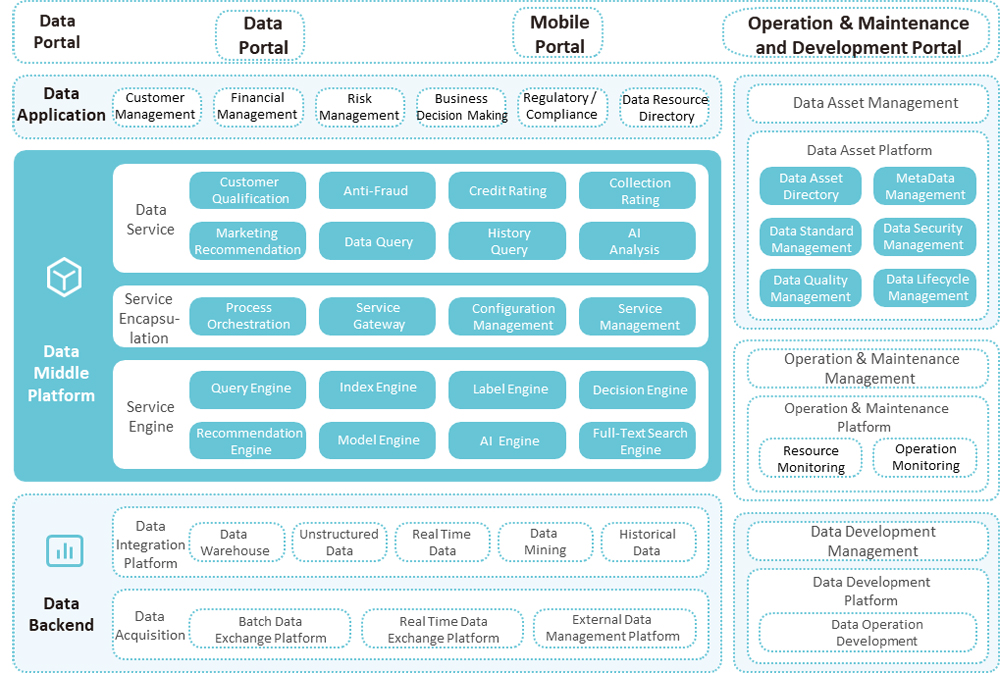
    The data center solution of Sunline is an overall data system architecture which integrates the entire data life cycle from data collection, aggregation, calculation to data service and data application, including data back-end, data application, data asset management and data development operation and maintenance as well as the data center in a narrow sense-the data center service layer.

    ·   Data back-end: A basic data platform with industry-leading and mature models, including data warehouse platforms, real-time data platforms, historical data platforms, data exchange platforms, external data management platforms and other products which can provide financial institutions with a solid universal back-end ability.

    ·   Data center service layer: Combine data service platform with the background data service engine and through service encapsulation, forming a closed loop between the data background, data application system and business system, realizing the decoupling of applications and data as well as maintaining close interactions through centralized management and other methods to realize the sharing and use of data between various systems so that bank data can be circulated among various systems and give full play to the value of data assets.


    Sunline ‘Large Middle-end, Small Front-end’ Data Center System


    Sunline’s data middle-end solution can build an overall data operation system for financial institutions based on data assets with a ‘large middle-end, small front-end’ to comprehensively improve the efficiency of financial institutions’ data services and drive business development with data:

    ·   Realize enterprise data service reuse

    ·   Avoid redundant construction and reduce the cost of chimney collaboration

    ·   Precipitation of general business capabilities, reducing the burden on the front desk

    ·   Unified service interface, improve operation efficiency

    ·   Enhance corporate management efficiency and product innovation efficiency

    With the help of Sunline’s data center system, financial institutions not only can form a matrix of various data service capabilities, meeting various applications and users’ application requirements for data assets in a platform-based, component-based, self-service and product-based manner but also can lay a solid foundation for the future development of data intelligent applications and the realization of the value of data assets, ultimately improving data service capabilities.

    With the advent of the digital age, the value of digital assets has become more important to financial institutions and has gradually become the core driving force for business development. As a leading financial technology company, Sunline has given full play to its deep understanding of its advanced technological capabilities and independent innovation capabilities in the field of big data to help financial institutions make full use of the value of data assets and accelerate their digital transformation.

  • Sunline Swooped Data Migration Projects For Two Large Commercial Banks in China

    Sunline Swooped Data Migration Projects For Two Large Commercial Banks in China

    Sunline swooped both bids for the data migration projects of China Merchants Bank and China Everbright Bank with their advanced and comprehensive data platform migration program.

    In recent years, financial information security has become a national development strategy with financial institutions promoting safe and controllable implementation of information technology. Although databases have long been occupied by foreign giants, the rapid development of the domestic mobile Internet in recent years has created a unique global scenario for the application of many new domestic databases. The progress of domestic databases has been remarkable and various banking institutions have adopted domestic databases, replacing their foreign legacy databases as part of their digital transformation journey.

    The replacement of the underlying database platform will bring about massive data relocation as well as huge data processing migration and transformation. Data warehouses and data marts are the core data integration, summary processing and storage platforms for enterprises, playing an indispensable role in business analysis, decision support and operation support. Therefore, in the process of bank database localization, the migration of data and its processing procedures as well as model reconstruction and optimization are the top priorities.

    In order to help banks accelerate the realization of domestic database substitution, Sunline relies on years of accumulated technical experience in the financial big data field with more than seventy data warehouses implementation to extract a complete and comprehensive data platform migration program. The data implementation program includes data migration, data processing program migration as well as model reconstruction and optimization of model reconstruction are the three major focus to realize the overall migration and optimization of data warehouses and data marts.

    In terms of data migration, enterprise-level data warehouse usually involves hundreds of terabytes or even petabytes of data and these data are stored in tens of thousands or even hundreds of thousands different tables. The huge amount of data is related to the time-consuming and slow performance of data migration while the number of data tables and the loading strategy of different tables determine the complexity of the data migration task. Data migration will need to consider factors such as data volume, batch window, storage space, etc. Technically, different processing methods need to be designed to deal with different amount of data.

    In terms of data processing program migration, the number of data processing programs basically corresponds to the number of tables i.e. the more tables there are, the greater the workload of the program. The migration of ETL program will need to consider the performance on the new platform to ensure that there is no degradation.

    Model reconstruction and optimization is one according to the characteristics of the new domestic database, taking into consideration the original model architecture and design defects, reasonable re-planning to maximize the technical characteristics of the domestic database as well as repair the shortcomings of the original model planning and design. Ultimately, it will appropriately optimize the data process links, strengthen unified data processing and reduce unnecessary data redundancy.

    Sunline Data Platform Migration Plan realizes comprehensive coverage from data migration strategy to data migration steps, data migration verification and data migration transition, solving issues like:

    ·   Data migration time window by ensuring the transmission rate.

    ·   Data changes during the migration through a batch migration strategy.

    ·   Heavy workload of ETL program transplantation through the standardization and generalization of transplantation procedures and automatic metadata matching strategy.

    ·   Mutual influence between tables during the migration process through the concurrent migration task and single table intervention strateg

    ·   Data migration verification through data range comparison report.

    ·   Transition of data migration by setting the parallel strategy of the original platform and the new platform.

    Under the general trend of financial information security and control, Sunline makes full use of its leading financial technology advantages with advanced technical solutions and rich data migration experience to help banks complete their data migration smoothly and safely, thereby accelerating the promotion of China’s banking industry domestic database replacement process.

  • Sunline Partners Penghua Fund to Create the First ‘Big Data and Microservices Hybrid Architecture’ TA System

    Sunline Partners Penghua Fund to Create the First ‘Big Data and Microservices Hybrid Architecture’ TA System

    In recent years, China’s asset management market has expanded and evolved rapidly. Digitization is disrupting and changing consumer habits making digital transformation a must for traditional enterprises to remain competitive. In the face of the crowded wealth management market, the partial balance of the industry that has been maintained by traditional public funds for more than 20 years is gradually being broken and it is urgent to explore a path of digital transformation, innovation and change that is compatible with the development of big asset management.

    However, TA system used by most fund companies today is still a closed architecture. With the sharp increase in transaction volume, the system architecture and performance can no longer meet the timeliness of clearing and unable to support the rapid advancement of business, resulting  high maintenance pressure, inability to response in time, reduced channel and customer satisfactions and inability for the structure and performance to support the rapid development of the business.

    Sunline and Penghua Fund jointly creates the new generation TA system

    With leading technical strengths, self-developed SpringBoot and SpringCloud open source enhanced technical architecture as well as rich experiences in the financial core field, Sunline and Penghua Fund jointly create a new generation TA system to get rid of the hindrance caused by the legacy TA system, respond to the rapid development of the Internet, support the rapid expansion of the business, meet the response to massive data and improve the efficiency of the settlement. The system was officially launched in January 2019 and has been online for more than a year with reported average daily clearing transaction volume estimated at 10 million and clearing time decreased by 50% year-on-year.
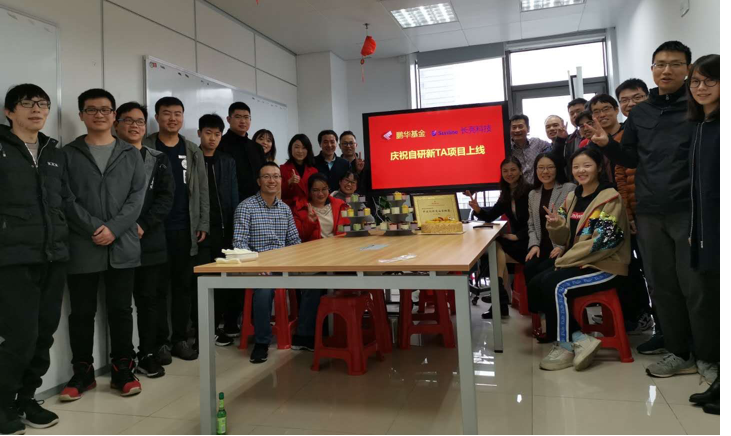
     

    Penghua Fund’s new generation TA system is the industry’s first and currently the only registration system based on big data architecture. The system innovatively adopts a big data and microservices hybrid architecture which is also the first in the industry and has achieved a breakthrough in clearing billion-level accounts with clearing efficiency 4 times higher than the systems commonly used in the industry.

    The first advanced big data and microservices hybrid architecture

    The new generation TA system adopts a microservice architecture. Each service has a single responsibility and is deployed independently, solving the problems of application complexity by decomposing a huge monolithic application into multiple services. At the same time, the Spring framework allows monolithic applications to be quickly expanded into distributed applications with SpringCloud, coping with a large number of concurrent data requests.

    In order to ensure the timeliness of transaction clearing, big data technology has been adopted to provide high-throughput application data access to process terabytes or even petabytes of data, fully satisfying the needs of Penghua Fund’s rapid business expansion and rapid clearing of massive data, allowing the company to quickly respond to changing market demands.

    Innovative products with hard core performance

    Relying on innovative concepts and architecture, the new generation TA system is at the forefront of the field of fund company IT systems, helping Penghua Fund to achieve a number of outstanding functions:

    ·   Supports rapid settlement of massive data with the introduction of a big data platform to support batch processing greatly improved the efficiency of clearing. It avoids the advantages of single-node server failure and system risks. At the same time, the open source system architecture is convenient for systematic understanding and learning, making it highly scalable and supportable.

    ·   Unified account database completes the integration and data migration of the company’s original TA systems, opens up all TA systems to share user data and consigns all the company’s fund products by docking a single system, increasing the customer loyalty and overall activity of cooperation channels through product integration and linkage.

    ·   Unifies monitoring platform, user management center (supports docking with AD and LDAP), task scheduling platform and monitors task execution status increases audit points to review whether specific tasks are performed normally. If abnormalities are found, the TA system synchronize corresponding responsible persons and gradually shift from manual operation and maintenance to automated operation and maintenance.

    ·   The TA system project is an opportunity to build a unified large, medium and middle system, maximizing the value of customer information and customer holding information, conduct customer portraits, customer classifications and support marketing activities with thousands of people and using ‘technology + finance’ data marketing model to transform traditional fund sales methods.

    ·   Improve the efficiency of version release and standard version. Build a one-click deployment continuous delivery platform and establish a rapid iteration and gray release mechanism.

    ·   Separation of account information and transaction information. The account chain-transaction structure is adopted to complete the load balancing mechanism, maintaining the performance of the system and break the separation of account information and transaction information. Adopting Spring cloud architecture, the system is responsible for the application, confirmation, query and modification of client fund accounts and trading accounts, keeping response time to channel parties less than 50ms. At present, the account chain has been developed into an independent account center, the central system of the company’s internal customer service and in conjunction with the company’s CRM (customer relationship management) system.

    Use agile development model for innovative practice

    As the new generation TA system project involves a wide range and large investments, all links are at risk and there are no mature products on the market that can be used directly. Therefore, Penghua Fund decided to implement the joint new generation TA system.

    In order to ensure smooth implementation of the project and deal with short project cycle as well as uncontrollable quality issues, Sunline and Penghua Fund decided to adopt the popular agile development model to improve the software team’s demand analysis and planning capabilities, delivery management capabilities and system planning capabilities, enhancing the accuracy of system requirements analysis and management as well as the flexibility and scalability of system architecture. Focusing on business value realization, the system greatly eliminating resource waste from the source.

    ·   In terms of organizational structure, the system transforms from a project system to a product system, making the team responsible for the product and reduce external interference. The product team is also responsible for product operation, achieving smooth DevOps and aligning the goals of development and operation and maintenance.

    ·   In terms of product value discovery, the ‘User Story Mapping’ method is introduced. From the perspective of the end-to-end business boundary (rather than the target system as the boundary), relevant stakeholders participate in the analysis of the business scenario with a complete value realization unit as the input requirement (user story) of product development. The delivery unit of the product group is no longer a separate function but an end-to-end value realization.

    ·   In the priority management of development process, the number of products in progress is limited through the swim lanes of the Kanban so that the team always focuses on the few user stories with the highest value, ensuring that only the user stories with the highest current value will be implemented.

    ·   Use the method of ‘built-in quality’ to ensure complete value delivery, accelerate value flow and delivery speed. If any user story finds problems and bugs in the test, it will be resolved in priority and the user story will be regarded as value delivery after the production release.

    ·   Before testing, ‘instantiating requirements’ is used in the user story refinement stage, a scenario-based test case is discussed and formed as the acceptance standard for user story development which greatly eliminates the waste of later modification or rework when problems are found in the later test.

    ·   Continuous product improvement driven by operational data. Thanks to the continuous delivery of business value, the team can continuously collect operational data and with the goal of operational improvement, the operational data is analyzed as input for continuous product improvement. The closed loop product evolution makes product improvement based on objective data basis rather than human subjective judgment.

    The new generation TA system helps Penghua Fund improve quality and efficiency

    Since the launch of the new generation TA system of Penghua Fund, a total of 26 channels have been docked through new access and channel migration, undertaking wealth management services for banks, securities firms and other companies in the financial industry. The channel access time has been reduced from the original two weeks to two months of joint debugging and testing work respectively to one week, greatly improving loyalty of the cooperation channels and overall satisfaction.

    With its superior performance, Penghua Fund’s new-generation TA system has successively won industry heavyweight awards such as ‘Outstanding Contribution Award for Scientific and Technological Innovation in Financial Industry-Development and Innovation Contribution Award’ as well as ‘IDC Financial Industry Technology Application Scenario-Best Innovation Award’.

    Through original architecture upgrades and lean innovative practices, Penghua Fund’s new generation TA system project went live as scheduled, successfully supporting the tempering of super businesses such as Double Eleven and forging a series of perfect product forms and enterprise-level capabilities. The successful implementation of the project has also brought Penghua Fund to a new level in its IT construction capabilities. Penghua Fund will also use the new generation TA system as an opportunity to establish a set of services or technologies that serve the entire system of Penghua Fund China and Taiwan to form an ecosystem suitable for fund companies, created industry barriers and promoted business innovation.

  • Sunline Big Data Business Won Heavyweight Award at DAMA China Data Management Summit

    Sunline Big Data Business Won Heavyweight Award at DAMA China Data Management Summit

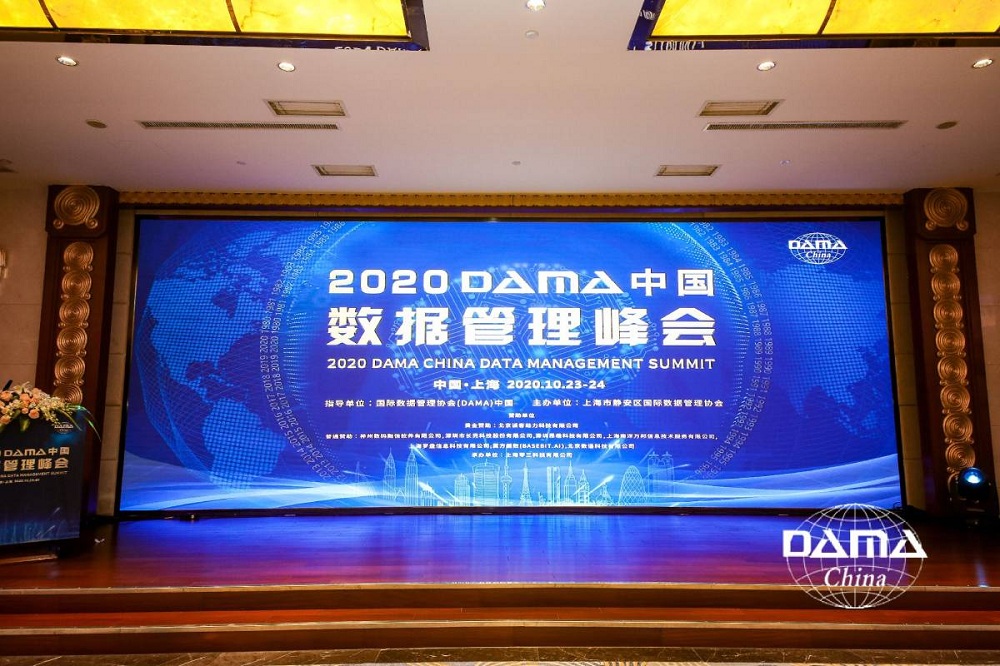
    On October 23-24, 2020 DAMA China Data Management Summit organized and hosted by the by the International Data Management Association (DAMA) China in Jing’an District was held in Shanghai. The conference closely focused on the theme of data management and digital transformation with in-depth analysis of domestic and foreign policies, trends as well as standards in the field of data management, focusing on industry best practices and applications. Sunline is recognized as a leading enterprise in the field of financial big data and was invited to participate in the conference.


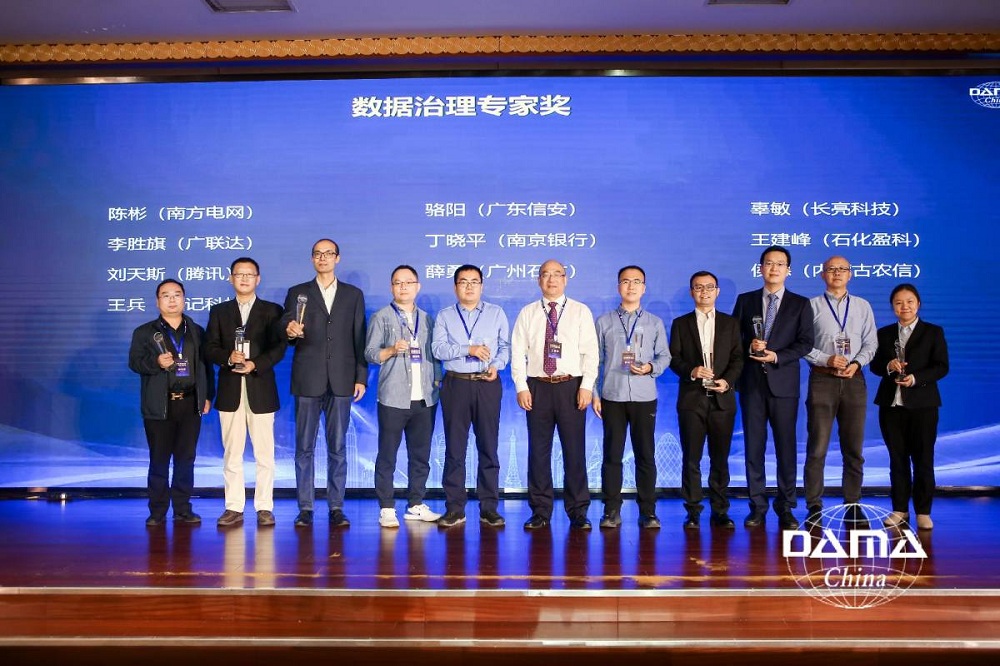
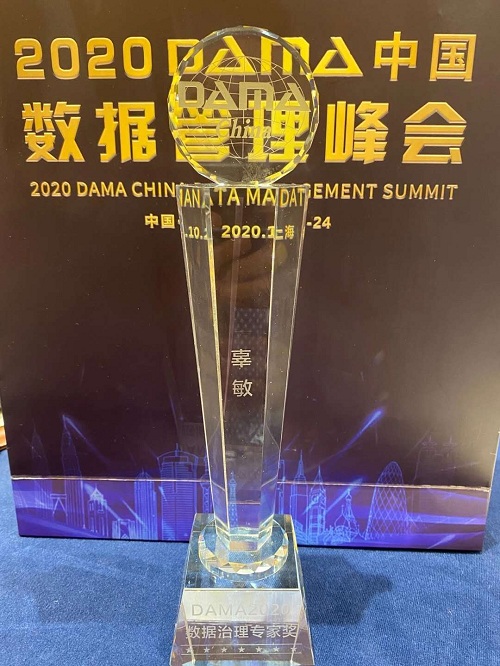
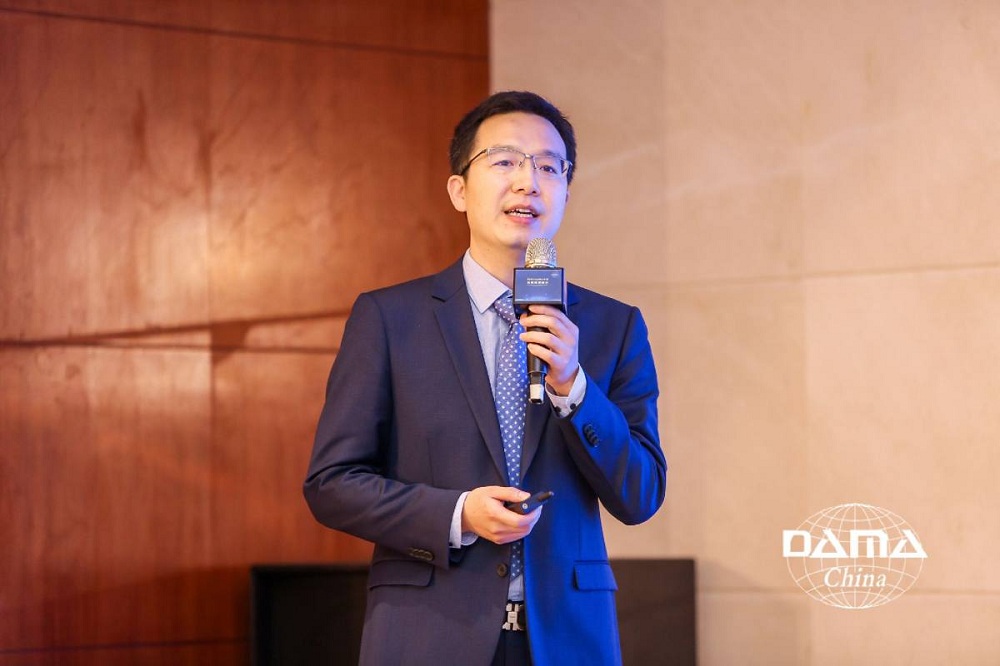
    During the DAMA Data Governance Awards, Gu Min, Deputy General Manager of Sunline’s Big Data Business was announced as the winner of ‘DAMA 2020 Data Governance Expert’ award for his outstanding achievements in the field of data governance. Mr. Gu has focused on data asset management and value applications in the financial industry for many years, providing data management consulting and implementation services for more than 100 financial companies. He also participated in the preparation of a number of national and industry standards, assisting regulatory agencies in formulating data governance guidelines and rating models, helped many banks in completing the appraisal of scientific and technological achievements of the People’s Bank of China as well as participated in  a number of regulatory agencies’ cutting-edge research on data governance, making outstanding contributions to China’s data governance.


    On the second day of the summit, Mr. Gu was invited to give a speech on ‘Building Data Asset Management Capability in the Financial Industry’, sharing how can financial institutions’ data asset management capabilities be built to help financial institutions carry out scientific and effective data asset management making use of Sunline’s rich project experience in the field of data governance.


    Sunline’s data asset management solution fully integrates business, technology and management to ensure the preservation and appreciation of data assets which includes 8 management functions and 5 safeguard measures. The management function refers to the implementation of a series of specific actions to safeguards data asset management, supporting the implementation of some auxiliary organizational structures and institutional systems for the realization of management functions to fully implement data governance. At present, Sunline’s data asset management solution has been implemented in more than 60 pan-financial institutions including but not limited to Export-Import Bank of China, Bank of Zhengzhou and China Galaxy Securities.


    In today’s digital economy era, data has become a new production factor and a new engine in driving economic and social development. As a leading financial technology company, Sunline has been studying data governance solutions in depth and actively participating in the promotion of national data governance work, helping financial institutions to effectively use data assets to deal with opportunities and challenges under the digital wave and to promote the digital transformation of China’s financial industry.

  • Sunline, the Forerunner in Large-scale Financial Risk Control Won the Bid For a Bank in the Southwest Region

    Sunline, the Forerunner in Large-scale Financial Risk Control Won the Bid For a Bank in the Southwest Region

    Sunline has recently won the bid for a big risk management system project for a bank in the southwest region, helping the bank construct a major risk management system that integrates collection, monitoring, early warning, control and reporting of large-scale risks exposure. The project has an important demonstration effect on the construction of a robust risk management system in the entire financial industry and will further promote financial institutions to better manage large-scale risk exposures.

    Both domestic and foreign banking industry face credit concentration risk as one of their major risks. In recent years, banks in China have increasingly diversified their credit granting methods to customers and customer concentration risks have shown some new characteristics. Effectively managing and controling large-scale concentration risks has undoubtedly become a realistic issue faced by the current banking industry.

    In order to promote the strengthening of big risk management and the effective prevention and control of concentration risks for commercial banks, the China Banking and Insurance Regulatory Commission has issued the rules for management of large-scale exposures of commercial banks in accordance with the actual conditions of domestic banking business development and international regulatory standards. (Hereinafter referred to as the “Measures”). The Measures clarify the regulatory requirements for large-scale risk exposures of commercial banks, that is, the limited range of the ratio of the risk exposure of commercial banks to non-interbank single customers, non-interbank related customers, interbank single customers or group customers to their net tier 1 capital.

    Sunline takes the lead in implementing a big risk exposure management system

    After the Measures were issued, Sunline realized the importance of big risk exposure management to banks and actively coordinated with relevant experts to interpretate and evaluate the possibilities of technologies to support banks. Sunline had organized multiple researches, making use of its strong technological strength as well as rich experience in financial risk management and control, becoming the first company to successfully develop a large-scale risk exposure management system and was at the forefront of big risk management in China.

    In response to the development of China Banking and Insurance Regulatory Commission, a bank in the southwest region took the lead in building a major risk exposure management system to strengthen concentration risk management and reduce credit concentration and with its continuous innovation and technological advancement, Sunline has won the bid for the project.

    Sunline’s large-scale risk exposure management system integrates collection, monitoring, early warning, control and reporting, realizing highly parameterized configuration, debt measurement and measurement process traceability to fully solve the current problems of major banks. Risk exposure management relies on offline manual collection and processing to complete data submission that results in large workload, low timeliness, poor accuracy and inability to meet regulatory online reporting requirements. Sunline make use of latest technologies to help banks accurately improve the level of concentration risk management.

    ●   Clears large-scale risk authority management and user records which helps the bank establish and improve these large-scale risk exposure management organizational structure, clarify management responsibilities and build an effective operating mechanism.

    ●   Automatically integrates and summarizes debt data, customer data, mitigation data, etc. and automatically perform risk exposure measurement for general risks, specific risks, transaction book risks, counterparty credit risks, potential risks and other risks to achieve comprehensive monitoring to achieve automated measurement and improvement of submission quality.

    ●   Sets internal limits for large-scale risk exposures and continuously monitor, warn and control large-scale risk exposures.

    ●   Automatically generates report data according to regulatory requirements to meet the report requirements.

    ●   Continues to collect relevant data and information to effectively support the management of large risk exposures.

    The large-scale risk exposure management system built by Sunline the bank in the southwest region not only increases the bank’s regulatory requirements for individual interbank customer risk exposures and reduces dependency on interbank business but also helps the bank invest more funds in the real economy, improves the efficiency of credit resource allocation and further enhances core competitiveness in the new environment of interest rate marketization and economic transition.

    Seizing the opportunities, Sunline is always one step ahead in the development of more advanced products with the blessing of technologies. On the road of continuous development, opportunities and underlying technologies keep Sunline in the forefront of the financial technology industry.

  • Take a Look at Sunline’s New Generation Bank-Enterprise Direct Connection System

    Take a Look at Sunline’s New Generation Bank-Enterprise Direct Connection System

    Bank-enterprise direct connection is an electronic banking product provided by banks to high-end enterprise customers. It is a new online direct connection method of enterprise ERP, capital system and banking system. Enterprises can directly complete the management and scheduling of bank accounts and funds through their own internal systems as well as perform various business operations like account management, information inquiry and transfer payments. At the same time, the bank-enterprise direct connection can provide support for enterprises to develop and customize personalized functions in the capital system. It has the distinctive features of information synchronization, high efficiency, simplicity, personalized service, safety and reliability.

    Bank-enterprise direct connection is actually the intermediary that links the banking system (core system, cash management system, etc. with the corporate capital system. The scheduler and manager of these bank interfaces responsible for receiving instructions from the corporate capital system and forwarding them to the corresponding bank, returning the bank’s feedback information to the corporate capital system immediately and corporate capital system can be accessed through the system and easily connected to all cooperative banks.

    Bank-enterprise direct connection system is like a highway on which corporate funds operate. One end is connected to various business systems on the enterprise side while the other is connected to various external banking systems. If there is a problem, the system will be seriously ‘congested’ and cause a chain reaction with serious consequences.

    Regardless of how small the system is, there are many functions. The system is in charge of the system management module, interface platform module, business management module, comprehensive query module, system configuration module, monitoring operation and maintenance module.

    ●   Interface platform module provides access services for external systems, including instruction reception, message verification, security check, forwarding scheduling and other functions. With the continuous expansion of bank service interfaces, the interface platform will also be continuously upgraded.
    ●   Business management module processes operations such as collection, payment retransmission and interface query initiated by each business module and the business processing platform also supports manual and regular operations on business functions such as fund collection, external payment and account management.
    ●   Comprehensive query module provides users with various dimensions of account and transaction query services to ensure that every instruction and every detail can be tracked.
    ●   System configuration module contains the technical configuration details of the connected bank, mainly the message type, communication time, message identification, etc. It also contains the business configuration content of each connected bank, account and certificate (enterprise code), such as bank name, account bank, company code (bank allocation), etc.
    ●   Monitoring operation and maintenance module provides a full range of monitoring and management for the normal operation of the system, early detection and early treatment of system abnormalities as well as ensuring the stable operation of the system around the clock.

    Some may say others have similar functions but it is not true.

    Sunline Bank-enterprise Direct Connection System is an asynchronous message engine on the basis of the first generation, so the performance, throughput and payment efficiency have been greatly improved with processing of millions of payment instructions every day is no longer a problem. Based on the micro-service distributed architecture, each bank interface is deployed independently and does not affect each other.

    Sunline Bank-enterprise Direct Connection System’s strong abilities benefit from its good design philosophy, reasonable internal structure and stable and mature technology platform. All of its functions are implemented using JAVA and JAVA-related technologies. The front-end and back-end separation architecture is adopted. The data interaction core can operate independently and expand flexibly and the core uses routing and messaging based on EIP (Enterprise Integration Pattern). The intermediary engine will even expand into a lightweight platform for enterprise system integration and data exchange in the future.

    Sunline’s ability has long been tested by the market and have connected with many mainstream domestic banks.

    Up to now, Sunline Bank-enterprise Direct Connection System has served more than 30 large enterprise group including China Electric Finance, China Merchants Group, China Unicom, AVIC Finance, CITIC Finance, Hisense Group Finance, Sinochem Group, Inner Mongolia Electric Power Group, Yutong Bus, TCL Group Finance, Zhejiang Transportation Group, Pudong Development and others.

    Under the product philosophy of Sunline for excellence, Sunline will redouble its efforts to innovate and optimize in the future to become more powerful and provide quality services to more customers. Looking forward to the next transformation of the system!

  • Sunline Shared Insight on Digital Banking Core Empowers Business Agility at Huawei Connect Summit

    Sunline Shared Insight on Digital Banking Core Empowers Business Agility at Huawei Connect Summit

    In the recent Huawei Connect Summit, Sunline has been invited as a technology partner to give insights on how can core banking support banks’ business innovation and cultivate ecosystems in a more agile way as well as how banks transition from traditional to digital core effectively and seamlessly as Bank 4.0 pushes digital transformation into full swing.

    Check out how banks can achieve agile and open digital CORE transformation in the new normal by Matthew Chen, Group CEO of Sunline’s Overseas Business.


  • The Story Behind Huishang Bank’s Business Intelligence Analysis Cloud Platform Project

    The Story Behind Huishang Bank’s Business Intelligence Analysis Cloud Platform Project

    No matter how difficult it is, we will brave it through. In our eyes, there is no mountain that we cannot climb and no road further than our feet can take us! This is Min Gong’s understanding of Sunline’s Spirit.

    (Min Gong, the project manager for Huishang Bank’s Business Intelligence Analysis Cloud Platform Project)

    On June 4, 2020, the project team implementing Huishang Bank’s Bank’s Business Intelligence Analysis Cloud Platform Project suddenly received a new demand for ‘real-time online loan data visualization’. Facing with the issue of tight deadline, customer requested that the development work be completed within a week.

    At that time, Min Gong as the project manager felt great pressure. “The demand involves a number of complex technologies, such as OGG, Kafka, Stream, etc. Although our project team has very rich experience in the application of these technologies, integrating and achieving the complex business requirements in a short period of time is still a huge challenge.”

    Not sticking to conventions and courageous to innovate are the genes of Sunline. This project adopts a brand-new realization method for when time is tight and tasks are heavy to meet customer. Min Gong quickly convened a meeting with project members to discuss the feasibility plan for the implementation of the demand. The project team originally planned to realize real-time calculation of real-time indicators through StreamJob, but because the stream micro-batch server has not been deployed, it can only be realized by Smartbi front-end page instead. After multiple rounds of evaluation and analysis, Mr. Zhang suggested using OGG, Kafka, Stream, Inceptor, Smartbi and other components as well as technologies.

    When the general direction has been set, the next step is how to gnaw off the hard bone. 

    Although all parties have coordinated resources to support this project, Min Gong understands the development of the entire project will ultimately rely on them to overcome key difficulties. 

    “At that time, it was a spiraling process. Everyone used most of their energy to think over and over again. When we encountered problems and were puzzled, we continued to try consulting experts. When we had made breakthroughs, we were often very happy”. 

    When Min Gong described this unforgettable experience, he used one word – ‘Never give up’. 

    In order to keep up with the progress of the project, project team members worked overtime past 10 o’clock every night. Min Gong’s home is far away from work and due to the impact of the epidemic, he could not take the bus. He could only spend four hours riding a battery bike back and forth. 

    Physical exhaustion and mental exhaustion are second to the distress he felt most when he received calls from his child every time he works overtime, yelling to him “Dad, when are you are coming home soon? I miss you.”

    Often at this time, his tears will flow uncontrollably as his emotions burst. 

    The double pressure mentally and physically did not crush Min Gong. The fighting spirit and determination of the project team to deliver the tasks on time makes everyone devoted to the intense project development.

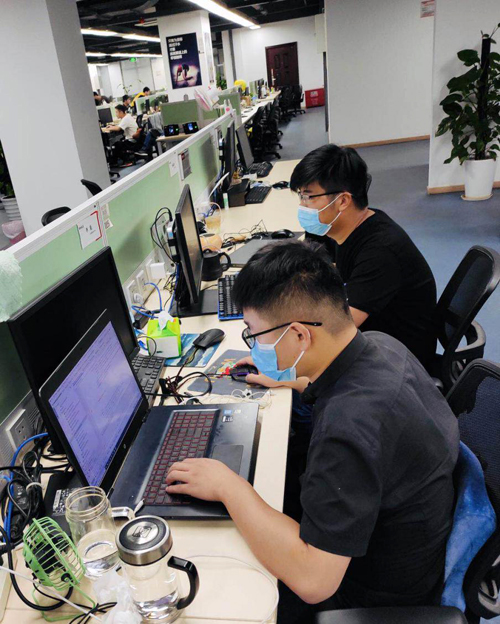
    (Working silhouettes of project team members)

    Every difficulty was being overcome one after another and everyone was pleased that their efforts have not been disappointed.

     After a month or so of hard work, Huishang Bank’s Business Intelligence Analysis Cloud Platform project team overcame various difficulties and finally realized the demand for ‘real-time online loan data display’ and put it into production on July 9. This project helped Huishang Bank realize the visual display of real-time big data for the first time and was named ‘Sky Eye Real-time Platform’ by relevant leaders, which is of great significance. Huishang Bank also spoke highly of the project team’s spirit in overcoming difficulties and never giving up.

     After this challenge, Min Gong has a deeper understanding of Sunline’s. We are not afraid of challenges in doing things and in the face of difficulties, we can stimulate our creativity. This spirit is the most precious wealth of each of us in Sunline.

     Although the result is important but we should remember the process, the sweat and sleepless night of Sunline’s team.