Category: News

  • Sunline Advances Core Banking Modernisation in the Philippines at CTB Convention 2026

    Sunline Advances Core Banking Modernisation in the Philippines at CTB Convention 2026

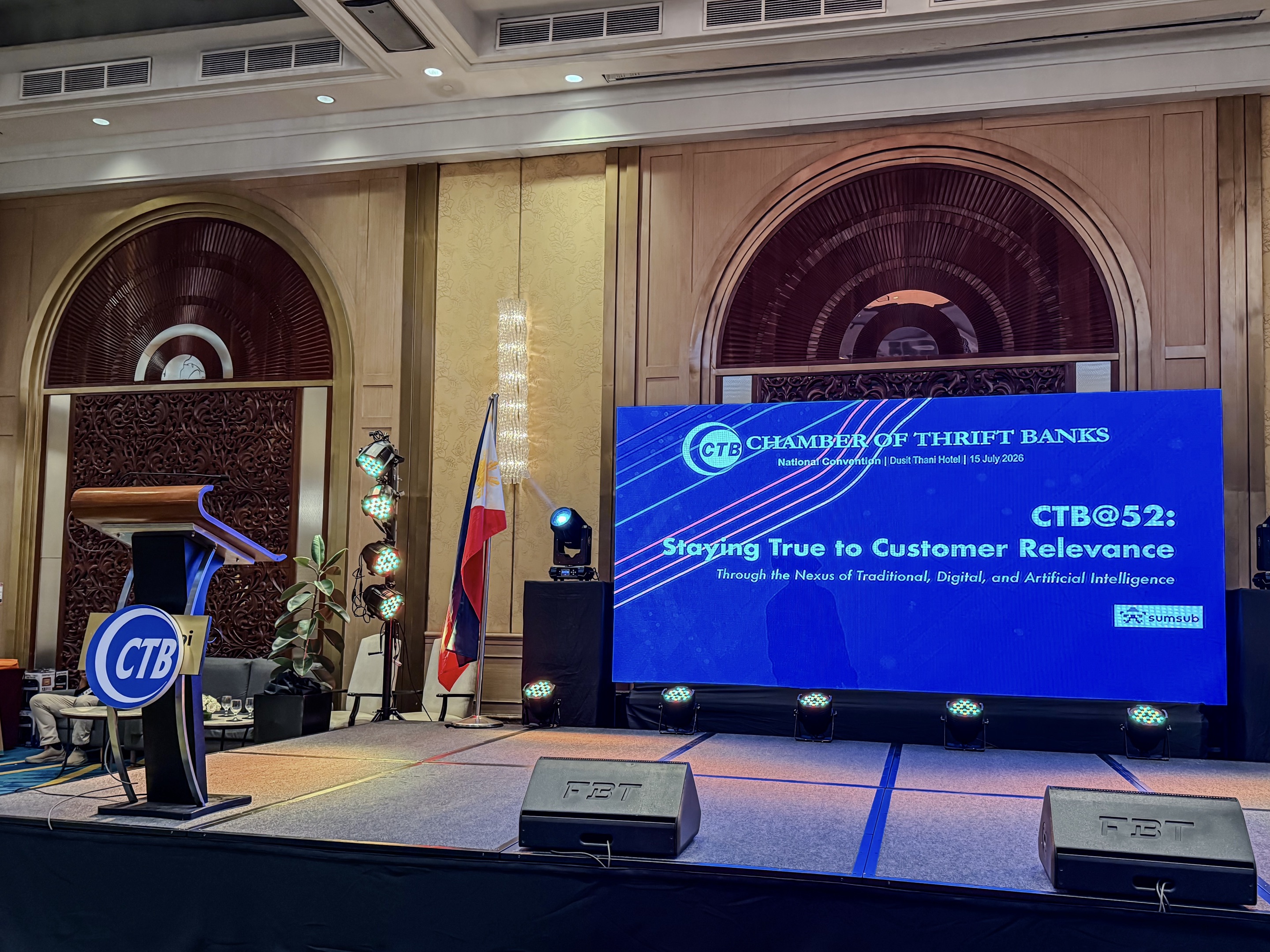
    MANILA, Philippines, 15 July 2026 – Sunline joined more than 150 delegates representing over 50 banks and financial institutions at the 52nd Chamber of Thrift Banks Convention 2026 to examine how banks can maintain customer relevance as traditional banking, digital services, and artificial intelligence increasingly converge.


    Held under the theme “Staying True to Customer Relevance Through the Nexus of Traditional, Digital and Artificial Solutions,” the convention framed customer relevance around three priorities: understanding customer realities, building digital trust, and adopting responsible AI. Guided by the Filipino value of malasakit, the discussions reinforced the importance of resilient, responsible, and human-centred banking innovation.


    Modern Banking Foundations for Scalable Growth in the Philippines


    Customer relevance increasingly depends on the ability of banks to scale digital services without weakening operational resilience or trust. Preliminary data from the Bangko Sentral ng Pilipinas showed that total banking assets reached a record ₱30.442 trillion at the end of May 2026, up 11.69% year on year, alongside continued growth in lending and deposits. This expansion is increasing pressure on banks to add capacity, accelerate lending and digital service delivery, and strengthen regulatory readiness without compromising operational stability or customer experience.


    Addressing these priorities requires more than individual system upgrades. SunCBS, Sunline’s modern core banking platform, provides a modular foundation built on microservices and domain-driven design principles to support high-volume, real-time operations. Together with Sunline’s Loan Origination Solution and digital lending capabilities, Sunline provides an integrated flow, including customer onboarding, product recommendation, and full loan lifecycle covering loan application, approval, and post-loan processing that would help banks to reduce fragmented workflows and improve lending efficiency.
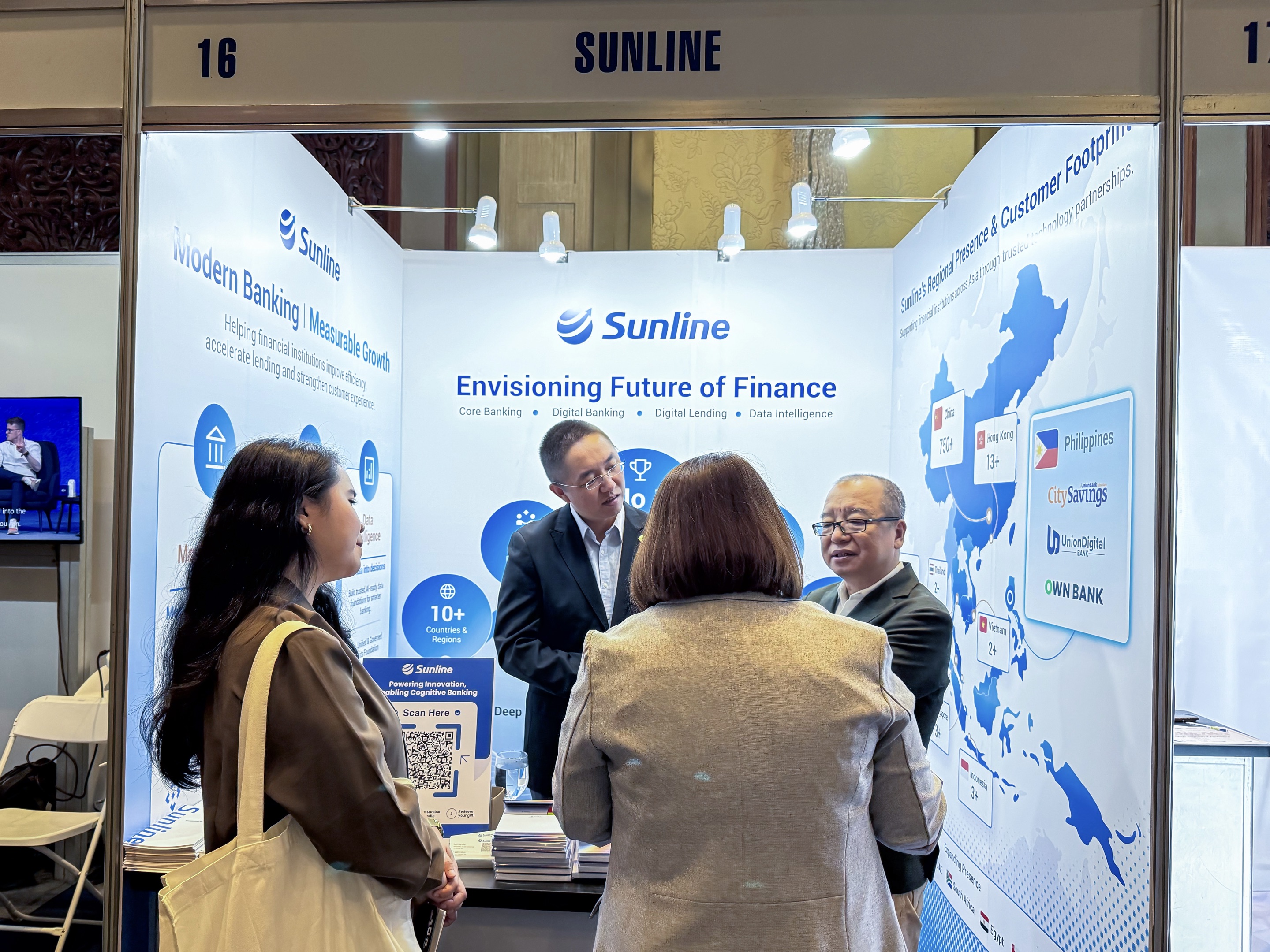


    Sunline’s experience in the Philippines and across Asia-Pacific includes digital-first banking development and complex core modernisation programmes. The company supports greenfield deployment, progressive migration through multi-core coexistence and full core replacement, allowing banks to align transformation with their business priorities, existing technology environments, and risk appetite rather than commit to a single modernisation model. In progressive programmes, legacy and new core platforms can operate in parallel, supporting controlled transaction routing, reconciliation, and domain-by-domain migration while maintaining operational continuity. These technology capabilities are complemented by migration planning, operational readiness, and programme governance to manage execution risk across complex banking environments.


    Complementing these foundations, a data intelligence layer strengthens data quality, regulatory reporting, and analytics, creating a trusted base for future AI-powered banking use cases. By combining banking domain expertise, modern technology architecture and practical transformation experience, Sunline continues to help financial institutions in the Philippines modernise with greater control, expand digital and lending services, and build resilient platforms for long-term growth.
  • Sunline Brings AI-Powered Core Banking Intelligence to NCS Impact 2026

    Sunline Brings AI-Powered Core Banking Intelligence to NCS Impact 2026

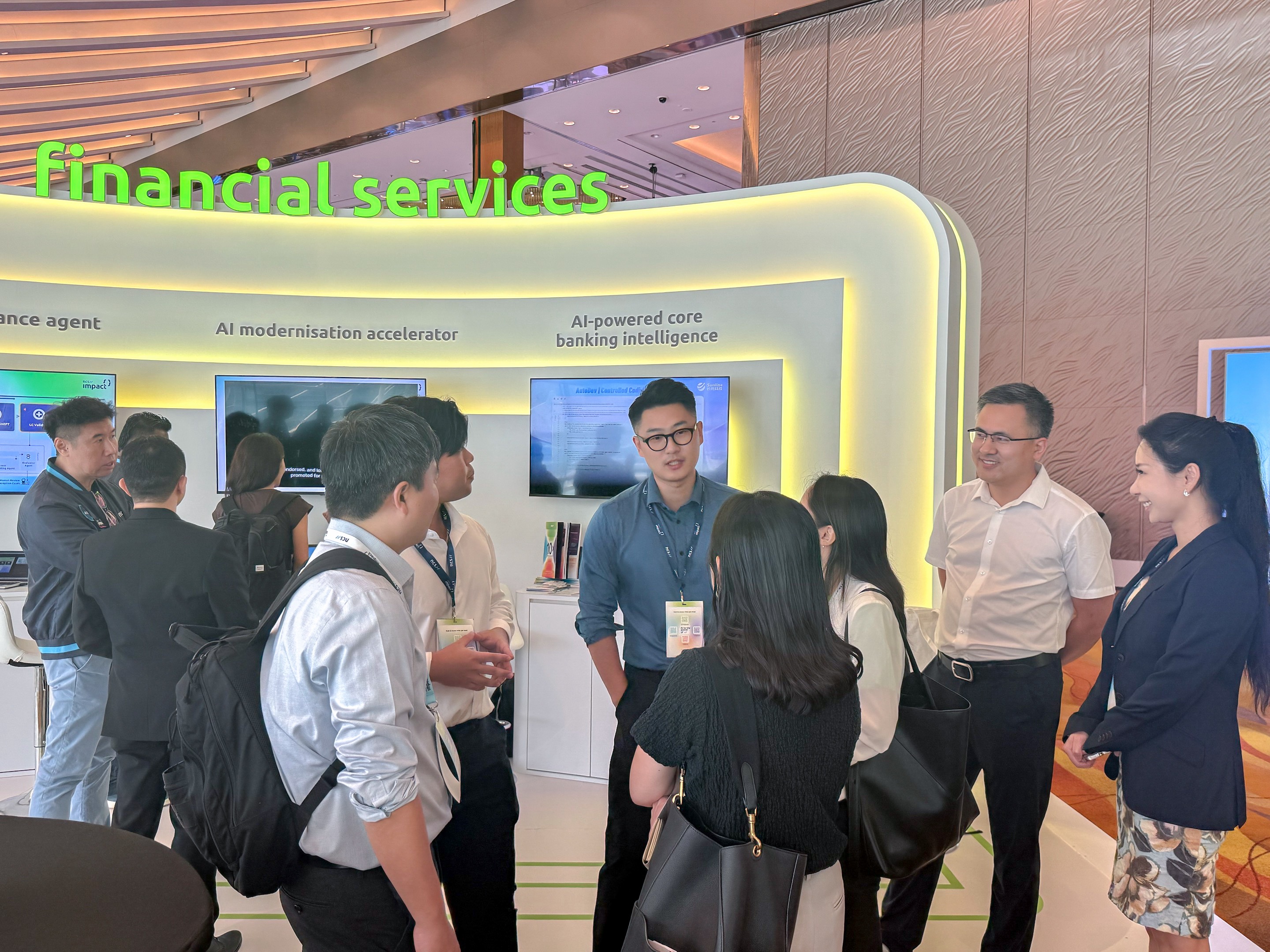
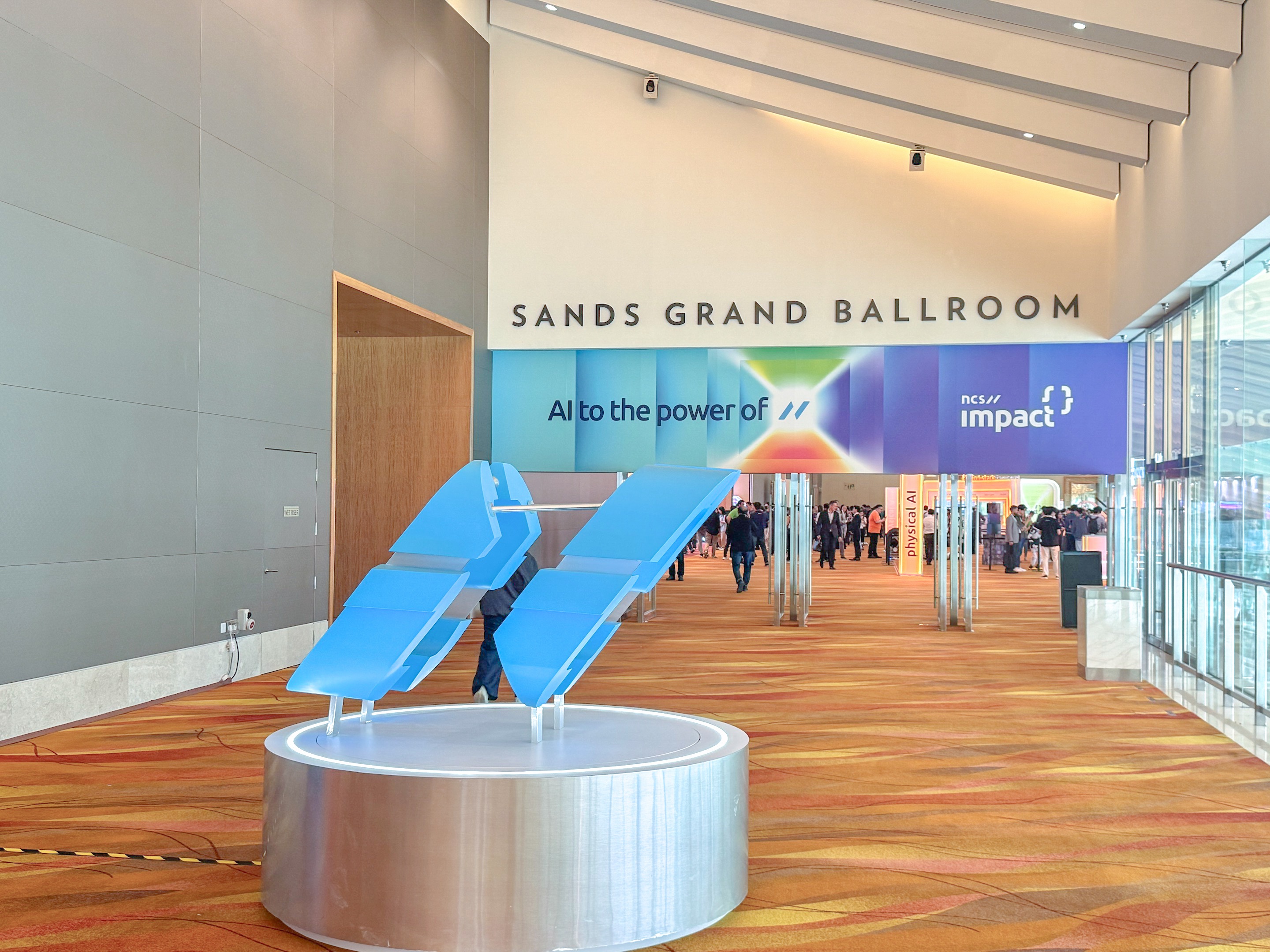
    SINGAPORE, 9 July 2026 – At NCS Impact 2026, Sunline, as a strategic partner of NCS, brought AI-powered core banking intelligence to the conversation, featuring SunCBS, DataMind, and the overseas debut of Luban Intelligent Workbench. The showcase connected core banking modernisation, trusted data intelligence, and AI-enabled technology delivery for financial institutions in Singapore and across the Asia-Pacific.

    As banks across Asia-Pacific move into a more execution-driven phase of digital transformation, modern core architecture, real-time data capability, and trusted AI adoption are becoming strategic priorities. The focus is shifting from isolated AI experimentation to building the digital core, trusted data foundation, and delivery capabilities required for resilient, governed, and scalable banking transformation.

    1 Platform, 2 Cores: Building an AI-Ready Banking Foundation with SunCBS

    Sunline’s 1 Platform, 2 Cores (1P2C) approach is built within SunCBS, combining Transaction Core and Data Core capabilities, with DataMind serving as the Data Core. This architecture enables banks to connect mission-critical transaction processing with trusted data intelligence, supporting a more integrated model of digital core transformation, real-time data usage, and intelligent banking operations.


    The strategic value of 1P2C lies in building a core technology foundation that supports business agility, operational resilience, and long-term innovation, while establishing the trusted data environment required for enterprise AI adoption at scale.

    Luban: Sunline’s Banking Intelligent Workbench for Technology Delivery

    Building on the 1P2C foundation, Luban extends AI into the way banking systems are designed, delivered, governed, and continuously enhanced. As Sunline’s Banking Intelligent Workbench, Luban supports human-AI collaboration across the software delivery lifecycle, helping financial institutions improve delivery efficiency, engineering governance, traceability, and software quality across complex transformation programmes.


    For complex banking core system development and delivery, Luban focuses on knowledge asset development, human-AI collaboration, and governed delivery. This helps banks move from point-based AI assistance towards an organisation-level AI:

    1. Knowledge asset development: Luban helps transform code, documentation, parameters, requirements, design assets, testing assets, and governance rules into searchable, traceable, and reusable knowledge assets. This enables banking technology teams to better understand existing systems, reduce knowledge fragmentation, and preserve institutional knowledge across long-term transformation programmes.

    2. Human-AI collaboration: Luban supports professional AI agents across the software delivery lifecycle, including requirements analysis, gap analysis, application design, coding, code review, testing, and governance. Through collaborative kanban, task orchestration, and AI agent delegation, business analysts, architects, developers, testers, and governance teams can work within a unified delivery process when handling complex system changes.

    3. Governed delivery: Luban brings kanban tasks, SOPs, tool invocation, artefact feedback loops, and human confirmation into a governed workflow. While improving engineering efficiency, it preserves sources, evidence, permissions, processes, and review mechanisms, helping banks improve delivery consistency, traceability, auditability, and software quality.

    Building on the strategic partnership established between Sunline and NCS in 2025, Sunline’s engagement at NCS Impact 2026 reflects the continued collaboration between both organisations in advancing digital transformation and innovation for the financial services sector. Through this engagement, Sunline demonstrated how its core banking expertise, trusted data intelligence, and AI-enabled engineering capabilities can support banks in Singapore and the wider Asia-Pacific region in advancing banking technology modernisation with greater agility, governance, and operational confidence.

    With extensive experience in core banking technology and a global client base of more than 800 financial institutions, Sunline continues to position core banking modernisation as a foundation for future-ready banking. Through SunCBS’ Transaction Core, DataMind Data Core, and Luban Intelligent Workbench, the company brings together platform modernisation, trusted data intelligence, and intelligent delivery capabilities to help banks in Singapore and across Asia-Pacific move from transformation strategy to practical execution.

  • Sunline Scales Kunpeng-Optimized Architecture to Set Benchmark in Core Banking Modernization

    Sunline Scales Kunpeng-Optimized Architecture to Set Benchmark in Core Banking Modernization

    As commercial banks accelerate the migration of mission-critical core banking workloads to sovereign and cloud-native computing infrastructure, compatibility bottlenecks, high validation costs, and performance risks continue to delay enterprise platform modernization.


    To address these systemic challenges, Sunline and the Shenzhen Financial Technology Innovation Base (the Base)-a public testing and verification platform focused on core financial technologies-have expanded their multi-year initiative, successfully commercialising a co-optimized core banking architecture built on the Kunpeng enterprise computing ecosystem. Now live across 20 commercial banks, the joint initiative provides a verified engineering blueprint for hardware-software co-optimization, demonstrating how deeply integrated platform architectures can de-risk core system replacement while delivering measurable performance gains.

    Addressing Technical Bottlenecks in Core Systems Migration

    The transition from legacy monolithic cores to modern, independent architecture is often hampered by the gap between software logic and underlying hardware compute layers. Financial institutions frequently encounter long validation cycles, high parallel-running costs, and unpredictable transaction latency during stress testing on heterogeneous hardware. These operational hurdles make full-scale cutovers a high-risk proposition for IT decision-makers.


    Operating through a co-established Financial Industry Laboratory, Sunline and the Base addressed these friction points by co-developing a full-stack, cloud-native core banking architecture. Rather than relying on superficial software emulation or unoptimized middleware, the initiative embeds core transactional logic directly into the native hardware layer.


    Quantifiable Benchmarks: The APStack Integration

    A primary driver of this architecture is the integration of Sunline’s APStack technical framework with the Kunpeng native development environment. By refining software compilation, testing, and execution pathways, the co-optimized platform delivers quantifiable improvements across key operational metrics:


    • Development Acceleration: Standardized development toolkits and optimized build pipelines reduce core transaction application development lifecycles by 20%.

    • System Throughput: Co-optimized runtime engines yield a 20% increase in overall system performance and transaction processing speed, ensuring operational resilience during peak concurrency periods.

    • Security Baseline: Automated compatibility and compliance verification frameworks enhance system baseline security controls by 30%.

    This full-stack approach covers core ledger management, account processing, and clearing functions, having completed production-level commercial verification at major joint-stock and commercial banks.


    Strategic Implications for Global Banking Technology

    The commercialization of this architecture highlights a shift in how financial institutions approach platform modernisation. By utilizing a pre-validated, hardware-optimized software stack, banks can reduce total cost of ownership (TCO) and avoid extended testing cycles.


    Furthermore, establishing a stable, high-throughput core foundation serves as a key prerequisite for broader digital transformation goals, including AI readiness. The joint development roadmap includes extending this architecture to support generative AI models, intelligent compute scheduling, and real-time data analytics. As cross-border banking operations expand, verified sovereign infrastructure models offer a repeatable framework for institutions seeking to maintain system stability, regulatory compliance, and operational autonomy across global operations.

  • Sunline Connects China Banking Technology Ecosystem to Malaysia Intelligent Banking Transformation

    Sunline Connects China Banking Technology Ecosystem to Malaysia Intelligent Banking Transformation

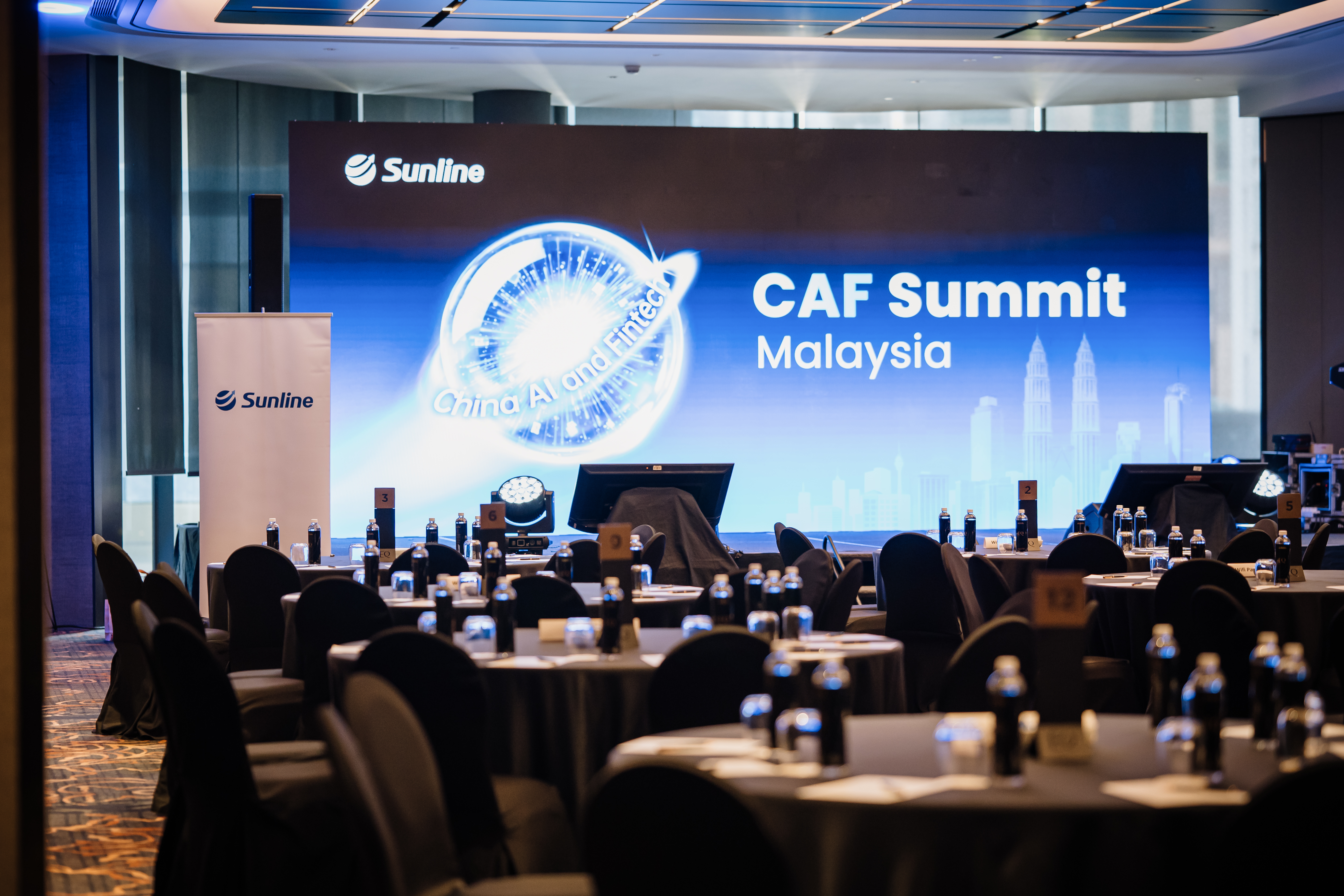
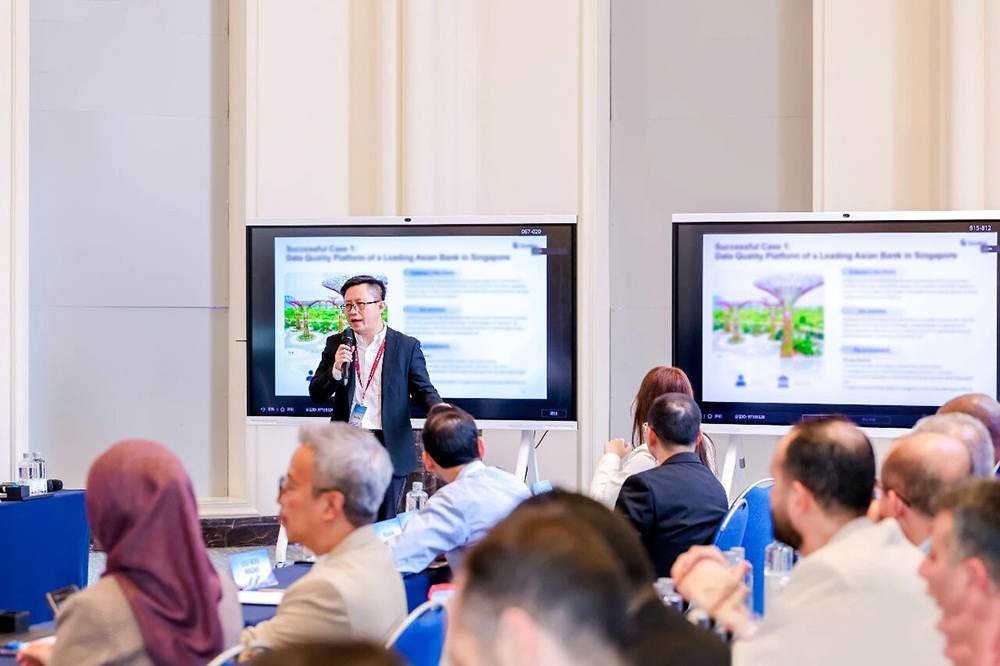
    KUALA LUMPUR, Malaysia, 26 June 2026 – Sunline positioned intelligent banking as an ecosystem-led transformation agenda at the China AI & Fintech Summit Malaysia 2026, also known as CAF Summit Malaysia 2026, bringing together banking leaders, China-based technology providers and local integration experts to examine how Malaysia’s financial institutions can build the next generation of intelligent, resilient and data-driven banking.


    Held in Kuala Lumpur under the theme “Building Intelligent Banking Platforms: Core. Data. AI.”, the by-invitation-only executive summit addressed a critical question facing banks today: whether existing technology architectures are sufficiently agile, resilient and governed to support the next phase of AI-enabled banking.


    As financial institutions across Southeast Asia move from digitalisation to AI-enabled operating models, the industry conversation is shifting from experimentation to production-scale readiness. For banks, the challenge has moved beyond access to AI tools. The greater priority is whether their core platforms, data architecture, infrastructure resilience and governance controls are mature enough to support real-time, compliant and scalable execution.


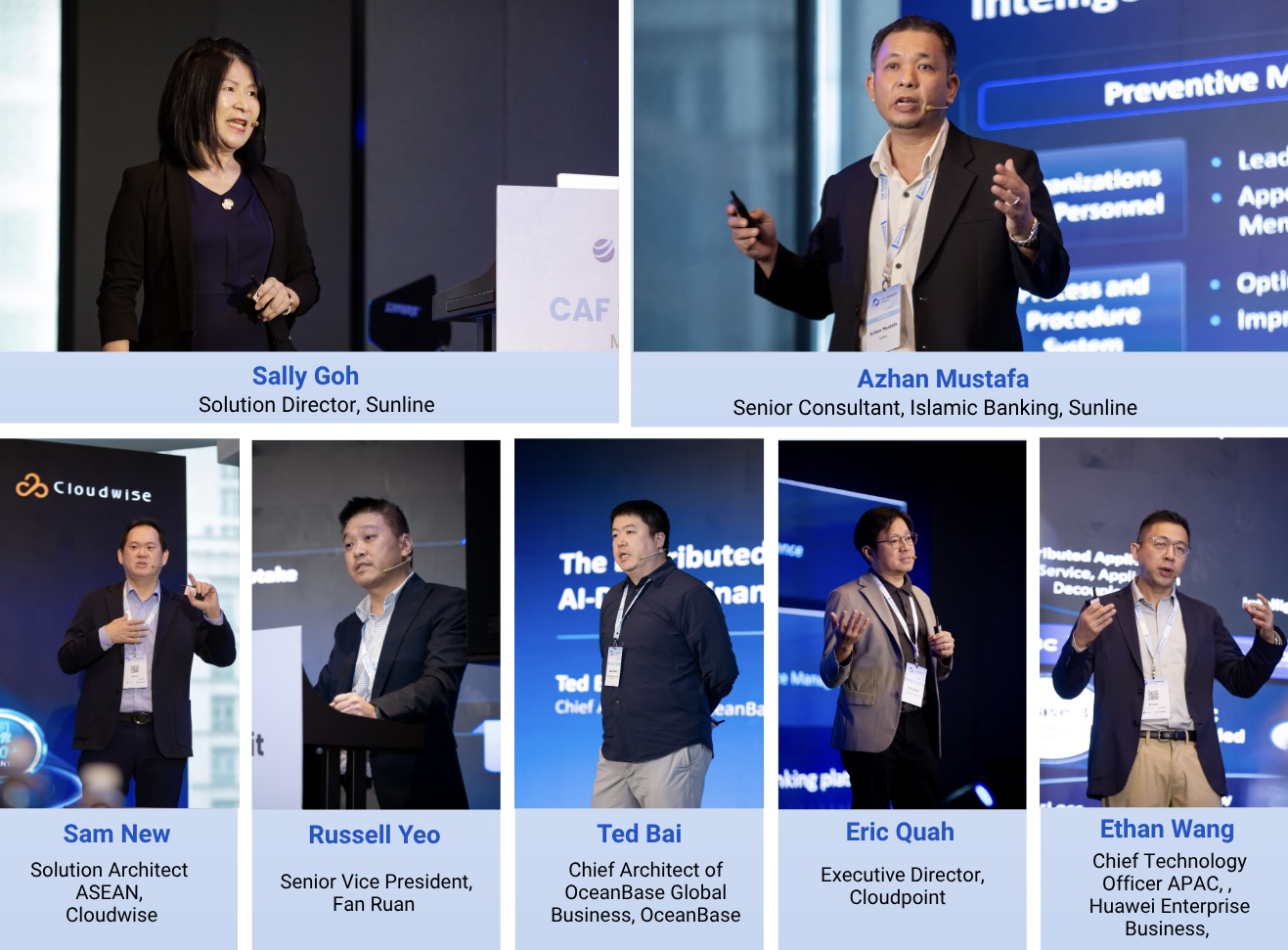
    Against this backdrop, CAF Summit Malaysia 2026 connected China’s banking technology ecosystem with Malaysia’s local delivery environment. The summit brought together complementary perspectives across core banking, distributed data infrastructure, enterprise analytics, observability, infrastructure modernisation and implementation support, reflecting the increasingly integrated nature of banking transformation.


    For Sunline, this approach reflects a partnership-led model for regional market development. Sunline contributes banking domain expertise, core modernisation experience and regional financial services engagement, while its ecosystem partners bring specialised capabilities across adjacent technology areas. The objective is not to present individual systems in isolation, but to show how different strengths can support a more coherent operating blueprint for financial institutions.


    The key areas highlighted at the summit included:

    • Core platform modernization: Sunline anchors the banking application layer, helping institutions move towards more agile, scalable and integration-ready core platforms.

    • Enterprise intelligence: FanRuan connects banking data with BI and AI-enabled analytics to support reporting, decision-making and business insight.

    • Distributed data infrastructure: OceanBase supports high-availability, real-time and large-scale database requirements for mission-critical banking workloads.

    • Operational resilience: Cloudwise addresses the observability and response capabilities required in increasingly distributed technology environments.

    • Infrastructure readiness: Huawei brings perspectives on mainframe core modernisation, cloud capability, and AI-ready infrastructure for financial services.

    • Local execution: Cloudpoint Technology Berhad provides Malaysia-based integration, regulatory understanding, and service continuity to translate technology propositions into implementation.

    Taken together, these areas reflect the breadth of Sunline’s partnership network rather than a single packaged solution. The value lies in connecting banks with relevant technology perspectives across core systems, data architecture, enterprise intelligence, operational control, infrastructure modernisation and local delivery. For Sunline, this reinforces its role as an ecosystem connector, helping align China-developed financial technology capabilities with the priorities and delivery realities of the Malaysian banking market.


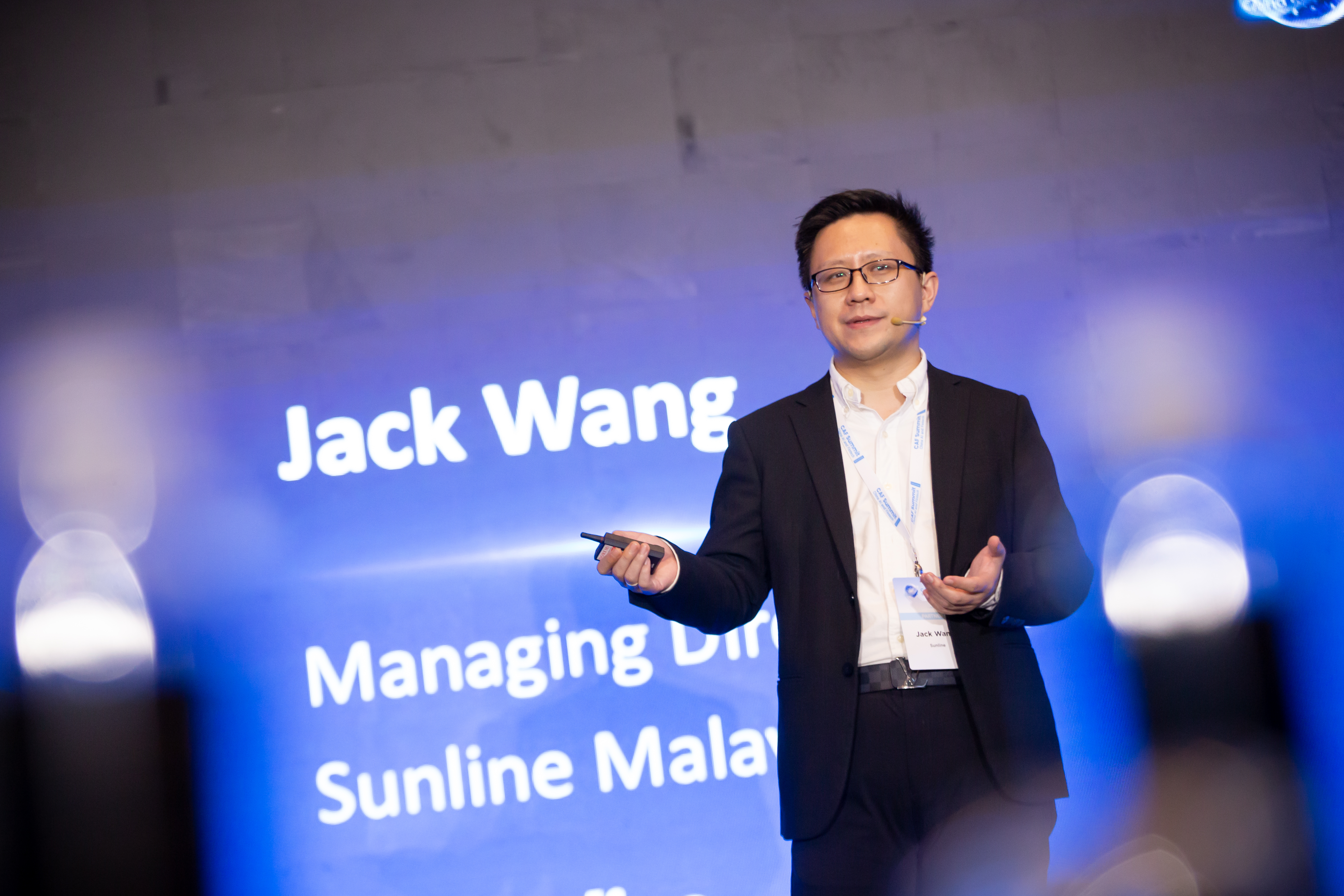
    The summit opened with remarks by Jack Wang, Managing Director, Sunline Malaysia, who highlighted the importance of bridging China’s fintech innovation ecosystem with Malaysia’s banking sector. His remarks set the tone for a programme focused on the balance between innovation ambition and execution discipline.


    The summit gathered over 80 banking leaders, technology executives and ecosystem partners, reflecting strong industry interest in how Malaysia’s financial institutions can move beyond digital initiatives towards more scalable and resilient operating models. Key areas of exchange included core banking modernisation, trusted data quality, AI-driven observability, next-generation distributed databases, BI and AI-enabled data value, mainframe core modernisation and local execution.


    A clear message emerged from the summit: AI adoption will not be defined by models alone. Sustainable value will depend on the readiness of core platforms, the quality of enterprise data, the resilience of technology operations and the ability of partners to translate capability into execution.


    Sunline extends its appreciation to all participating banks, speakers, ecosystem partners and guests for contributing to CAF Summit Malaysia 2026. The participation of OceanBase, FanRuan Software, Cloudwise, Huawei and Cloudpoint Technology Berhad helped shape a focused industry exchange on how Malaysia’s banking sector can approach modernisation with greater clarity, resilience and delivery confidence.


    CAF Summit Malaysia 2026 forms part of Sunline’s ongoing regional engagement with banks and technology partners across Southeast Asia. Through collaboration with China-based technology providers and local integration partners, Sunline continues to support industry dialogue and practical execution around core banking modernisation, data-driven transformation and AI-ready banking platforms.


    About Sunline

    Sunline is a banking software and technology services provider serving financial institutions across core banking, digital banking, big data, financial management and intelligent finance domains. With experience in financial technology innovation and implementation, Sunline works with banks and financial institutions to support digital transformation, platform modernisation, and data-driven business development.

  • Sunline DataMind Integrates Agents and Semantic Modelling to Reshape Intelligent Data Development

    Sunline DataMind Integrates Agents and Semantic Modelling to Reshape Intelligent Data Development

    As banks move from experimentation with generative AI towards production use, the challenge is shifting from what AI can generate to whether it can operate reliably within enterprise data environments. For financial institutions, an AI response is only useful when it reflects the right business definitions, follows governed processes, and can be traced back to an auditable execution path.

    Sunline’s DataMind data intelligence platform addresses this challenge by combining semantic modelling with an enterprise Agent framework, embedding Agent capabilities directly into the platform foundation rather than treating them as standalone tools. The approach is designed to connect business context, data assets, and execution, eliminating hallucinations in large language models (LLMs) and creating a more controlled foundation for AI-enabled data operations.

    From Data Storage to Domain Knowledge

    A common limitation in data lakehouse environments is that models often describe physical tables rather than business meaning. Metrics, dimensions, and entities may exist in technical structures, but the business logic connecting them is not always explicit. This creates ambiguity when AI systems interpret financial concepts or generate queries.


    • Entity-Centric Semantic Layer: DataMind constructs multi-dimensional knowledge graphs centered on core financial entities. By mapping business terminology (such as net interest margin or non-performing loan ratios) directly to physical data execution logic, the platform provides explicit context to the underlying models. This structural alignment eliminates derivation ambiguities and ensures explainable output for every query.


    • Bridging the Knowledge Gap: DataMind addresses model hallucinations at the architectural level by combining a domain-specific semantic layer with deterministic execution protocols. By mapping business terminology directly to physical data execution logic, the platform provides explicit context to the underlying models, eliminates derivation ambiguities, and ensures explainable output for every query.

    From AI Assistance to Governed Execution

    Semantic context addresses what AI needs to understand; the Agent framework addresses how tasks are executed.

    DataMind incorporates six core architecture features for enterprise AI operations, advancing the platform from a conversational tool into an enterprise-grade intelligent workbench:

    • Multi-Tenant Governance: Centralized management of agent assets, knowledge bases, and scheduled workflows across enterprise teams throughout the asset lifecycle.


    • Two-Tier Knowledge Base and Intelligent Retrieval Architecture: Connector-driven integration with existing IT assets utilizing the two-tier architecture to balance knowledge sharing with strict data isolation, while dual-path retrieval ensures the accuracy of financial-grade Q&A. 


    • Plan-Based Execution Framework: Complex tasks are decomposed into defined steps, checked before progression, and recorded for audit purposes. This approach is intended to make AI behavior more deterministic and suitable for production environments.


    • Standardized Capability Packaging: DataMind supports modular packaging of Agent capabilities, enabling standardized circulation and dynamic loading of Agent assets. 


    • Seamless Resource Integration: Support from Agent-Mode-Package specification and the Model Context Protocol (MCP) enables agents to connect with external tools and resources in a standardised way, supporting broader integration across the banking technology infrastructure.


    • Secure Sandbox Runtime Environment: Execution of sensitive data tools within MicroVM sandbox environments, ensuring isolated, policy-compliant execution boundaries.

    Moving Data Operations Towards Automation

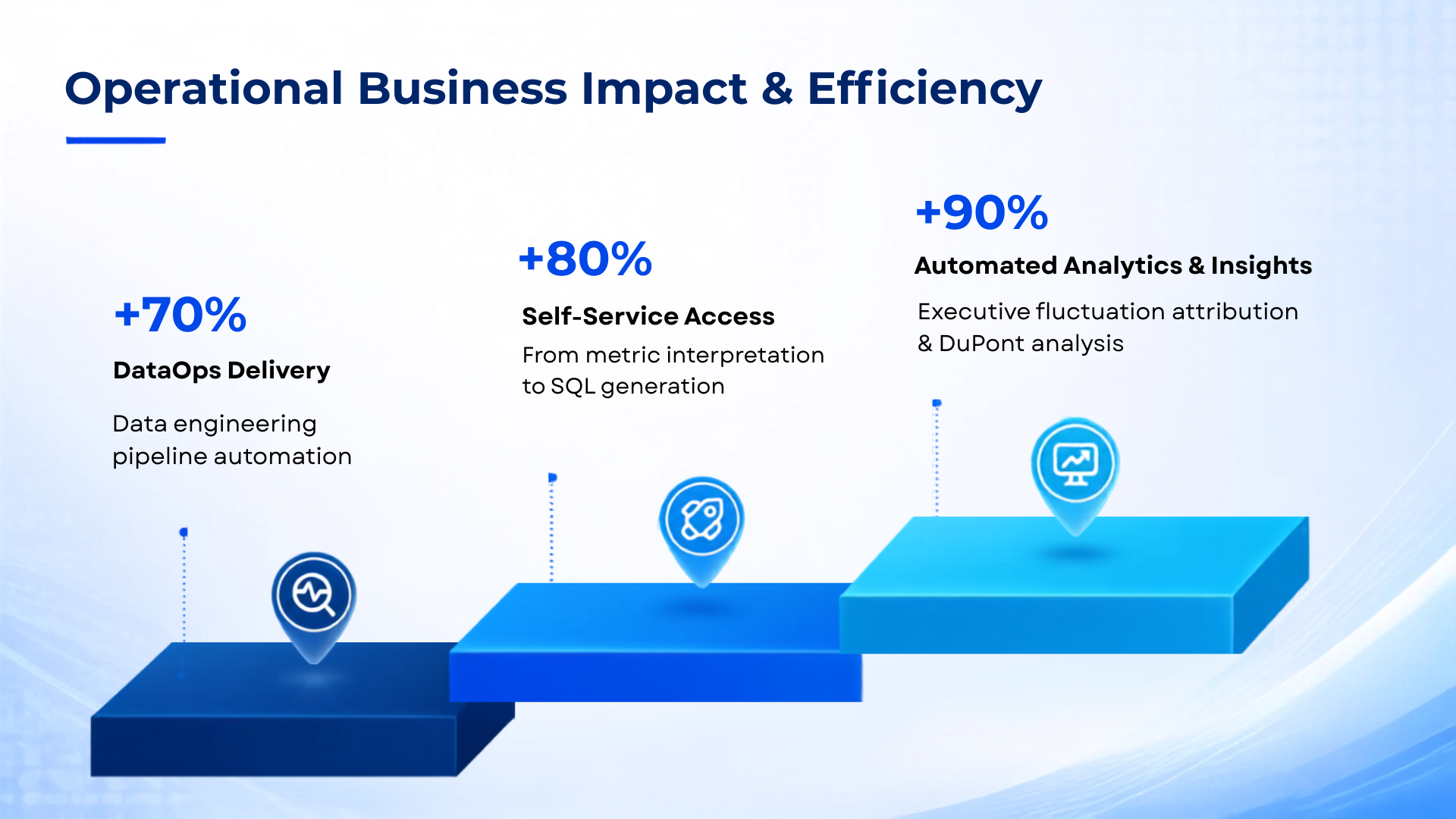
    Deployed within multiple banking environments, DataMind demonstrates measurable productivity gains across three core operational scenarios:


    • DataOps Delivery: DataMind establishes a collaborative mechanism consisting of a Master Control Agent, five categories of Agents covering offline development, real-time development, batch scheduling, data services, and intelligent operations, and an Audit Agent. This mechanism automates an end-to-end closed-loop pipeline creation from natural-language requirements to production deliverables, achieving a 70% increase in data engineering efficiency.


    • Self-Service Data Access: Semantic modelling supports the process from metric interpretation to SQL generation and visualization, with a reported 80% improvement in self-service data access efficiency. 


    • Automated Analytics & Insights: Agents support tasks such as metric fluctuation attribution and DuPont analysis, generating visual reports and accelerating executive insight generation by 90%.

    These results point to a broader shift in enterprise data operations: AI is moving beyond an interface for individual tasks and becoming part of the underlying development and execution workflow.

    Building a More Governed Foundation for AI in Banking

    By integrating semantic modeling with enterprise agent orchestration, Sunline DataMind provides a deterministic bridge between complex raw data assets and strategic decision-making, delivering operational resilience, strict regulatory alignment, and verifiable engineering efficiency. 

    As banks progress towards more AI-enabled operating models, these foundations will become increasingly important in determining whether AI can move from individual productivity use cases into repeatable, enterprise-scale data operations.

  • Sunline Banking Summit Shanghai 2026 Explores the Next Phase of Intelligent Banking

    Sunline Banking Summit Shanghai 2026 Explores the Next Phase of Intelligent Banking

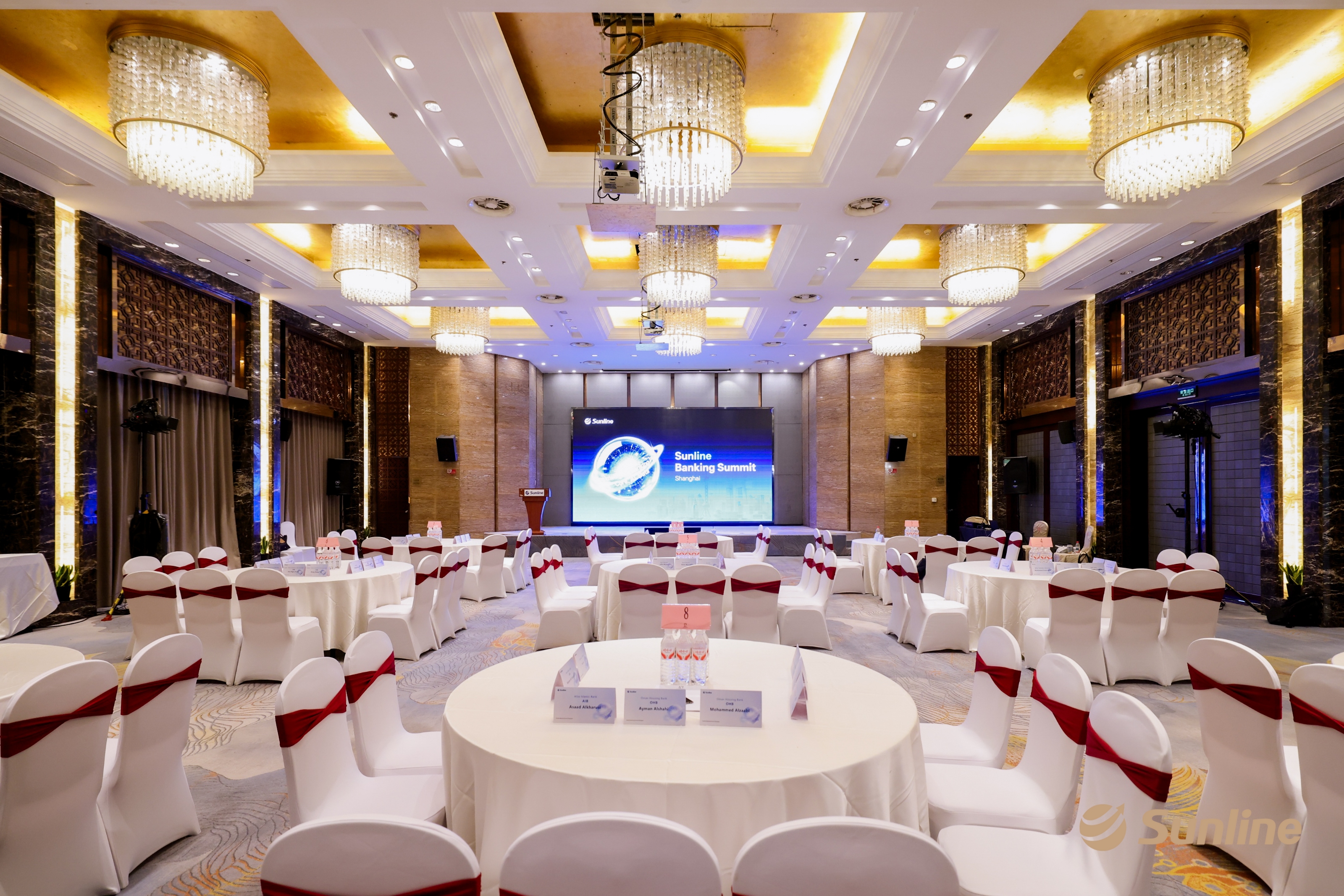
    Shanghai, China, May 19, 2026 – Under the theme “Building Intelligent Banking Platforms”, the Sunline Banking Summit Shanghai 2026 took place in Shanghai Zhujiajiao, gathering senior financial leaders, technology executives, ecosystem partners and industry experts from the Middle East, Central Asia, Singapore, Malaysia, Indonesia, Thailand, Vietnam, Hong Kong and other key markets for cross-regional dialogue on the next phase of intelligent banking.


    Returning to Shanghai for its second year, the gathering underscored Sunline’s growing role as a regional platform where banking leaders and ecosystem partners examine the next stage of technology-led transformation. As banks continue to modernise mission-critical systems, strengthen data foundations and explore the practical adoption of AI, the focus is shifting from isolated digital initiatives to integrated platforms that can support real-time operations, trusted decision-making and long-term resilience.


    Centred on the architecture of intelligent banking, Sunline articulated a platform vision where modern core systems, AI-ready data foundations and governed execution capabilities form the backbone of a more connected financial institution. Its capabilities across future-proof core banking architecture, intelligent automation, trusted AI adoption, data quality management, integrated loan lifecycle management and mainframe offloading reflected how banks can move beyond fragmented transformation efforts towards operating models built for resilience, intelligence and scale.


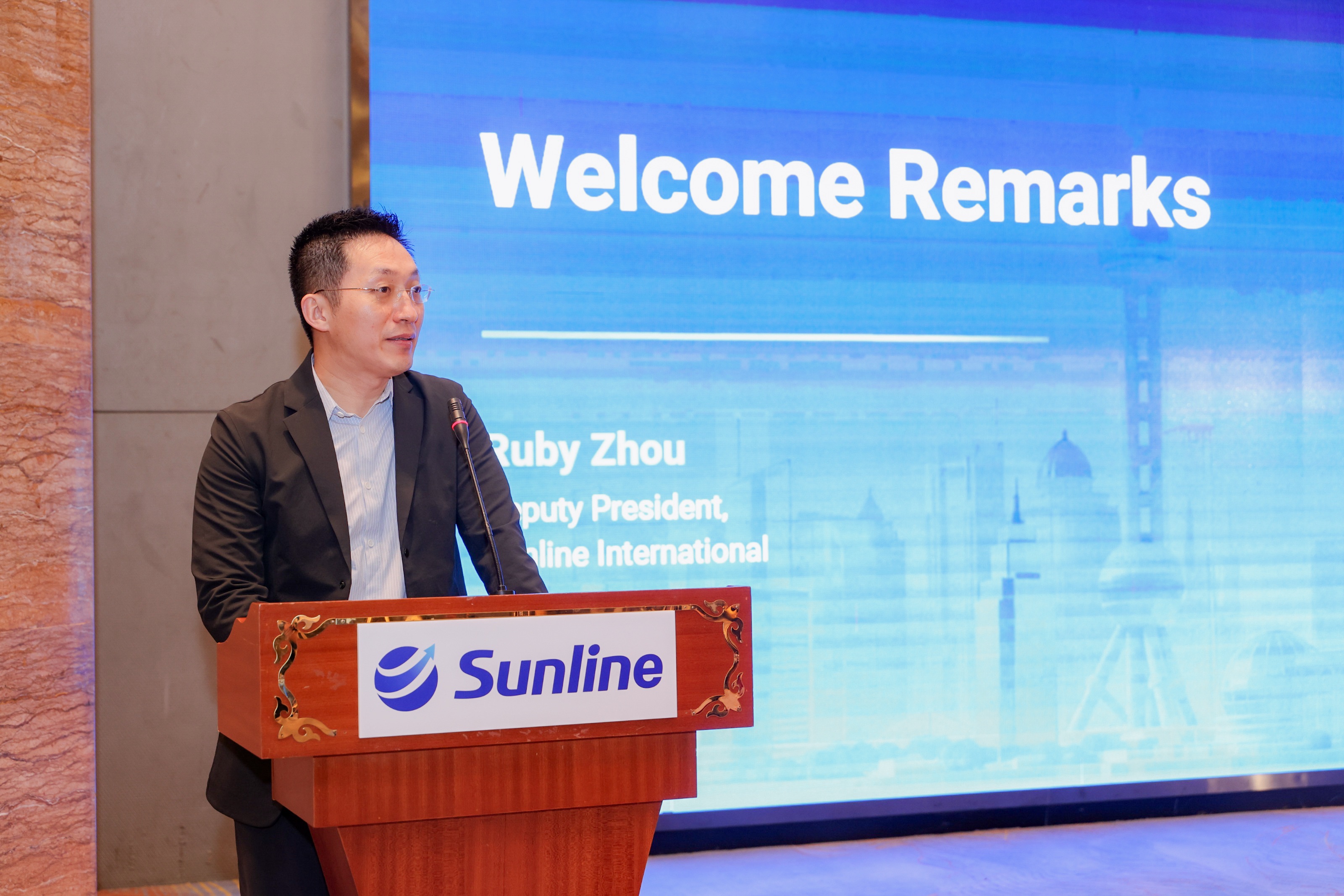
    “Banks have reached a critical point where incremental technology additions can no longer address the structural limitations of legacy systems,” said Ruby Zhou, Deputy President of Sunline International. “The future of banking will be shaped not by the volume of digital tools deployed, but by the strength of the architecture that connects them. Through core modernisation and AI-ready data foundations, we believe banks can move beyond technical debt and build the resilience, intelligence and agility required for the next era of finance.”


    As the banking industry moves into a more intelligent and architecture-led era, the ability to connect core systems, data foundations and AI capabilities will increasingly define institutional competitiveness. Sunline will continue to work with financial institutions and ecosystem partners to shape this next phase of banking transformation, helping banks build the resilience, intelligence and execution capacity required for the future of finance.

  • Sunline at Huawei Thailand Partner Summit 2026: Building the Next Phase of Intelligent Banking Transformation

    Sunline at Huawei Thailand Partner Summit 2026: Building the Next Phase of Intelligent Banking Transformation

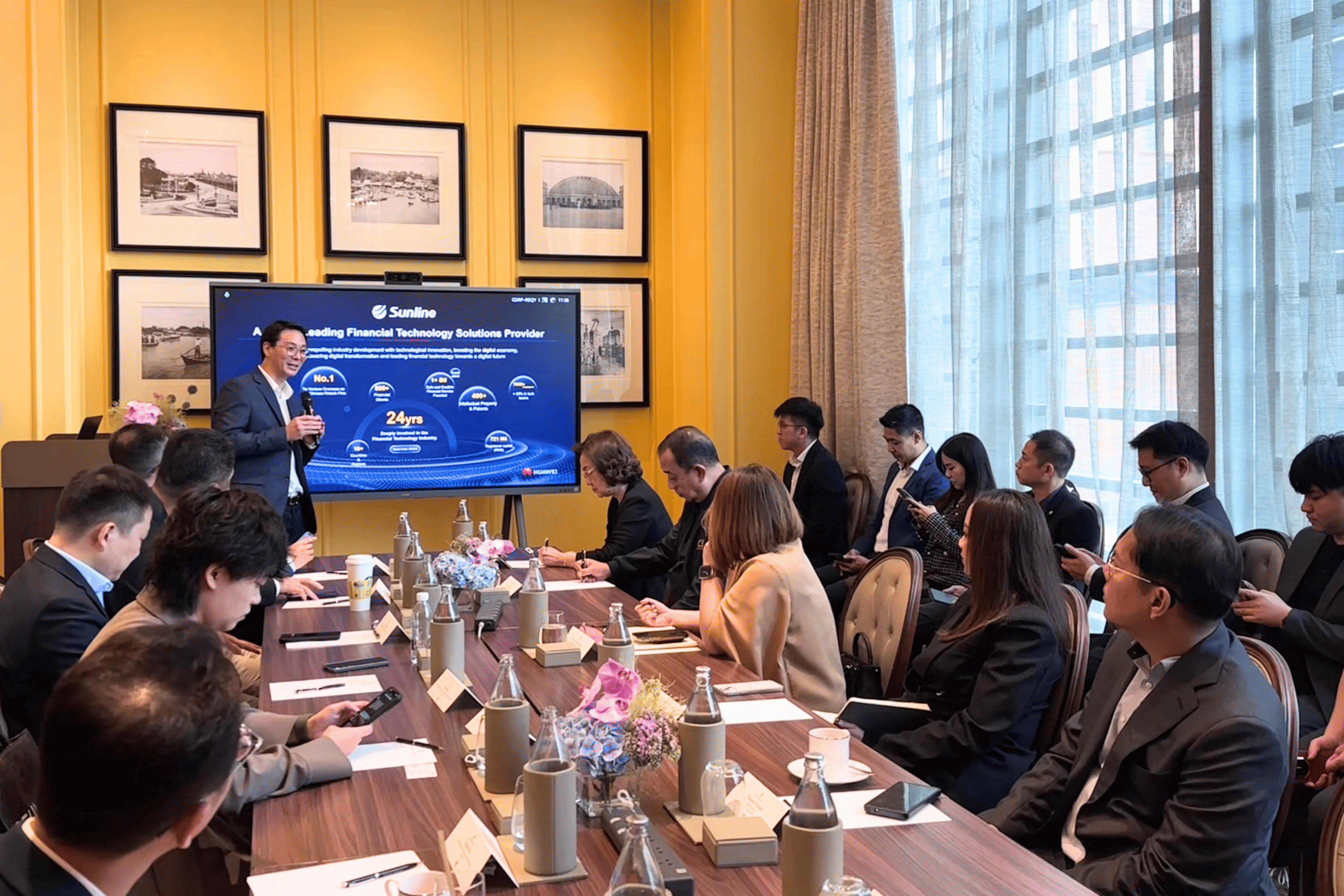
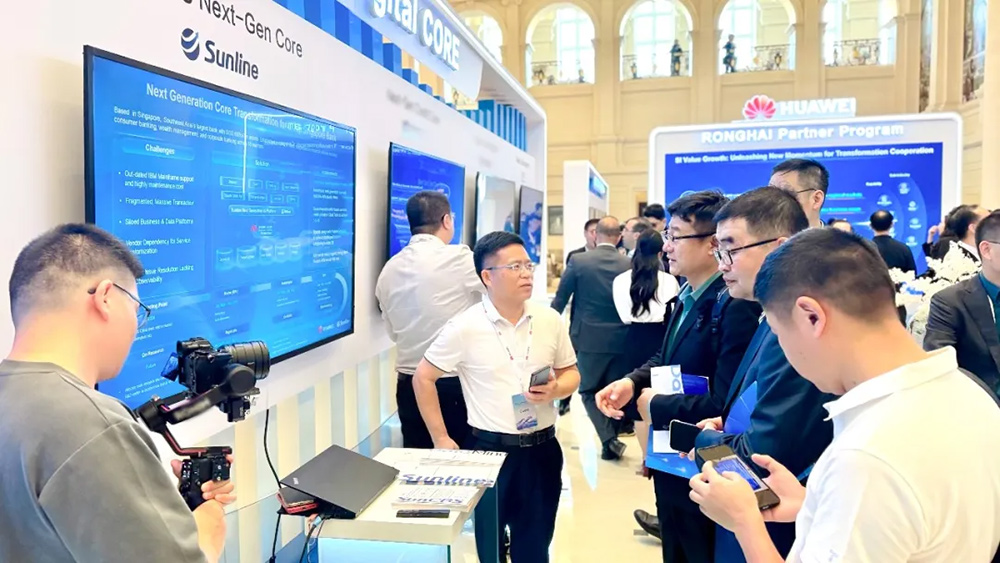
    Bangkok, 8 May 2026 – At the Huawei Thailand Partner Summit 2026 in Bangkok, Sunline joined more than 400 partners from across key industries under the theme “Together, Advancing Industrial All Intelligence”, as ecosystem collaboration continues to advance intelligent transformation and AI-enabled innovation across industries.


    At the “RONGHAI Solution Salon” for the financial industry, Sutee, Country Head of Sunline Thailand, highlighted a recent collaboration between Sunline and Huawei on a leading banking project in Asia, emphasizing how greater convergence across core banking platforms, infrastructure architecture, and ecosystem capabilities can support financial institutions in building scalable, resilient, and future-ready operating environments.


    The collaboration brings together Sunline’s core banking expertise and Huawei’s digital infrastructure capabilities under the Huawei RONGHAI Financial Partner Program. By leveraging the “4-Win” collaboration model, this partnership supports large-scale banking transformation initiatives through cloud-native architecture, integrated data capabilities, infrastructure optimisation, and ongoing co-innovation across the financial services ecosystem.


    As intelligent transformation continues to reshape the financial sector, closer collaboration —driven by the RONGHAI initiative—among financial institutions, technology providers, ISVs, and ecosystem partners is becoming increasingly important. By deepening the “4-Win” collaboration model, we aim to strengthenoperational resilience, accelerating technology modernisation, and supporting sustainable industry development.


    Through its continued participation in Huawei’s Global Financial Partner RONGHAI Programme, Sunline remains committed to deepening strategic collaboration with Huawei, financial institutions, SIs, ISVs, and ecosystem partners to accelerate modernisation initiatives and deliver long-term value in the digital and intelligent era.

  • Redefining the Digital Credit Frontier: Sunline to Power New Digital Lending Platform for a Joint-Stock Commercial Bank

    Redefining the Digital Credit Frontier: Sunline to Power New Digital Lending Platform for a Joint-Stock Commercial Bank

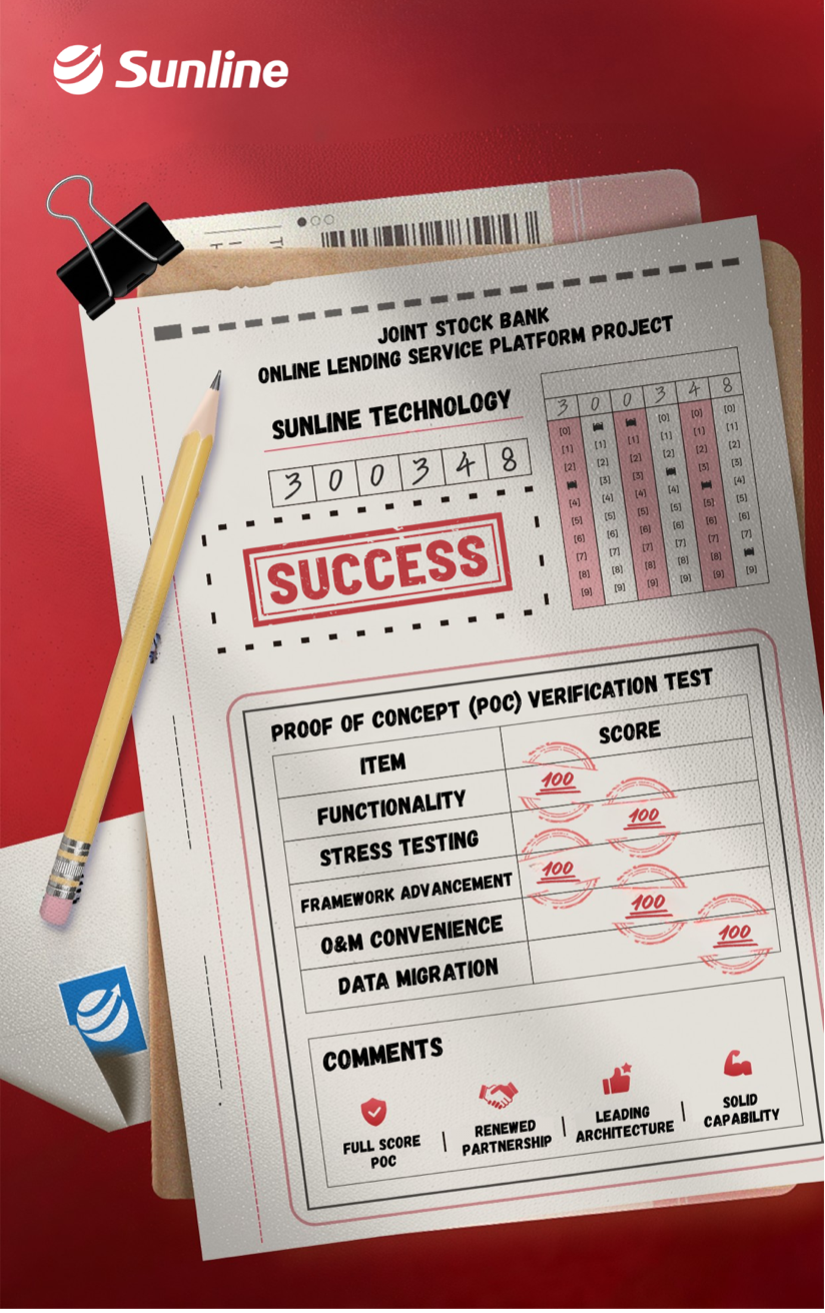
    Demonstrating the power of replacing legacy frameworks with flexible, high-performance execution layers, Sunline recently achieved a perfect score across performance, architectural integrity, and full lifecycle coverage during a rigorous Proof of Concept (POC) evaluation for a major joint-stock commercial bank. By replacing rigid monolithic structures with modern platform architecture, institutions can seamlessly manage peak digital demand across modern lending models while unlocking the building-block agility required for continuous product innovation. 


    Solving the “Scale Paradox” with Sunline’s Execution Layer

    The global banking industry is entering a decisive phase of digital transformation. As customer expectations shift toward real-time, personalized credit experiences, institutions are under pressure to modernize legacy lending platforms that were never designed for scale, agility, or ecosystem collaboration. This tension between traditional infrastructure and the demands of digital-first lending has become a defining challenge for retail banks worldwide.

    Modern retail lending-spanning proprietary digital loans, co-lending models, and credit-as-a-service-requires an infrastructure that can handle extreme volatility in transaction volumes while maintaining rigorous risk controls. Many established institutions face a critical bottleneck: the Scale Paradox. Traditional lending infrastructure was built for predictable, batch-driven operations, not for extreme transaction volatility or ecosystem collaboration. For this specific institution, the objective was clear: replace a restrictive legacy framework with a high-performance digital lending foundation capable of supporting sustainable, large-scale growth.

    A Platform-Based Approach: A Microservices-Led Execution Layer

    Sunline’s engagement centers on building a platform architecture that supports the full lifecycle of digital lending. Moving away from monolithic structures, the new architecture utilizes a microservices and component-based design. This allows the bank to manage the entire credit lifecycle-from automated onboarding and limit management to real-time decisioning and automated accounting-as a series of orchestrated services.


    Key to this methodology is the implementation of a robust execution layer. By leveraging an advanced gPaaS (General Platform as a Service) framework and high-performance batch and online processing engines, the platform functions with “building block” flexibility that allows a bank to iterate on new products as quickly as the market demands. This ensures that the technology stack remains a driver of revenue growth, rather than a bottleneck to innovation.

    Validating Performance at Scale

    During the rigorous POC phase, Sunline’s platform was subjected to high-concurrency stress testing to simulate the demands of modern digital traffic. The results demonstrated a system throughput and response latency that exceeded global benchmarks, confirming the platform’s ability to maintain stability during massive transaction peaks. Beyond raw performance, the evaluation validated the platform’s data migration integrity and its business semantic model, ensuring that complex credit data remains consistent across the enterprise during the transition.

    The Strategic Impact: Toward Intelligent Operations

    The deeper integration between Sunline and the bank underscores a wider industry trajectory: digital lending is evolving into a platform capability that connects banks, fintechs, and partners through shared data and execution layers. By aligning the lending execution layer with the bank’s core transformation, the institution achieves a higher level of operational intelligence and data-driven decisioning.

    Sunline remains committed to driving this industry shift. We are not just positioning ourselves as the center of the ecosystem but as an enabler within it, helping banks build the digital foundations required for lending in an era defined by agility, resilience, and collaboration. In the years ahead, such platform-based approaches will shape how retail credit is delivered: more efficient, more inclusive, and more aligned with the expectations of a digital-first economy.

  • Resilient Banking Through Core and Data:  Sunline at Huawei Global EcoWeek

    Resilient Banking Through Core and Data: Sunline at Huawei Global EcoWeek

    At Huawei Global Financial EcoWeek 2026, where ecosystem leaders from across the global financial services and technology landscape gathered to examine the next phase of financial transformation, Sunline was featured as a key core banking partner of Huawei. Discussions centred on how banks today are responding to rising operational complexity, increasing data demands, and the need for more agile, data-led operating models.

    With twenty-four years of experience in financial technology and an established eight-year strategic collaboration with Huawei, Sunline drew on its track record of delivering large-scale transformation programmes, including a recent implementation for a leading bank in Singapore. As one of the largest banks in Asia by assets, it is consistently recognised among the world’s best banks. These experiences reflect a growing shift towards platform-based transformation in complex and evolving banking environments.

    “Sunline’s partnership with Huawei is grounded in long-term alignment across both architecture and execution. By combining core banking capabilities with a robust infrastructure foundation, banks can modernise with greater certainty while retaining the flexibility to evolve. Through this collaboration, structured and risk-managed transformation approaches have been developed to address key operational and architectural challenges, enabling more scalable and resilient operating models,” said Jack Wang, Managing Director of Sunline International.


    Data Governance as a Foundation for Scalable and Resilient Banking

    As discussed during the Data Intelligence roundtable session, regional implementation experience shows that a standardized and consolidated single source of trusted master data is the foundation for reliable data analysis and AI use cases across intelligent marketing, risk management, operations, and data visualization. Especially when designing a 3-to-5-year data transformation journey, strong data governance empowers more effective data analysis for future business cases. Supported by DataMind, Sunline’s data intelligence platform, this approach spans data standards, quality management, metadata governance, and lifecycle oversight, enabling more consistent and dependable data usage across enterprise functions.

    DataMind establishes a governed data layer between infrastructure and application layers, supporting consistent data flow across both underlying systems and business-facing platforms. This reduces fragmentation, improves cloud integration, and provides a more reliable foundation for operational processes and downstream use cases.


    Integration of Core Systems and Data Architecture

    Through its collaboration with Huawei, Sunline extends this capability by aligning core banking systems with real-time data platforms within a unified, platform-based architecture.

    This alignment enables transactional processing and data management to operate in coordination, strengthening operational resilience and improving consistency across business functions. It also supports a more responsive operating environment, where decision-making is increasingly driven by timely and reliable data.


    As financial institutions modernise their technology environments, core systems, data foundations and infrastructure are increasingly integrated within cohesive architectures. Sunline’s strategic direction, together with ecosystem partners such as Huawei, reflects this shift, supporting more resilient and future-ready operating models across the global banking landscape.

  • Resolving Data Fragmentation: Unveiling the “Semantic Data Layer + Agent” Operating Model for Modern Banking

    Resolving Data Fragmentation: Unveiling the “Semantic Data Layer + Agent” Operating Model for Modern Banking

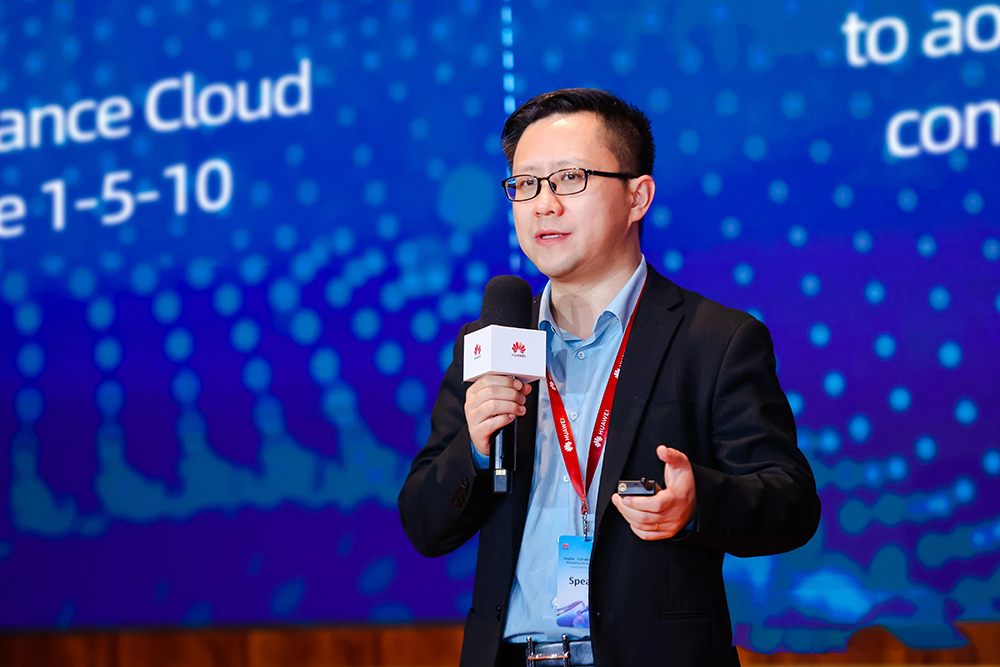
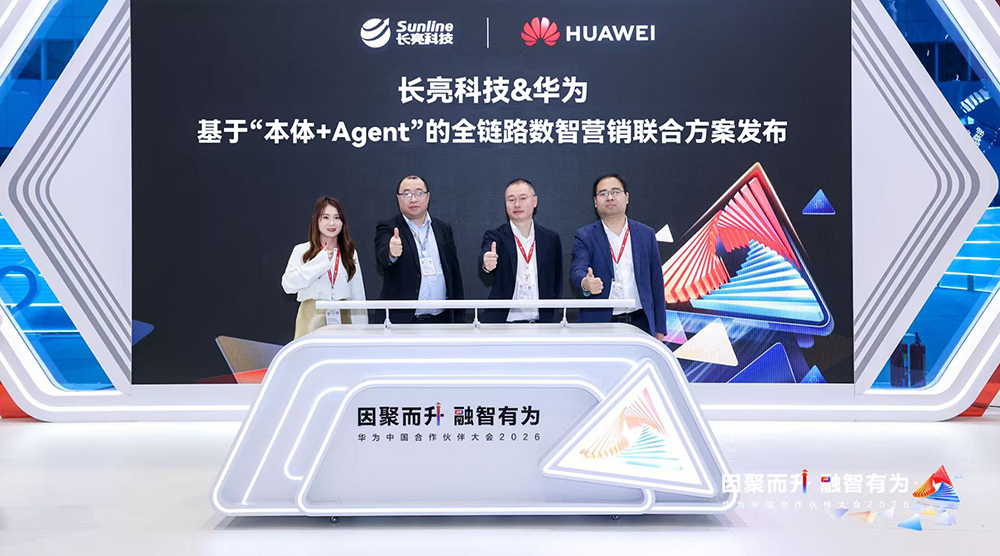
    At the Huawei China Partner Conference 2026, Sunline officially launched the joint “Semantic Data Layer + Agent” Full-Stack Intelligent Marketing Solution with Huawei. The initiative marks a strategic shift for financial institutions, moving from passive “massive data storage” to “proactive intelligent decision-making.”

    The solution integrates the core “Semantic Data Layer + Agent” architecture of Sunline’s DataMind platform with Huawei’s robust infrastructure, including MRS services and DWS databases. Sun Shisheng, Executive Assistant to the Group CEO of Sunline Group, Sunline Group attended the signing ceremony along with Huawei representatives.


    Bridging the Gap to “Intelligent Computing”

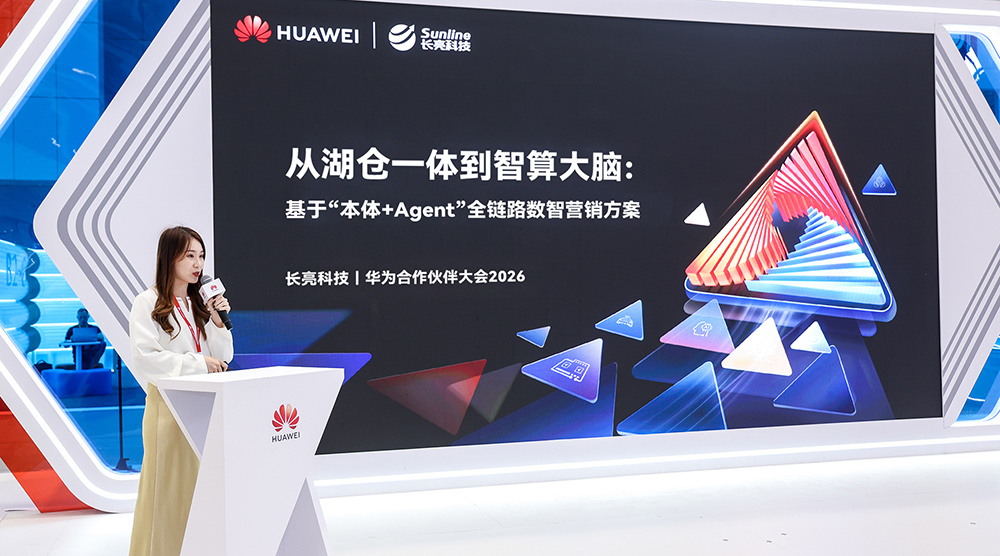
    During a keynote session, Celia Zhou, Solution Director at Sunline, introduced the scheme’s multi~agent collaboration and various application scenarios, highlighting that the era of AI demands a transition from traditional lakehouse architectures to a centralized intelligent computing hub. This new paradigm addresses critical industry pain points such as fragmented customer data, prolonged model deployment cycles, and product homogenization and need misalignment caused by a lack of customer insights.


    Transforming Data into Growth

    By utilizing Sunline’sDataMind semantic data modeling and multi~agent applications, the solution transforms fragmented data into financial data model, a structured data with clear business semantics. This provides the logical foundation for five specialized AI agents:Model, Mapping, Plan, Simulate, and Report Agents. Together, they automate the banking marketing lifecycle, from capturing customer intent in real-time to executing autonomous, precision-targeted actions.

    Proven Business Impact

    The solution has already demonstrated significant ROI in retail wealth management scenarios.Key performance highlights include:

    • Campaign Agility: Launch cycles reduced from days to under 2 hours.

    • Engineering Efficiency: 80% reduction in repetitive SQL development.

    • Market Insight:50% increase in customer persona coverage.

    Foundation of Innovation: Sunline’s APStack & Kunpeng Integration

    In a private session on infrastructure innovation, Sun Shisheng shared Sunline’s success in core production system renovation. He highlighted how the APStack technology platform, natively developed on the Huawei Kunpeng ecosystem, powers core banking, enterprise ledgers, and data asset systems. Sun emphasized that Sunline will continue to innovate alongside Huawei Kunpeng to inject new momentum into the industry’s digital transformation. Looking ahead, Sunline and Huawei remain committed to deepening their R&D collaboration, exploring new AI-driven frontiers to turn data assets into a sustainable engine for financial growth.