Category: News

  • The Rise of Peer-To-Peer (P2P) Financing in South East Asia

    The Rise of Peer-To-Peer (P2P) Financing in South East Asia

    P2P financing is a way for individuals or businesses to request funds from investors via a digital platform. The digital platform is an intermediary between the requestor and the investor. Multiple investors can contribute their funds towards a request made by a borrower. These platforms essentially connect borrowers seeking financing to investors seeking attractive returns.

    From its modest beginning in the UK and the U.S, peer-to-peer (P2P) lending has become a global phenomenon and this alternative financing has experienced an explosive growth particularly in Asia at the turn of the decade. Asia’s large population of smartphone-savvy and unbanked makes it a prime market for financial alternative that leverage digital platforms and technology to provide businesses and individuals with financing opportunities outside of the traditional finance system.

    In KPMG’s 2016 Fintech 100 report, two of the world’s top five fintech companies were Chinese P2P lenders while market for licensed money lenders has increased exponentially over the past five years in countries like Hong Kong, Singapore and Malaysia, filling the void in the countries’ financial system which tended to favour larger enterprises.

    Looking into the maturity of P2P industry in the US, UK and China while targeting its population of around 640 million, the Southeast Asia region is the region many had confidence to foray into. The region is also home to a huge swath of unbanked communities and “P2P platforms can bring the banks to the borrowers’ doorsteps”. However, local element will play a crucial role in the nascent growth of the P2P industry in the region as Southeast Asia is still very fragmented albeit being a huge market of opportunity. Unlike in China, a uniform set of rules and regulations across multiple jurisdictions is not sufficient especially if the industry regulatory frameworks are relatively underdeveloped.

    Many still believe the conveniences and penetration of mobile technology with the younger generation leapfrogging, the time taken for P2P to become mainstream in ASEAN will be much shorter than the time taken for the e-commerce industry to flourish in the region.

    Fundaztic Topped FF18 Semi-finals with Remarkable Presentation of the Revolution of P2P Financing in Malaysia

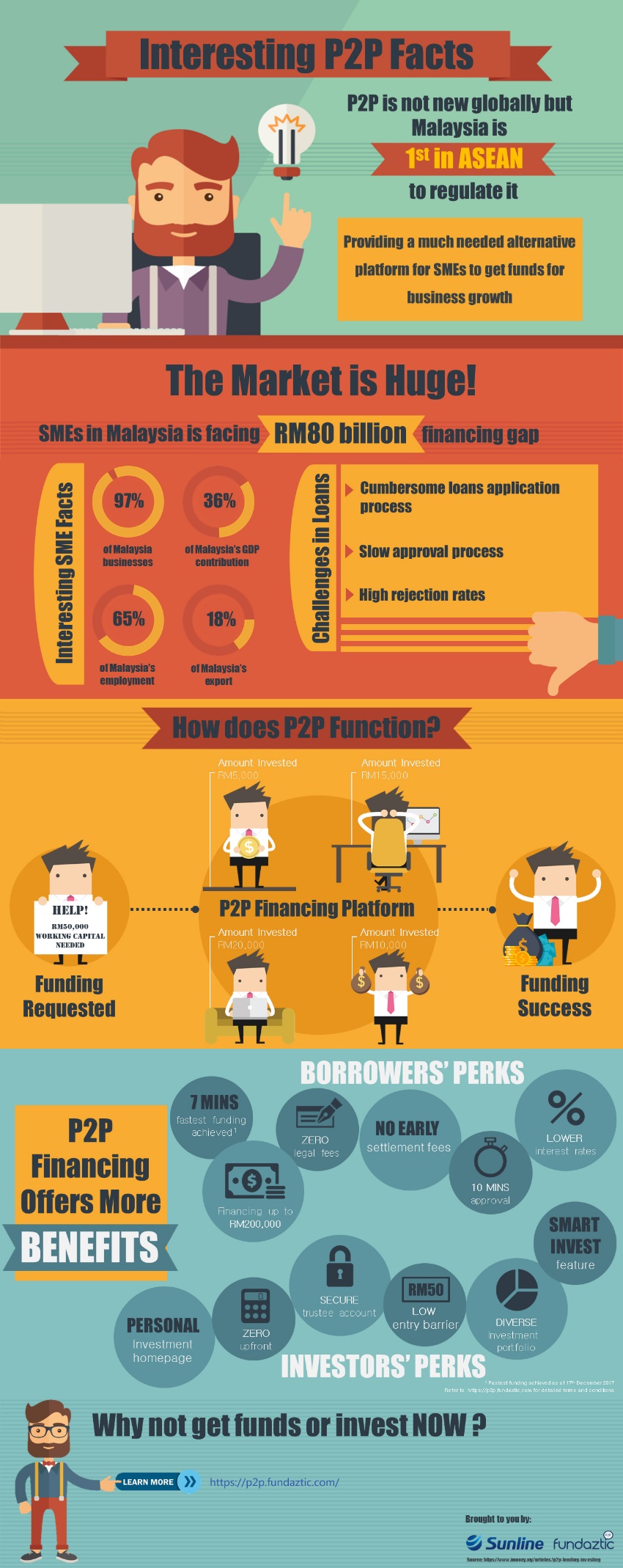
    Although P2P is no stranger globally, Malaysia is the first ASEAN country to regulate it. As an effort to expand financing access for SMEs, the SC Malaysia appointed six P2P operators to run P2P financing platforms Fundaztic is fully owned and managed by Peoplender Sdn Bhd, one of the six recognised market operators licensed by the Securities Commission (SC) of Malaysia to operate a peer-to-peer financing platform.

    Competing with more than a thousand start-ups for the golden opportunity to be on stage in Hong Kong and emerge champion in Next Money Asia 2018 Fintech Finals (FF18), Fundaztic’s mission to “democratize lending and investment by providing rates equitable to risks via reliable big data and technological leverage” aims to enhance access to both financing and investment for businesses. Their insightful presentation at the semi-finals had remarkably depicted how P2P financing is revolutionizing financial services and is paving the way for the future. FF18 is organized through a collaboration between NextMoney and VISA. With the world’s best speakers assembled to cover FinTech designs, innovation and entrepreneurship, FF18 is also the centre stage where the top 24 start-ups globally will be pitching about their company for the grand prize.

    Fundaztic emerged as the champion for FF18 Semi Finals and will be the only Malaysian representative to pitch at the FF18 Finals in Hong Kong.

    Bridging an RM80 Billion Funding Gap in Malaysia

    The number of small and medium enterprises (SME) are rising in parallel to the growing digital economy in Malaysia. Making up to 97% of business establishments, contributing 37% of the country’s Gross Domestic Product (GDP), 65% to the country’s workforce and nearly 18% of Malaysia’s exports, SME plays a major role in the Malaysian economy.

    However, SMEs are currently facing setbacks that significantly restricts their growth. Securities Commission (SC) Malaysia reported a RM80 billion funding gap faced by SMEs. Bearing in mind that SMEs play a critical role in the prosperity of our economy so alternative sources of funding becomes a viable venture.


    How Does P2P Financing Work?

    To simplify the process of P2P financing for an SME, let’s look at an example:

    Company A need RM50,000 working capital for its business. Company A raises this funding request via a P2P financing platform online. On the other hand, this request offers an investment opportunity to potential investors. Interested investor will lend his money to Company A after considering the risk profile and credit assessment. Investors may choose to deposit RM100 or even RM10,000 depending on their risk appetite. The funding continues until the target of RM50,000 is achieved. At this point the offering will be closed, and the funding will be released to the borrower. Company A makes monthly repayments including interest charges to each investor.

    Interest rates are calculated based on the credit assessment and risk profile of the borrower’s company by the P2P financing platforms which requires disclosure of key details including but not limited to financial information, business plans and purpose of funds. SC Malaysia has declared that interest rates to be capped at 18% per annum with credit scoring methodologies made transparent to both investors and borrowers. Charges for services rendered by P2P financing platforms may vary. Digital platforms greatly expand the number of investors and funding can typically be obtained within 1-2 weeks after submission.

    Like any other investments, risk is always present in P2P financing. Instances where borrowers default on their payments will leave investors in losses. However, wise assessments on the SME prior to investing will minimize such risks. Successful P2P investors have hundreds of loans across different P2P financing platforms and most reinvest their returns.

    For borrowers, they can get better rates on their interest charges while investors can get better returns on their investments. It’s a win-win situation!
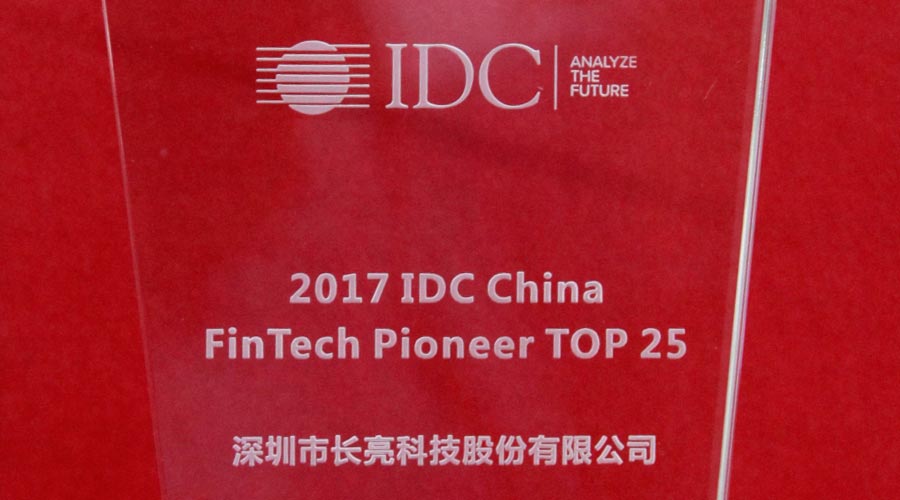
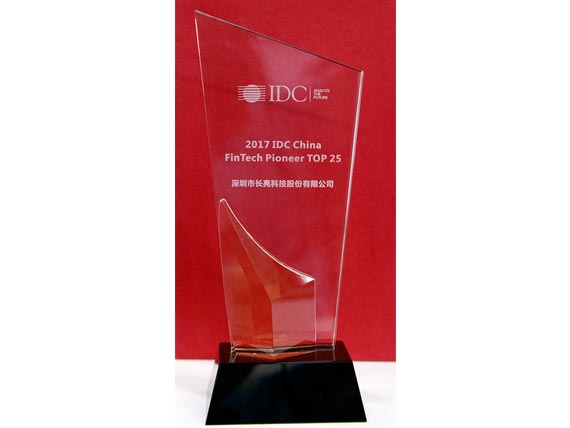
  • Sunline awarded “2017 IDC China FinTech Pioneer TOP 25”

    Sunline awarded “2017 IDC China FinTech Pioneer TOP 25”

    Sunline (Stock Number: 300348)
    awarded “2017 IDC China FinTech Pioneer (for financial technology) TOP 25” for
    being one of the world’s leading third party independent research institute in IT.
    Even though this is the first of such campaign for IDC in China, Sunline being
    the world’s leading financial IT service provider has been recognized for their
    contributions as one of the top FinTech pioneers.


    IDC believes that digital
    transformation is an inevitable course for China’s financial industry. Big
    data, cloud computing, mobile technology and social network as representative
    of the third platform and its foundation of 6 major technologies including 3D
    printing, robotics, internet of things (IOT), AR/VR, cognitive system and next
    generation security, will become the tools for digital transformation.


    Rooting on the historic changes of China’s financial industry
    triggered by science and technology, IDC select the nominees for the top 25
    pioneers based on the following 3 criteria:
    1. Concentration on financial science
    and technology: Income from financial technology should account for 50% or more
    of the total revenue of the company.

    2. Financial technology innovation:  Paying attention to the application of big
    data, cloud computing, mobile technology and social network as the
    representative of the third platform
    its
    foundation of 6 major technologies including 3D printing, robotics, internet of
    things (IOT), AR/VR, cognitive system and next generation security as the
    innovation accelerators in the
    financial industry; application of block chain and artificial intelligence
    technology innovation and financial industry; as well as innovation in the
    application of traditional business solutions.

    3. Acceptance of users in the financial industry: Nominees
    must already have some successful cases as well as received recognition and
    praise from financial users.


    As a leading financial IT service provider
    to more than 400 financial institutions worldwide, Sunline has continuously
    increase their efforts in R&D while actively joining the wave of the market
    change. The industry is well aware that traditional financial institutes’
    demand towards digital banking has surged due to the rise of FinTech and
    traditional core banking system can no longer support their business
    development. To cater for the changing needs of the traditional financial
    institutions, Sunline has successfully launched their digital banking system,
    big data solutions, innovative APP products with the application of big data,
    artificial intelligence and AR technology.


    Digital banking system created a precedent platform for domestic
    internet banking.  The overall solution
    of the system includes digital core system, internet financial services
    platform, internet pre-platform and the internet unified payment platform. This
    technology platform solves issues of internet based financial services for all
    kinds of financial customers, specially built to help traditional financial
    institutions achieve rapid adaptation and transformation to meet the demand of
    internet era.

    In terms of big data applications, Sunline led by a team of
    business data expert team, provides leading solutions like big data analysis,
    data warehousing and business intelligence; helping financial institutions to customer-centric
    services, improving their core competitiveness by increasing market insight
    ability, risk control ability, profitability and financial innovation ability
    and ultimately create more business values.


    Sunline is also the first in the industry to develop TinyServer
    products to solve issues related to rapid development of back-end servers. These
    products support plugins such as WeChat, Alipay, Gaude, Apple etc sharing,
    payment and landing platforms.


    IDC has announced the annual 2016 China Banking Industry IT
    Solutions Market during the “2017 China Financial Industry Transformation and
    Innovation Summit & Awarding Ceremony”. Sunline ranked the 6th overall and 4th in core business. IDC senior research manager also
    expressed Sunline being one of the top in the industry with rapidly growing and
    expanding businesses.


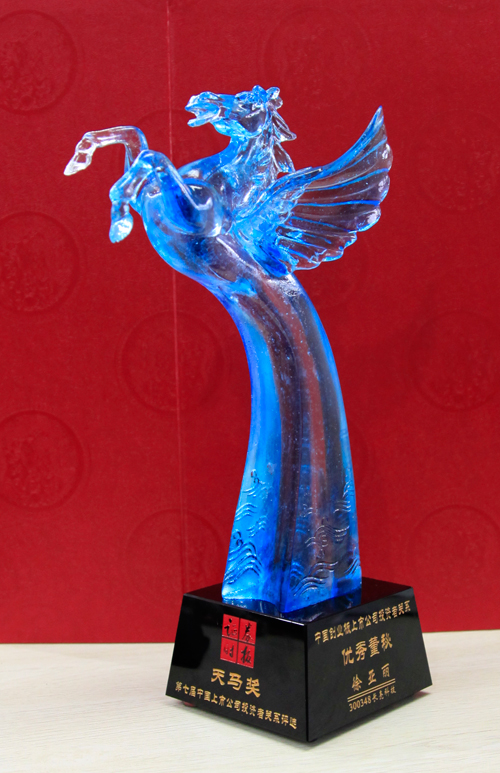
  • Ms Xu Yali from Sunline awarded “2016 Taurus Best Secretary Award”

    Ms Xu Yali from Sunline awarded “2016 Taurus Best Secretary Award”

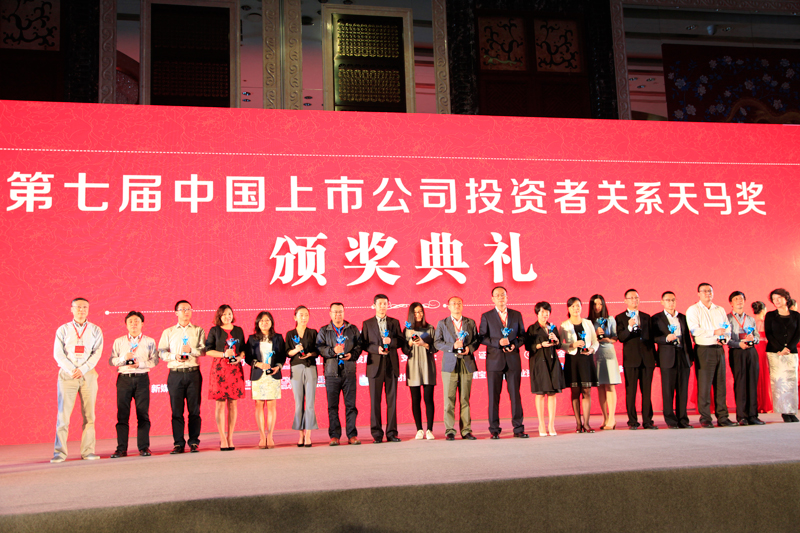
    China Securities Journal held its 19th Taurus Forum and Award Ceremony for Listed Companies” in Guilin this year.
    During the ceremony, the four classic awards 2016 Taurus Top 150 Investment
    Value, 2016 Taurus Wealth Leadership Award, 2016 Best Secretaries Award and
    2016 Taurus Best Investor Relations Management were announced.


    Ms Xu Yali, secretary to the executive vice
    president and board of directors of Sunline, has in recent years assisted the
    company in completing IPO, major mergers and acquisitions and promoting
    refinancing of projects, to be awarded “2016 Taurus Best Secretaries Award”.
    Winning this award is not only due to Ms Xu’s professional competence, diligent
    and positive attitudes, but also because of the exponential growth of Sunline
    through its performance, merger and acquisition to put forth more attention and
    recognition from the capital market. Winning this award is not only a display
    of personal capabilities, but also the embodiment of the overall strength of
    science and technology.


    Sunline as a leader in financial
    information industry, depends on the excellent leadership to accelerate
    innovation and further promote the development of global financial information.


  • Sunline Convenes Summit to Map Out Leading Companies Financial Future

    Sunline Convenes Summit to Map Out Leading Companies Financial Future

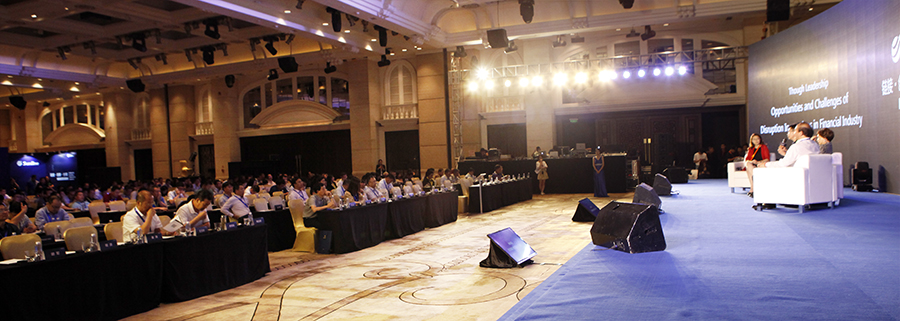
    27 July 2017 – Shenzhen, China – Leading Banking Software and
    Technology Services Company, Sunline recently hosted the Sunline Global
    Financial Summit 2017 titled “Connect. Reinvent. Collaborate” at the
    InterContinental Shenzhen Hotel OCT from July 27th to 28th 2017.

    More
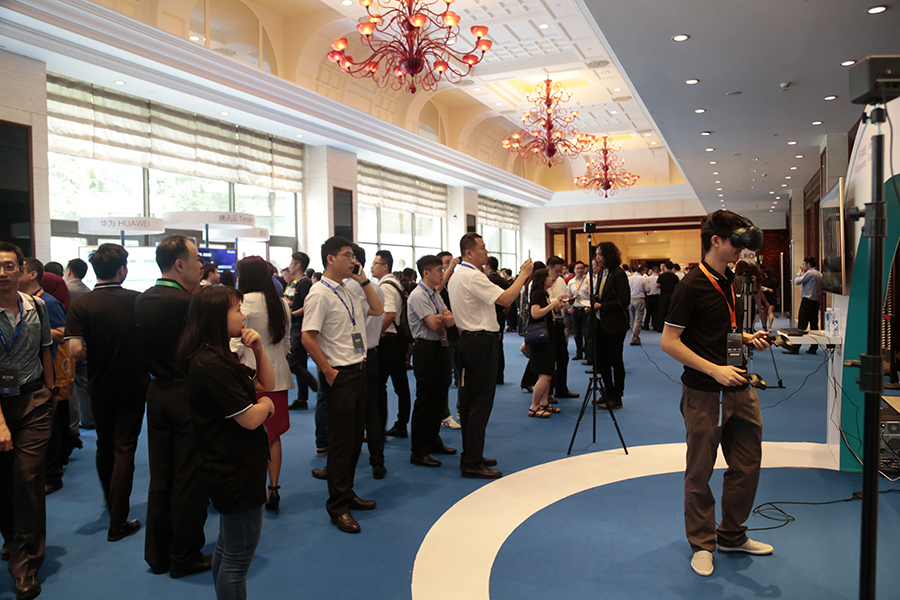
    than 300 delegates comprising of IT and finance leaders convened at the
    financial summit that is centered on the rise of FinTech, digital
    banking systems and end-to-end functionalities which have caused a
    complete restructuring of the global innovation economy. The 2017 Global
    Sunline Financial Summit has allowed for opportunities and challenges
    for each delegate to discover the emerging impact, trends and challenges
    through shared by forward-thinking financial industry leaders and
    experts.

    The summit also saw Sunline signing a joint venture
    agreement with Indonesia’s leading ICT infrastructure providers,
    MasterSystem to jointly ride the wave of financial technology
    development in the Indonesian market. Sunline’s strategic partners
    Tencent, Huawei and DaoCloud attended the event, and demonstrated their
    support to the ever-growing demand in the field of financial IT
    solutions.

    The continuous development of technology in the
    information age along with the rapid development of science and
    innovation, financial technology to big data, cloud computing,
    artificial intelligence (AI), block chain, AR / VR and other
    technologies have disrupted the financial services industry. Market data
    indicates that Chinese mobile payments in 2016 were 50 times greater
    than those in the US due to the rapid adoption of “mobile payments”. As
    leading financial IT experts and driven with a purpose to make banking
    relevant, Sunline has over 15 years of experience in developing core
    banking systems spanning digital banking, securities, insurance, funds,
    asset management, internet finance and other financial technology
    services in the IT industry.

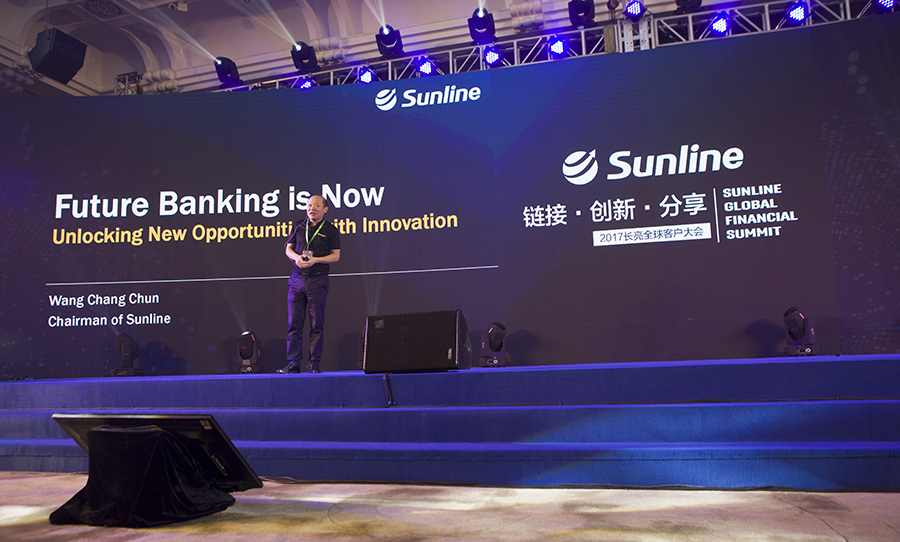
    During the financial summit, Mr. Wang Chang Chun, Chairman of Sunline,
    delivered a speech on the topic “Future Banking is Now – Unlocking New
    Opportunities with Innovation”. The financial delegates, together with
    Sunline, as well as other representatives used this opportunity to share
    insights on Insurtech, Commercial Bank Asset and Liability Management,
    Finance, Fintech vs Internet Finance, Financial AI, Financial Big Data,
    Mobile Finance, Block Chain technology and other wide-ranging topics
    that were well-received and formed a turning point on how enterprises
    can apply best practices and solutions to collaborate more effectively
    across finance focused models. For the first time in the industry the
    event brought topics such as how VR and AR could transform the future of
    the financial technology industry paired with case studies and
    effective solutions to provide end-to-end, flexible and fully integrated
    digital business solutions.

    Sunline for the past 15 years have actively responded to trends
    and innovative solutions, thus finding the drive to ride the financial
    technology wave – whether it is pioneering to eliminate any
    technological challenges or independently attaining IP rights to China’s
    first-generation JAVA based core banking systems. With mobile
    penetration outpacing desktop Internet usage, the mobile industry
    payment is poised for growth, thus resulting in demand for comprehensive
    adaptable IT solutions in the form of mobile apps such as WeChat, PC
    and mobile banking to online financial platform services and risk
    management. In this regard, Sunline has already deployed features and
    tools that have help to grow and transform 400 financial institutions
    both local and globally.

    The construction of the digital banking systems has allowed for Sunline Group to receive recognition on all fronts starting with “IDC China FinTech Pioneer Top 25”, “China’s Top 100 Software Vendor”, “Forbes China 2017 Top 100 Potential Listed Companies” and “Top 10 Leading IT Service Provider In The Financial Industry” among others.


    With a single-minded focus strategy, Sunline has expanded to Hong Kong, through the establishment of investments, mergers and acquisitions and other forms of integration, to create seamless product developments, sales, delivery, operation and management under one roof. One of the main company’s focus is to expand its professional services and cover the core banking financial technology systems in line with international standards and expanding P2P lending systems to other international markets.

    Chairman of Sunline, Wang Chang Chun said that having been in the financial technology industry for the last 15 years, the group has accumulated a deep sense and commitment to the financial technology industry relying on the company’s legacy, values and synergy. Combined with the velocity of change in the financial industry, the potential to ride the future of technology is promising.

    “Enterprises will seek to reinvent their solutions by integrating the latest technology trends and the industry best practices to ensure high quality innovative financial services to battle with the competitive market.  As such, Sunline will continue to uphold its mission to create value for customers and to strive for customer-centric concept to deliver financial services in a comprehensive and secure manner,” added Mr. Wang.

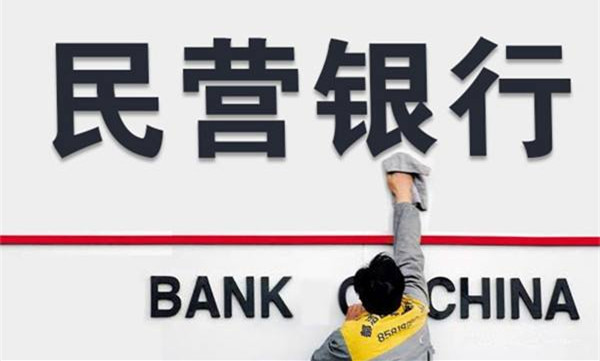
  • First private bank in Northeast China starts operation

    First private bank in Northeast China starts operation

    CHANGCHUN – The first private bank in
    China’s rust belt, an industrial area in the northeast had officially started
    operation on Tuesday, as the first approved the establishment of the northeast.
    Headquartered in Jilin, Yillion Bank was approved in December 2016 by China’s
    banking regulator and co-sponsored by at least two private capital providers.

    Yillion Bank positioned itself as an
    intelligent internet bank, intending to base at the northeast and penetrating
    nationwide. The lender mainly attracts deposits from personal consumers and
    provides financial support to small and micro firms. In the future, big data will
    be embedded deep into product development and operations management of Yillion
    Bank.

    In the recent years, China has approved a
    pilot scheme to set up five private banks to give private capital a bigger role
    in the country’s financial system. Nationwide, 17 private banks have been given
    opportunities for reformation and development.

  • 353.6 Billion worth of “Fat Ang Paos” sent out during banks bonus frenzy

    353.6 Billion worth of “Fat Ang Paos” sent out during banks bonus frenzy

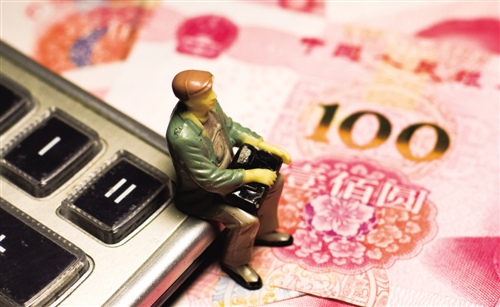
    According to public information, 25 listed
    banks shared out bonuses totalling 353.6 billion Yuan this bonus season.


    Among them, Industrial and Commercial Bank (ICBC)
    of China was the most generous, paid bonuses exceeding 80 billion Yuan. Bonuses
    from China Construction Bank, Agricultural Bank of China, Bank of China, Bank
    of Communications, China Merchants Bank, Industrial bank and CITIC bank bonuses
    also exceeded ten billion.


    ICBC dividends over 80 billion

    Listed banks are ushered into their bonus
    season in June and July, with none left out as all of them presented their
    bonus scheme. According to Flush’s (300033, stock it) statistics, 25 listed
    banks will be pay out 353.6 billion Yuan with an average distribution of cash
    dividends ratio of 26.7%.

    ICBC is the top in dividend payout, with a
    total of 83.506 billion Yuan. ICBC 2016 annual distribution plan for each 10
    shares were paid out 2.343 Yuan (including tax) with a cash dividend ratio of
    30.5%. Judging from the performance over the past three years, ICBC’s bonuses
    have maintained above 30% with the cash dividend in 2014 amounted 91.26 billion
    Yuan with a dividend ratio of 33% and cash dividend in 2015 amounted 83.15 billion
    Yuan with a dividend ratio of 30.3%.

    Central Huijin Investment, China Securities
    Finance, Sycamore investment, Yifangda Fund Management and China Merchants
    Fengqing Flexible Allocation Mixed Launched Fund together held on 129.62
    billion worth of shares. According to share out bonus scheme, their total
    profits amounted 30.37 billion Yuan with the shareholders occupying 36.36% of
    the share out bonus.

    In the bonus share out frenzy, Ping An
    Insurance, Anbang Life Insurance and China Life Insurance respectively holding
    4.32 billion shares, 390 million shares and 317 million shares, were each paid
    out dividend amounting 1.01 billion Yuan, 91.377 million Yuan and 74.273
    million Yuan.

    Among the top four banks, China
    Construction Bank has the highest absolute dividend per share, with the highest
    reaching 0.278 Yuan per share. According to the final number of shareholders, the
    amount of share out bonus was 69.503 billion Yuan with cash dividend ratio of
    30.03%.


    City commercial banks dividend higher than
    agricultural banks

    Last year, city commercial banks and
    agricultural firms were listed one after another. Dividends showed city
    commercial being far higher than agricultural firms.

    Among the city commercial banks, Bank of
    Shanghai is the “most generous”, according to its published annual
    profit distribution plan. By the end of 2016, the total share capital base at
    6.4 billion shares. 5 Yuan cash dividends (including tax) is paid out for every
    10 shares and capital reserve is 10 shares for every 3 shares. By this
    calculation, the Bank of Shanghai dividends amounted 3.2 billion Yuan.


    Bank of Jiangsu ranked second.

    Bank of Jiangsu paid 1.78 Yuan for every 10
    shares with a total of 2.055 billion Yuan of cash dividend distributed. The big
    dividends of the bank benefited a lot of shares of listed companies. Huaxi
    Holdings, announced on June 7 to hold Bank of Jiangsu’s 249 million shares, accounting
    for 2.16% of its total equity. According to the above scheme, Huaxi may obtain
    44.288 million Yuan of cash dividends. Su Changchai A also reported on the same
    day to owning 38 million of Bank of Jiangsu’s shares. The company may obtain
    6.76 million Yuan cash dividends. At present, the company has received the
    dividends and recognized as investment income.


    For agricultural banks, Bank of Changshu top
    the list. The bank intends to distribute cash dividend of 1.80 Yuan for every
    10 shares (including tax) with a total cash dividend distribution of 400
    million Yuan. Bank of Wuxi on the other hand plan to distribute 1.5 Yuan for
    every 10 shares, amounting a total cash dividend of 277 million Yuan.


    Even with an average performance last year,
    Jiangsu Zhangjiagang Rural Commercial still distributed dividends as
    “sincerity”. As reported in April 28, dividend distribution is based
    on the total share capital of 1.808 billion shares in December 31, 2016 with 1
    Yuan (including tax) distributed for every 10 shares. Total distributed cash
    dividend amounted 181 million Yuan. According to this calculation, the cash
    dividend amount accounted for 26.22% of the company’s net profit.


    Bank of Wujiang lacked bonuses, with only for 0.6 Yuan paid out for every
    10. Total distribution of cash dividend amounted 67 million Yuan, 3 shares per
    10 shares.


    Although there are plans for share out
    bonuses, but investors should avoid speculations. At present, the dividend and
    dividend income of listed companies shall be differentiated and individual
    income tax policy shall be implemented. Among them, for more than 1 years of
    ownership, free of personal income tax; For a period of less than 1 months and
    1 months to 1 years, the actual tax burden is 20% and 10%.


    “Due to lack of flexibility, retail
    banking stocks have not been too favourable. However, institutions are very
    fond of banking stocks, such as QFII, insurance, social security funds and so
    on,” Snowball Finance General Manager Li Changmin said. Based on the
    current observation, bank stock valuation is low due to high margin of safety. This
    is shown in the recent market adjustment, whereby not only has the banking
    sector not been implicated, it has risen steadily; In addition, 4% to 5% of
    dividends a year refer to a very stable organisation.

  • 12 Central Enterprises Signed Debt-to-Equity Swap Agreements with Banks

    12 Central Enterprises Signed Debt-to-Equity Swap Agreements with Banks

    Central enterprises have presented brilliant performance in the first half of the year, hitting new highs in both revenues as well as profits. 12 central enterprises have signed framework agreement with banks on debt-to-equity swap, speeding up the restructuring and consolidation of these central enterprises. While trying to maintain growth, central enterprises are paying more attention to risks control as well as the quality and benefits of improvements.

    Shen Ying, chief accountant of the State-owned Assets Supervision and Administration Commission (SASAC) indicted at the press conference of the State Council Information Office held on July 11 that SASAC is more concerned about whether advancing the restructuring can meet the expected results. If the restructuring of central enterprises is smooth and the results can meet expectations, these enterprises will play a better role in the future.

    Central enterprises have initiated their key restructurings this year with China National Nuclear Corporation and China Nuclear E&C Group being the first to propose their strategic restructuring. Subsequently, Sinolight Corporation and China Poly Group have been rumoured to follow suit. The consolidation and restructuring of central enterprises have sped up since June.

    Shen indicated that in the recent years, the consolidation and restructuring of central enterprises are mainly conducted in the following forms. Firstly, through associations between strong enterprises. Two enterprises with matching size in the same industry can reduce repeated investments and construction, and restructuring and consolidation resulted in a reduction of operation cost through. Secondly, consolidation through mergers. Thirdly, through restructuring of upper and down-streams of industrial chains. Industrial layout can be improved and market fluctuations will be prevented. For example, the restricting of raw materials and processing enterprises.

    Shen also pointed out that restructuring of central enterprises is not a simple consolidation. There are still a lot of work to do after the restructuring. The coordination in the capital market will also be essential for groups with many listed companies.
    The debt risks of central enterprises are of high concerns. SASAC’s statistics show that as at the end of 2016, the asset-liability ratio of central enterprises was 66.6 percent, which is 0.1 percentage points lower than 2015. As at the end of March 2017, the asset-liability ratio of central enterprises was 66.5 percent, 0.1 percentage points lower. Based on the statistics, the overall debt risks of central enterprises are within control. Hence, SASAC has been highlighting the swap of debts into equities many times.

    “SASAC is always asserting the importance on risk prevention of central enterprises as risk prevention is of significance to stable economic growth. It controls liability ratio and liability scale of some enterprise with huge amount of liabilities through linkage of budget, assessment, wages and investment management.” Shen pointed out at the news conference. SASAC has done a lot in deleveraging, like driving enterprises to optimize their capital structure, encouraging them to finance from capital market via launching IPO and issuing stocks to improve capital structure, supporting them to conduct asset securitization business, and advancing them to collect development fund by vitalizing existing funds to reduce dependence on liability as much as possible.

    Shen disclosed during the conference that 12 central enterprises have signed framework agreement on debt-to-equity swap. Some central enterprises such as China Baowu Steel Group Corporation and China First Heavy Industries have made positive achievements in such debt-to-equity swap program. Overall liability ratio of central enterprises keeps sable, debt structure is being optimized and solvency indicator is also improving.

    In terms of de-capacity, Shen pointed out that the SASAC and central enterprises focus on the main topic of deepening supply-side structural reform, carry out key tasks of cutting overcapacity, destocking, deleveraging, lowering costs and improving weak links, accelerate structural adjustment, transformation and upgrading, and strengthen core competitiveness and ability of sustainable development.

    Firstly, the implementation of tasks to cut overcapacity has been taken seriously. In the first half of the year, they totally reduced overcapacity of iron & steel industry by 5.95 million tons and have superseded the annual task. They cut overcapacity of coal industry by 6.59 million tons and restructured the capacity of coal industry by 13 million tons. Secondly, they conducted work on “zombie enterprises” and enterprises in dire straits. They put forth proposal on disposing “zombie enterprises” and governing subsidiaries in dire straits to ensure positive results. Thirdly, they move quicker in tackling historical questions. Separation and transfer of water, power and heat supply and property management have been completed by over 50 percent. Fourthly, they invest more in strategic emerging industry. They mainly made investment in strategic emerging industry, advanced manufacturing industry, modern tertiary industry, infrastructure and people’s livelihood guarantee field. Investment made in new energy, equipment manufacturing, scientific research and modern tertiary industry increased by 4.4 percentage points. There were more than 500 platforms for mass entrepreneurship and innovation as well as over 200 incubators and scientific industrial parks for mass entrepreneurship and innovation were established. They also initiated and joined in over 200 funds to lay good foundation for future development.

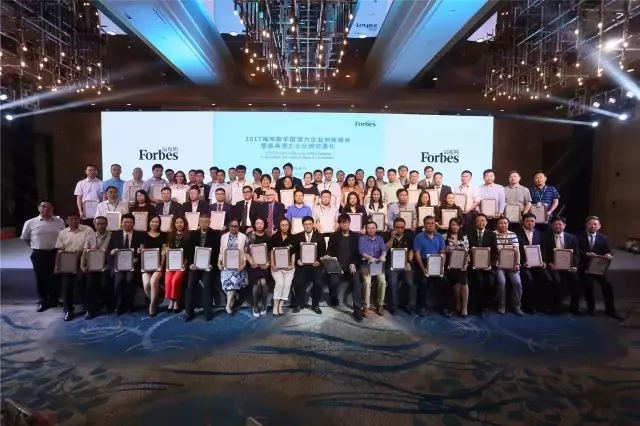
  • Sunline Awarded “2017 Forbes China Top 100 Potential Enterprises”

    Sunline Awarded “2017 Forbes China Top 100 Potential Enterprises”

      This is the 12th year since the first release of “Forbes Chinese Potential 100” in 2005. Forbes has investigated and surveyed China SME comprehensively and independently, and made the history by presenting the list of potential listed companies, unlisted companies and notable NEEQ (National Equities Exchange and Quotations )companies, which including 220 enterprises. In its 15 years of service, Sunline is now the leading financial IT solutions provider and was awarded one of the top Forbes Chinese Potential Companies in 2017 with 3 major preponderances.


      First, Forbes recognises Sunline’s independent research and development efforts to drive technological innovation. In 2015, Sunline has developed the new generation core banking system using distributed architecture to meet the requirements of autonomous controllable technology and support the multi-parameter product configuration, and successfully deploying it for WeBank. Sunline’s core banking solutions is highly recognized by large and medium commercial banks, including Nanjing bank and Ping An bank. The company’s self-developed digital core banking system has also won the trust of many customers including traditional financial institutes and Fintechs.


      Secondly, Sunline is also recognised for their active capital operations by exploring new business models. In 2015, Sunline Holding successfully issue their shares and through the integration of internal resources and talent introduction of strategic investment, established several distinctive subsidiaries. The company further strengthened its market share in the financial industry in the aspects of asset management, digital banking, business intelligence as well as credit cards. Their customers have expanded to Fintechs, small loan companies, financial insitutes, car manufacturers, asset management companies and others.


      Thirdly, Forbes also recognises Sunline’s social responsible culture and their contribution to promote the growth of the financial industry. Leveraging on expertise and more than 10 years of experience in the financial industry, Sunline has played a significant role to help the country’s traditional financial institute deepened the understanding of the Internet Finance and by providing comprehensive solutions, alleviated their transformation journey to reinvigorate the industry. On the other hand, Sunline also helped Fintechs to understand the financial businesses and regulatory supports through their services, successfully driving development of these enterprises.
    Fan Luxian, Chinese editor-in-chief of Forbes indicated Forbes is authoritative and transparent. The list of enterprises or individuals awarded is not only based on strength, but also based on potential evidences.


      With the release of the list, Forbes China also announced 2017 Forbes Potential Enterprise Innovation Summit and 2017 China Forbes Top Potential Enterprise Awards will be held in Henan province Zheng Dong New District of Zhengzhou city in May 2017. During the summit, Sunline will be present at this event amid other listed enterprises and guests.

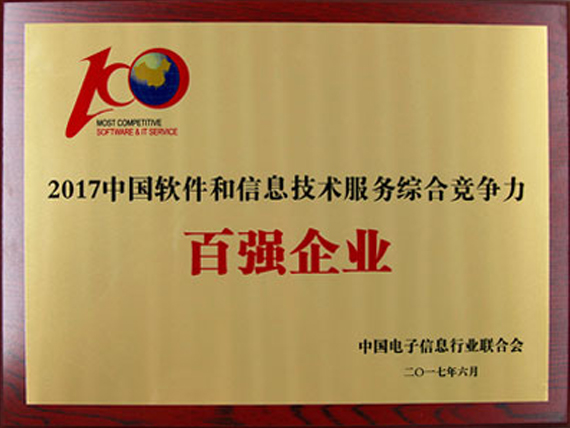
  • Sunline Nominated “2017 Top 100 of China Software and Information Technology and Service Competitiveness”

    Sunline Nominated “2017 Top 100 of China Software and Information Technology and Service Competitiveness”

       Sunline (Stock Number: 300348) was nominated as one of “2017 Top 100 of China Software and Information Technology and Service Competitiveness”


      The list, recently joint released by China Electronic Information Industry Association and China Software Industry Association after a series of evaluations on appraised enterprises, uncovers the China’s top software industry pioneers. According to the data from the organizing committee, the nominated top enterprises have respectively demonstrated remarkable achievements in areas including innovation and coordination, green initiatives, openness in development concepts, economies of scale, continuous innovation in research and development, international business outreach in the past year.


      Since its establishment 15 years ago, Sunline has grown alongside the industry through continuous innovation and development for financial institutions including banking, insurance, unit trust, securities as well as Fintechs. The 3 main categories of products developed for banks, Sunline’s major customers are business, management and channel solutions. As of today, Sunline is the only service provider to independently research and develop all 3 categories of solutions for banks.


      In the era of digital transformation, top service providers should no longer only focus on being outstanding in their contributions towards banking information but also to pursue national innovation strategies as well as the “Belt and Road Initiative” that bring opportunities for overseas market expansion. It is also important for pioneers to adapt to the era of digitisation and build innovative solution platforms for financial institutions to reinvigorate the industry.


      At present, Sunline has helped more than 400 financial institutions locally and globally on their journey towards digital transformation. Being nominated as the top 100 is an encouragement for Sunline to uphold their objectives in creating more value for customers through reinvention of innovations and to become a leader in global financial IT solutions provider.

  • Credit Risk Control with AI

    Credit Risk Control with AI

      Credit risk management systems have transformed from the focusing on the total loan process life cycle in the first generation, to the application of structure data such as linear scoring card in the second generation. The new generation of credit risk management systems in the big data era are of exemplary reliability with:


      1.The ability to process both structured and unstructured data simultaneously;

      2. The ability to model risk and behaviour using non-linear models.

      The following figure illustrates the main component of the third-generation big data credit risk management system:  Big Data =AI + BI + Modelling


      The new generation of credit risk management systems in the big data era leverages traditional business intelligence (BI) tools to analyse structured data within the bank, credit data from the central bank (structured data) as well as artificial intelligence (AI) algorithm (i.e. NLP) to analyse risks associated with various external unstructured data (i.e. judicial litigation data from judicial websites, industrial or commercial data, public opinion data from authorised media). All data are unified to perform risk modelling, providing more accurate results and minimising risks of non-performing loans.
    There are 3 conditions to meet for a robust and reliable AI platform:
      1. Legitimate & reliable data sources – Relying solely on bank’s internal data and credit data from the central bank is no longer sufficient as related external unstructured data that does not
    involve privacy issues will further enhance accuracy.
      2. Experienced data scientists – Build a strong AI platform to deal with massive unstructured external data with deep network training techniques.
      3. Subject matter experts – This is often an overlooked point. For platforms to function reliably, subject matter experts must be able to transfer their field knowledge correctly to the data scientists to write out correct AI algorithms. However, it is even harder to find such experts compared to experienced AI scientists.
      With a powerful artificial intelligence platform to unify internal and external heterogeneous data, the new generation of risk management system that covers the complete loan life cycle is developed.