Blog

  • Sunline and Alibaba Cloud Inked Collaboration to Promote Digital Upgrade of Core Banking System

    Sunline and Alibaba Cloud Inked Collaboration to Promote Digital Upgrade of Core Banking System

    On August 26, Sunline and Alibaba Cloud officially signed a collaboration agreement in Hangzhou and jointly released a new generation cloud-native core solution. Both parties will give full play to their respective resources and technological advantages in banking core, data intelligence and other fields, to lead and promote the implementation of solutions in banking core and other fields together.
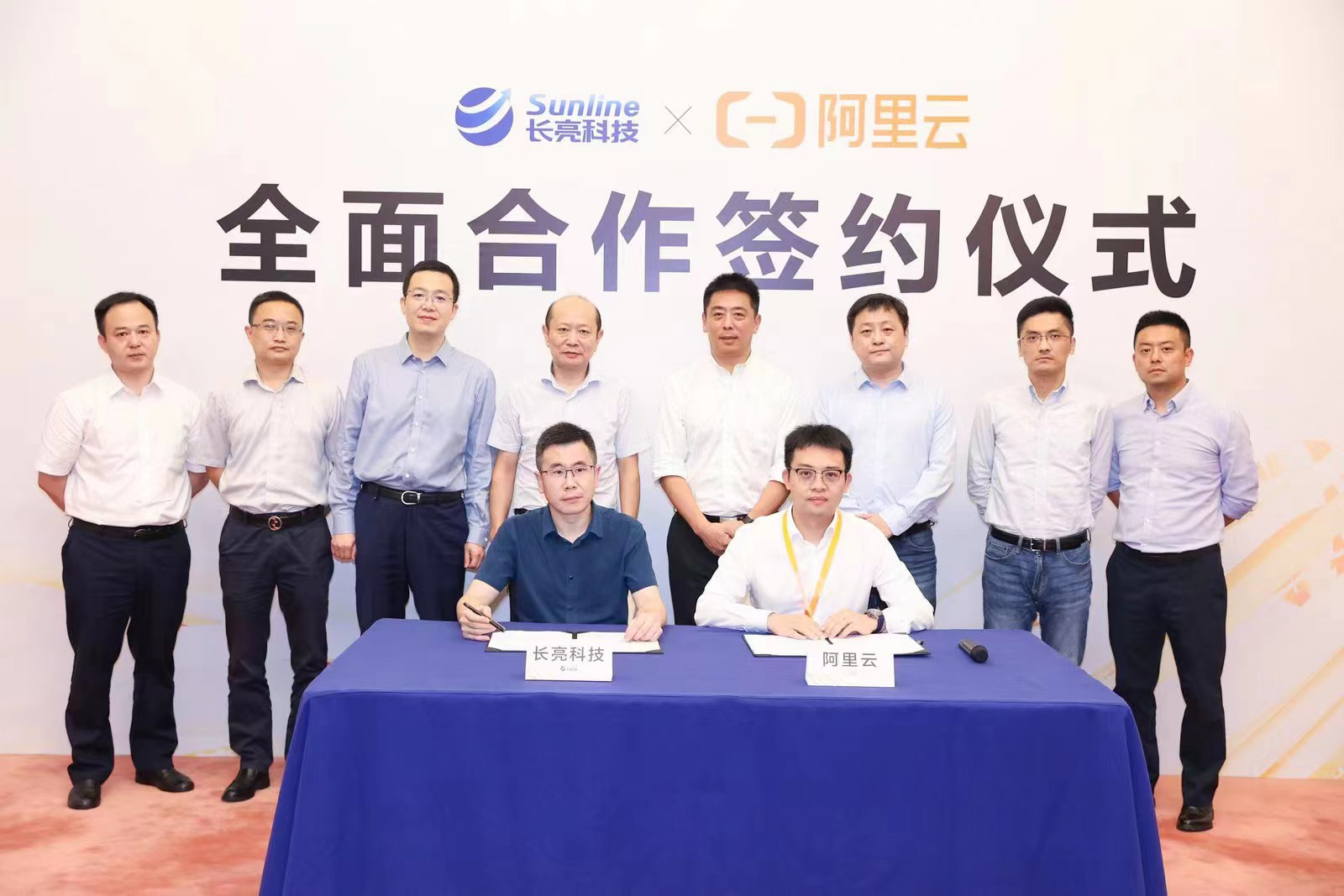
    Mr. Liu Weiguang, General Manager of Alibaba Cloud Smart New Finance & Internet Business Department, believes that this should be an epoch-making alliance of powerful players in the history of financial technology. In the past five years, Alibaba Cloud and Sunline have made breakthrough progress in their respective fields. The two sides have joined forces and constantly providing values in the strategic transformation projects of many banks.

    “In the process of digital upgrade with our financial customers, our two goals will eventually converge, that is, to jointly shape the core of the new platform in the digital age, and create an intelligent data asset platform in the age of cloud! Let us look forward to this new combination of shining debut on the stage of China’s financial digitization and the long winds and waves towards the future of the cloud!”

    Mr. Wang Changchun, Chairman of Sunline, said that Sunline has always insisted on independent R&D and innovation for 20 years, and has always led the development trend of core banking systems. “Those who are wise change with the times, and those who are knowledgeable make decisions. Today, in the digital economy era, from the perspectives of digitalization and intelligence to examine the two-way empowerment of financial industry, Sunline believes that distributed + cloud native business architecture has ushered in the inflection point of the times, and the core system of the new generation will take the architecture transformation as the carrier, take the business model and technological innovation as the guide and support the ability to leap to value empowerment to have a higher degree of openness and rapid integration into the ecosystem. In this collaboration, both parties will extract new ideas from leading practices, leverage new models, develop new formats, and jointly drive a new era of digital finance with technological innovation.”

    With the agreement, the two parties will carry out an all-rounded, in-depth and multi-form collaboration mainly around core systems, data intelligence and other sub-industry fields. In the field of core banking systems, Alibaba Cloud has a new generation cloud-native core architecture overall solutions with underlying IaaS\PaaS capabilities, core transaction distributed databases, cloud-native application frameworks, etc. while Sunline provides core banking business systems and other related solutions. In the field of data intelligence, Alibaba Cloud has the capabilities of analytical database and data middleware, as well as the overall solution of big data product architecture while Sunline provides financial data business systems and other related solutions. The two parties will jointly create core banking and joint financial data solutions and products.

    The new generation cloud-native joint core banking solution released this time has been reconstructed by the two sides of major cloud-native feature technologies such as full distribution, field microservices, application containerization, heterogeneous integrated service grid, and highly available unitization. The joint solution can support the new generation core systems with more flexible business expansion, more reliable off-site multi-activity, more elastic scale scalability as well as more comprehensive operations, maintenance, governance and observability, laying a robust core foundation for the digital transformation of banks.

    Sunline is the world’s leading financial technology solution service provider, focusing on driving the development of the industry with technological innovation, empowering financial business reformation with financial technology, and providing financial institutions with integrated financial IT solutions such as core business, digital financial business, big data business and comprehensive value management business, serving nearly 1,000 financial institutions in China and overseas.

    Alibaba Cloud is a leading global cloud computing and artificial intelligence technology company, providing services to enterprises, developers, and government agencies in more than 200 countries and regions. After several years of continuous investment, Alibaba Cloud continued to maintain the No.1 position in the overall financial cloud market in 2021, and has served 6 large state-owned commercial banks, 12 joint-stock commercial banks and 90% of listed commercial banks, the vast majority of which are core products and services such as cloud, big data, and databases.


  • Sunline’s Comprehensive Value Management Platform Empowers Banking Operations

    Sunline’s Comprehensive Value Management Platform Empowers Banking Operations

    High speed charging for Sunline’s Comprehensive Value Management Business with the newly won project for a provincial association as well as the recent project launches for a joint-stock and a rural commercial bank.

    With the continuous development of China’s information technology, the economic environment and financial environment are also undergoing profound changes. The wide application of the Internet and Big Data in the financial field has caused the banking industry to face different business risks and competitive pressures. Only by taking precautionary measures, increasing revenue by reducing expenditure, realizing refined management and differentiated operations, as well as accelerating product innovation and service quality improvement, can banks stay in the fight and achieve sustainable development.

    Independent research and development have helped the management transformation of many banks

    A provincial association has many branches and various business types and with the annual budget being unable to be unified across the banks, the head office is unable to show comprehensive statistics. Therefore, the association has decided to construct a comprehensive budget management system. With many successful cases for banks in the country, and other factors such as the ability to exceed customer expectations, quality of its business teams and the experience of its delivery team, Sunline has won the association’s operating budget management system project in mid-August 2022.

    The comprehensive budget management system is independently developed by Sunline based on years of experience in the financial industry, combined with the knowledge on business characteristics and business needs of China’s financial industry. The system can quickly build a complex and complete budget management model based on the actual business management needs of financial enterprises, realizing the whole process of budget management from strategic goal decomposition, budget preparation, budget summary to execution monitoring, budget analysis and assessment. With the features of flexible configuration and convenient use, the system can meet the complex, diverse and personalized needs of the budget management for financial enterprises.

    Through the construction of a comprehensive budget management system, Sunline will help the customer summarize the operating budgets of each branch and group in a unified manner, and make a reasonable group budget preparation, which is convenient for the head office to control and perform unified planning. This time, Sunline cooperated with the provincial-level United Credit Union for the first time in the development of the comprehensive budget management system, which is of special significance for Sunline to expand its business into another market in the future.

    Winning the project marks a new starting point, while the launch is an important milestone

    Sunline’s comprehensive budget management system has been put into production in more than 10 leading city commercial banks, rural commercial banks, and joint-stock banks. Its business scope includes but is not limited to business budget, financial budget, expense budget, capital budget, and capital expenditure budget. It has achieved a good outcome in refined management. Recently, the system has been newly launched in a leading rural commercial bank, and preparing to launch in another joint-stock bank.

    After implementing the localized core system with traditional bank database, this leading rural commercial bank took a year to upgrade the comprehensive budget system by means of step-by-step iteration. Focusing on the goal of “tools + application”, it has realized the construction of a complete budget management with sound and clear budget organization and management, value-oriented key indicator system, standardized budget preparation model, shared and efficient information management system and other modules.

    Through the analysis of the implemented functional modules of the commercial bank, we can get a glimpse of the realization path of Sunline’s comprehensive budget management system, aiming to provide some ideas and references for banks and financial institutions in need.

    Budget forecast

    Based on the external economy, market indicators, and inter-bank information, combined with the bank’s development strategy, the rural commercial bank’s various business lines are simulated by scenario assumptions, including forecasting deposit and loan-to-customer interest rates, FTP interest rates, business development structure, and business development quotas and future business scenarios, so as to simulate and predict business profitability.

    Annual budget preparation

    The overall preparation of the annual budget covers the business, expense, finance, and capital expenditure budgets of the head office budget, branch budgets, and village bank budgets.

    Combining with the current management status of the rural commercial bank, we sorted out the annual budget preparation template and budget preparation process suitable for the current situation, realized the online budget preparation and centralized financial approval of the branch, and automated the budget summary, which greatly improved the standardization of the budget preparation process. and efficiency.

    In addition, the preparation process realizes the transformation and unity of the business context and the financial context, making it easier to form a consensus on the budget results.

    Budget release and control

    The functional module of budget release includes functions such as pre-release, final release, release query, etc., which visually displays the expense indicators after the event, helping the rural commercial bank to achieve scientific management and control. In addition, this module opens up the financial system to form a closed-loop model, realizes the linkage between systems, regulates the management and control of financial reimbursement, and achieves pre-forecasting, in-process control, and post-event analysis.

    Rolling budget

    The combination of rigidity and flexibility in budget management is reflected in the complementarity of rigid annual budgets and flexible rolling budgets. The rigidity of annual budgets is reflected in the setting of performance appraisal benchmarks, the formulation of countermeasures and action plans, and the allocation of resources while the flexibility of rolling budgets is reflected in the orderly coordination of the daily control and the handling of changes will help the rural commercial bank to advance its work in a more standardized and orderly manner.

    Budget analysis

    The budget analysis function is divided into two aspects: report display and visualization. By realizing the visualization and concreteness of data display, the managers of the bank can have a clear overview of the overall situation at a glance, be clear of the gap between execution and goals and provide support for relevant decision-making.

    Budget management workbench

    The budget workbench involves functions such as workflow, task flow, approval flow, tasks to be prepared and approved, budget warning, etc. This module can solve the management pain points of the rural commercial bank’s chaotic tasks, achieve efficient connection between subordinate and subordinate businesses, and clarify responsibilities at all levels. Among them, the budget early warning is like a monitoring tool that regularly sends early warnings for delayed and missed work tasks, effectively supervises the progress of the work, and improves the overall work efficiency in an all-rounded way.

    Through the construction of the comprehensive budget management system, the financial analysis and decision-making support capabilities of the rural commercial bank’s head office and the preparation and analysis efficiency of the budget management of the whole bank have been comprehensively improved, doubling efficiency improvement of “decision-making” and “management”, thus enhancing the implementation of the bank’s strategy. The ability of landing and scientific management can effectively support its future strategic development and transformation.

    Comprehensive budget management is the starting point of the bank’s refined management, and it is an effective strategy for China’s commercial banks to improve their core competitiveness and development benefits. Sunline has always insisted on independent research and development as well as deep understanding in the industry. The excellent market performance is a strong testimony to the continuous progress and the company will continue to use lean innovation to improve the bank’s comprehensive decision-making ability, boost the bank’s stable operation, and finally realize the bank’s strategy.

  • Certification of Strength | Sunline Co-edited the “Financial Application Alliance Chain Technology Privacy Protection Research Report”

    Certification of Strength | Sunline Co-edited the “Financial Application Alliance Chain Technology Privacy Protection Research Report”

    Recently, under the guidance of the Central Bank, the Beijing Fintech Alliance released the “Financial Application Alliance Chain Technology Privacy Protection Research Report”, and Sunline, as a member of the Alliance and a leading financial technology service provider, was knee deep in the preparation of the report.

    In recent years, privacy computing technology has received attention from the industry, and although the application of privacy computing technology in the financial field can ensure data security, there are deficiencies in data confirmation and pricing, trusted depository evidence, and malicious node detection. On the other hand, blockchain establishes a trust foundation between participants through the consensus mechanism, and realizes the authenticity verification and auditing of on-chain data through smart contracts, which has the advantages of being difficult to tamper with and is more traceable.

    Will the combination of the two effectively improve the security of data circulation and provide a new technical path for data sharing?

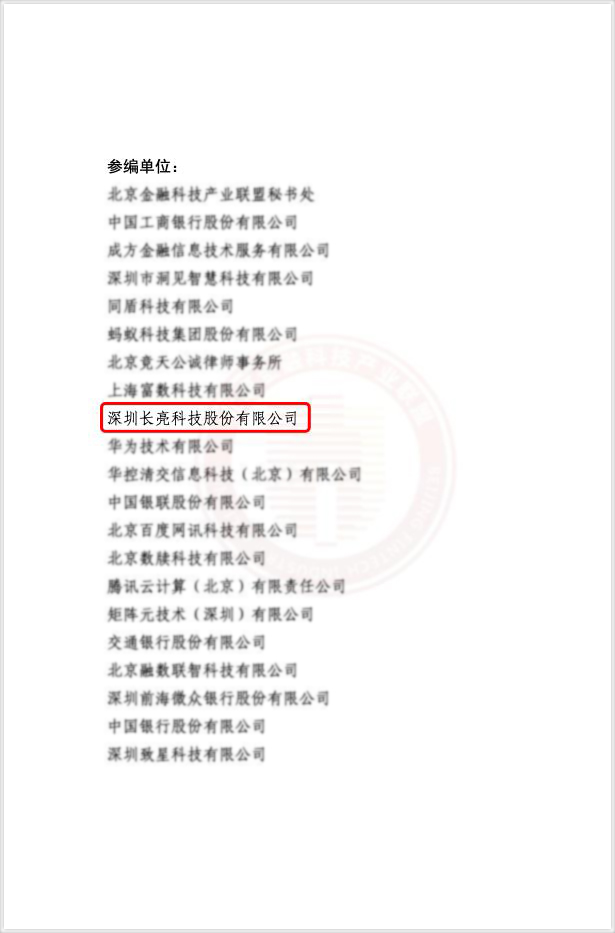
    The Data Committee of the Beijing Fintech Alliance organized relevant member units to carry out financial application research on the combination of privacy computing technology and alliance chain, and compiled the “Financial Application Alliance Chain Technology Privacy Protection Research Report”. Sunline, together with more than 20 units such as Industrial and Commercial Bank of China, Bank of Communications, Bank of China, Huawei, Tencent Cloud, etc., jointly participated in the compilation, focusing on the practice cases of alliance chain and privacy computing combined with joint risk control modeling, anti-money laundering, intelligent site selection and whitelist sharing, exploring the application value of cutting-edge technologies in the financial industry.

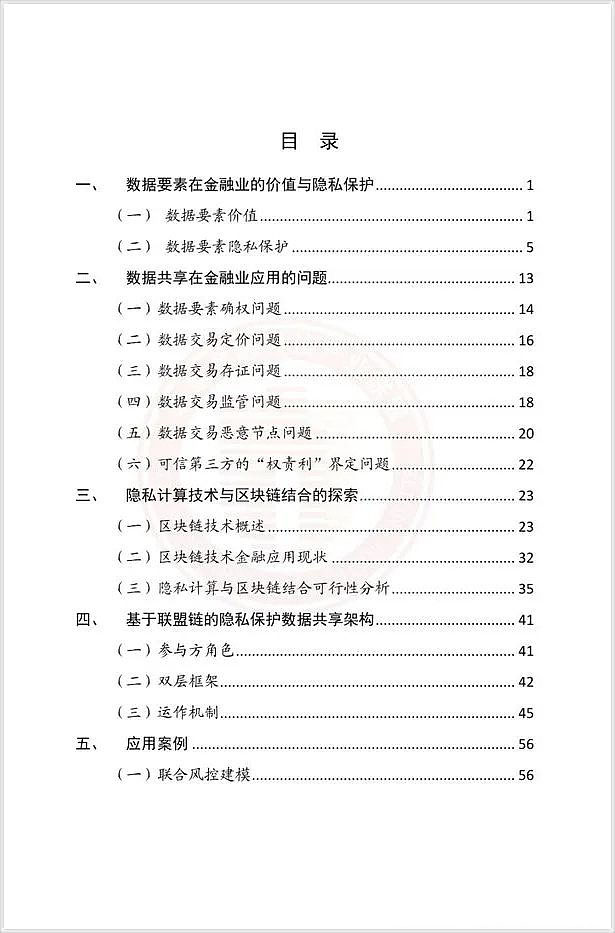
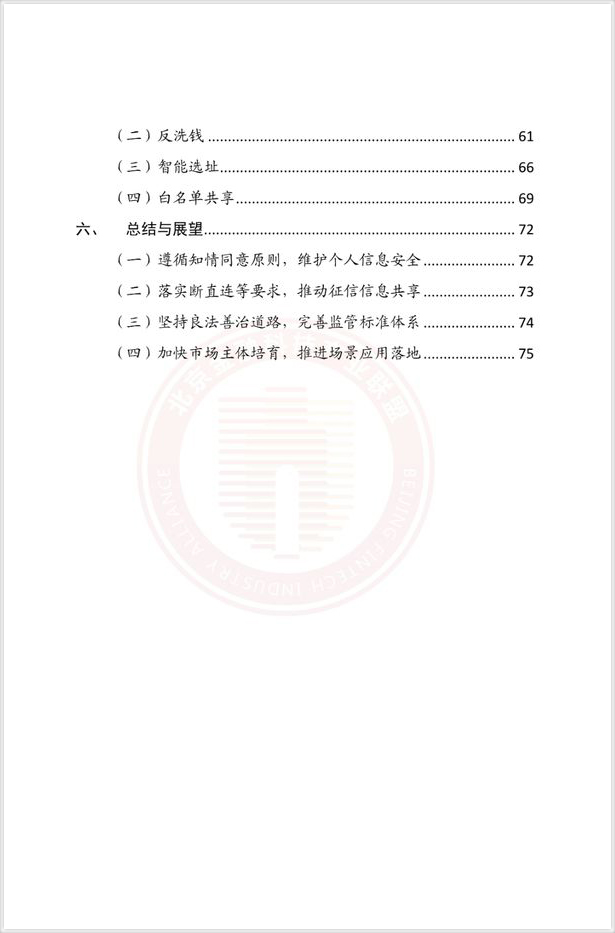
    The report comprehensively introduces the value and privacy protection of data elements in the financial industry, the application of data sharing in the financial industry, the exploration of the combination of privacy computing technology and blockchain, the privacy protection data sharing architecture based on the consortium chain, the application cases and the summary prospects, etc., providing a reference for the application of the consortium chain technology in the privacy protection field of the financial industry.

    In the exploration and practice of alliance chain and privacy computing technology, Sunline adheres to the concept of professionalism and innovation as the foundation of its establishment, and carries out multiple business areas such as middle-office, inter-agency reconciliation, risk prevention and control, and regulatory compliance in the provident fund industry based on Hyperledger Fabric, FISCO-BCOS, enterprise Ethereum Quorum and other well-known blockchain platforms in China and abroad to develop a universal chain adaptation engine, creating an anti-money laundering application based on alliance chain technology and other technical solutions, leading the innovative development of anti-money laundering business of regulatory authorities and financial institutions, and solving the problems of difficulty in trust transmission, difficulty in trust collaboration and high cost of regulatory audit by:

    1.              Introduction of the alliance chain technology through the adaptation and docking of open source blockchain platforms such as Hyperledger Fabric, FISCO-BCOS, enterprise Ethereum Quorum, etc., to realize the digitization, automation and intelligence of anti-money laundering regulatory rules.

    2.              Using smart contracts to complete real-time supervision and data sharing, and promote the further improvement of anti-money laundering prevention, in-process monitoring and post-event disposal of financial institutions

    Sunline has nearly 20 years of practical experience in consulting services, product research and development in the field of big data, and participated in the compilation of the “Financial Application Alliance Chain Technology Privacy Protection Research Report”, which represents the company’s technical strength in big data and has been recognized by the industry. In the future, Sunline will give full play to its own advantages, accelerate the technological innovation of data elements, actively explore the best path to achieve the balance between data application and data security, and fully support the digital transformation of financial institutions!

  • Sunline Once Again Swooped Large Joint-stock Bank Risk Management and Interbank Fund Projects

    Sunline Once Again Swooped Large Joint-stock Bank Risk Management and Interbank Fund Projects

    Sunline’s financial interbank business has been very active in the top joint-stock banks market, and recently won projects for a joint-stock bank’s intelligent market risk management platform and its financial interbank business digital operations. With innovative solutions and leading technological advantages, the solution will help the bank improve their risk management and trading capabilities, promote digital transformation of its interbank financial services, as well as prevent and resolve financial risks, with the ultimate aim of deepening financial reformation.

    In the era of new technology and economy driven by financial opening, technological progress and continuous waves of digitalization, the traditional development model of the banking industry is undergoing subversive changes. In recent years, with the rise and vigorous development of interbank fund business, major commercial banks have taken actions accordingly to comprehensively promote the digital transformation of interbank fund business by building an intelligent fund system platform, empowering the development of business front, middle and back-office, and boosting financial interbank business. Business has become an important engine supporting the future development of financial institutions.

    Relying on two decades of practices and experience in the financial field, Sunline has a deep insight in the development trend of the digital transformation of capital business, focusing on improving the two core capabilities – risk and transaction, helping customers to activate market potential. The professional application of system planning, transaction integration, risk quantification, and intelligent operation continues to improve, and can provide customers with comprehensive, end-to-end capital business solutions.

    Winning two consecutive projects for a joint-stock bank this time marks that Sunline has reached a new level in the development of its interbank fund business, and has become a trusted partner for the industry’s leading interbank fund transaction and risk management platform constructions.

    Intelligent market risk management platform project

    The market risk management platform integrates a unified risk control platform for financial market business, an intelligent risk data analysis and key risk control indicator measurement platform. The joint-stock bank aims to achieve unified management in capital measurement models through this platform, and to increase the bank’s ability to interpret, analyze and price business capital.

    For this project, Sunline will empower the joint-stock bank in terms of market risk management, counterparty credit risk, hedging business management, capital measurement and model management based on the construction of five functional modules of approval, early warning, monitoring, analysis and control. The project will improve the banks risk management platform in all aspects, fully meeting the needs of different data users to call, read and analyze risk data, ultimately improving the efficiency and value of data use:

    • for the management by providing a multi-dimensional, fast, accurate and intuitive management dashboard to strongly support management decisions.

    • for front-end users by providing full-dimensional and richer transaction reference information to facilitate transaction decision-making and rational resource allocation.

    • for middle-office risk analysts by providing functions such as limit monitoring and tracking, risk attribution analysis, business risk analysis, etc., to get rid of basic work such as data collation.

    Financial interbank business digital operations project

    The financial interbank business management platform is an important system supporting the business development of the bank’s interbank department. Under the background of comprehensive digital operation, the system urgently needs to build a digital operation module, improve data quality, as well as strengthen financial interbank business risk monitoring, business operation analysis and decision-making capabilities.

    Sunline will combine the digital transformation needs of the joint-stock bank and use digital technology to reshape the bank’s financial interbank business operations and promote the continuous deepening of a joint-stock bank through the construction of five functional modules: business verification, profit and loss creation, forecasting and planning, risk monitoring, and auxiliary tools. The comprehensive digital operations will be able to:

    • refine data, refine reports, form a management perspective, and accurately grasp key management data in real time.

    • calculate and count transactions one by one, produce daily, weekly, monthly and quarterly reports for management, and send them to relevant stakeholders in a timely manner.

    • supports query and export of various regulatory reports, provides custom report functions, and realize quick handle of temporary needs in a timely manner.

    In the future, Sunline will continue to lead the development path of joint-stock banks by innovation, relying on its original and independent technical advantages, and export more professional and high-quality financial solutions, products and digital technical service capabilities to help financial institutions fully release their business potential, igniting the “business engine” of financial digital transformation!

  • DevOps Practices: Continuous Integrated Testing Platform, Guaranteed Efficient Delivery

    Testing has always been an important step to ensure the quality of the software R&D process, but with traditional R&D model, there has been a lack of linkage between testing and the software life cycle. With the promotion and implementation of the DevOps model in the software industry, more frequent delivery further aggravates the industry's concerns about testing. Inefficient testing is often the primary reason for delays in delivery, and the testing process has become the biggest bottleneck for enterprises to transform into DevOps.

    In order to solve such challenges, the concept of “continuous testing” was proposed and gradually became the inevitable pursuit of the industry. In DevOps, continuous testing provides a continuous feedback mechanism that acts as a catalyst throughout the product delivery pipeline, with automatic feedback at each stage ensuring that defects are addressed early in the development process.

    This article will focus on sharing how Sunline's R&D collaborative management platform helps companies get feedback on software release business risks as soon as possible in the “continuous testing” stage of DevOps.

    Building an integrated continuous testing platform with technology accumulation

    As a carrier of DevOps practices in the testing field, continuous testing is a basic and continuous activity that should run through the entire software delivery cycle. Compared to the traditional testing mode that is prone to many issues in the DevOps era, the first thing that continuous testing needs to change is the “post-testing” situation. Emphasizing on pre-testing, continuous testing define tests as early as possible with parallel testing and development, maintaining close collaboration in the process to achieve quick feedback on business risk.

    Focusing on the ultimate goal of “improving efficiency through continuous testing”, MOne Test, an integrated continuous testing platform created by Sunline’s MOne product team, helps the R&D team take testing as a basic activity throughout the entire software delivery process with powerful test management functions. In the process, the software delivery cycle is greatly shortened, testing and R&D are synchronized and iterated, continuous testing is realized, and high-quality delivery is achieved through:

    ·       Full life cycle covering different stages from test planning, test execution to test report analysis.

    ·      Rich team collaboration supporting testing teams of different sizes, and provides all the functions to meet the needs of team collaboration and process automation.

    ·       Continuous testing with the ability to integrate the testing process into continuous delivery and DevOps system, seamlessly connecting to defect management tools (JIRA, MOne Project) and continuous integration tools (Jenkins, MOne Pipeline), etc.

    ·      Integration covering test case management\review\execution, interface\WEB automation, fault drill, performance test (compatible with JMeter native jmx script) and other functions.

    The practice of continuous testing within iterations in MOne Test

    The testing process generally includes use case design, use case review, test execution, and test reporting. MOne Test integrates continuous testing platform to increase the collaboration and feedback between testing and other roles in the process, and opens up data interaction with the project management platform. The purpose is to help the team solidify practical experience through product capabilities, so as to achieve high efficiency within iterations test with:

    Efficient organization and management of test cases to easily organize use cases in the tree-structured use case library, testers can flexibly reuse test cases to form use case reviews and test plans, greatly improving work efficiency.

    Docking with mainstream project management platforms such as JIRA, MOne Project, etc., test cases can quickly associate requirements and defects, and in the process of test case execution, defects can be quickly created and synchronized to a third-party defect platform.

    Rich online collaboration with multiple roles in the team allow multiple participations in the use case review and execution at the same time, the work status is synchronized real-time, cross-test redundancy is avoided and information is synchronized efficiently.

    Efficient testing requires automation as the cornerstone

    In the high-frequency delivery scenario of DevOps, how can the team improve the efficiency of test execution? The first thing that comes to our mind is automated testing as it is the basis of continuous testing. Only with a high degree of automation can it meet the high-frequency release requirements of continuous delivery.

    Currently, most testing tools use open-source interface automation frameworks or open-source interface testing tools to automate interfaces, such as Postman and JMeter. However, this method has high maintenance costs and lacks the function of batch execution, which cannot meet the needs of rapid verification.

    MOne Test is an integrated continuous testing platform, which fully refers to the page layout of open-source tools in design. It is easy to use, and supports batch execution, which can realize “zero code” interface automation.

    Rich parameter transfers to meet the needs of data construction with the main types of parameters are as follows:

    ·       Parameter constructor to quickly generate data for testing, such as random numbers, timestamps, ID numbers, etc.

    ·       Public parameters put public data in the script into the public parameters for unified management, which is easy to maintain.

    ·      Step parameters allow quick reference of data returned by the previous step, and support referring to the data returned by different types of steps.

    ·      Transaction data show data reference across scripts to meet complex banking scenarios.

    ·      Project environment variables allow quick change to the script URL and public data by switching the project environment (test, SIT, UAT) when the script is executed so that the same script can cover different running environments.

    Flexible scenario arrangement supports the combination of steps such as API, API template, database query (MySQL, Oracle, PostgreSQL), JavaScript script, etc., to jointly complete the interface test of complex business scenarios.

    Support batch execution visualizing the entire execution process of each API request i.e., request header, request body, response header, response body, assertion in the script execution step will be recorded. If the execution fails, the failure step will be prominently marked and the cause of the failure will be displayed.

    Integration of automated testing capabilities into the DevOps system provide Jenkins plug-ins, which can directly schedule batch tasks on the test platform after API key authentication. Self-developed MOne Pipeline provides tool-specific operation steps to easily realize one-click automatic deployment and testing.

    MOne Test helps the interface automation construction of a banking system

    ·       The automated scripts cover a total of 2,000 key transactions and develop nearly 3,400 automated test cases.

    ·     Batch tasks can be fully returned to the system every week and each time before going online, and the system can be fully expanded and executed concurrently in multiple environments.

    ·       Generate a fixed system start date through transactions, and restore data through scripts after each round of testing performed.

    Through the construction of interface automation, the efficiency of the bank's testing can be greatly improved. Multiple scripts can be executed concurrently during task execution, thereby greatly shortening the regression cycle and reducing the risk of digitalization.

    In the process of practicing continuous testing, enterprises not only need technical support, such as the basic capabilities of continuous development, continuous integration, and continuous deployment but they also need to pay attention to the precipitation of data, and continuously optimize behaviors based on data indicators, so as to realize the benefits of DevOps.

    In the next article, we will share more on the practices in the “continuous deployment” phase, so stay tuned!

  • DevOps Practices | Continuous Integrated Testing Platform, Guaranteed Efficient Delivery

    DevOps Practices | Continuous Integrated Testing Platform, Guaranteed Efficient Delivery

    Testing has always been an important step to ensure the quality of the software R&D process, but with traditional R&D model, there has been a lack of linkage between testing and the software life cycle. With the promotion and implementation of the DevOps model in the software industry, more frequent delivery further aggravates the industry’s concerns about testing. Inefficient testing is often the primary reason for delays in delivery, and the testing process has become the biggest bottleneck for enterprises to transform into DevOps.

    In order to solve such challenges, the concept of “continuous testing” was proposed and gradually became the inevitable pursuit of the industry. In DevOps, continuous testing provides a continuous feedback mechanism that acts as a catalyst throughout the product delivery pipeline, with automatic feedback at each stage ensuring that defects are addressed early in the development process.

    This article will focus on sharing how Sunline’s R&D collaborative management platform helps companies get feedback on software release business risks as soon as possible in the “continuous testing” stage of DevOps.

    Building an integrated continuous testing platform with technology accumulation

    As a carrier of DevOps practices in the testing field, continuous testing is a basic and continuous activity that should run through the entire software delivery cycle. Compared to the traditional testing mode that is prone to many issues in the DevOps era, the first thing that continuous testing needs to change is the “post-testing” situation. Emphasizing on pre-testing, continuous testing define tests as early as possible with parallel testing and development, maintaining close collaboration in the process to achieve quick feedback on business risk.

    Focusing on the ultimate goal of “improving efficiency through continuous testing”, MOne Test, an integrated continuous testing platform created by Sunline’s MOne product team, helps the R&D team take testing as a basic activity throughout the entire software delivery process with powerful test management functions. In the process, the software delivery cycle is greatly shortened, testing and R&D are synchronized and iterated, continuous testing is realized, and high-quality delivery is achieved through:

    ·       Full life cycle covering different stages from test planning, test execution to test report analysis.

    ·      Rich team collaboration supporting testing teams of different sizes, and provides all the functions to meet the needs of team collaboration and process automation.

    ·       Continuous testing with the ability to integrate the testing process into continuous delivery and DevOps system, seamlessly connecting to defect management tools (JIRA, MOne Project) and continuous integration tools (Jenkins, MOne Pipeline), etc.

    ·      Integration covering test case management\review\execution, interface\WEB automation, fault drill, performance test (compatible with JMeter native jmx script) and other functions.

    The practice of continuous testing within iterations in MOne Test

    The testing process generally includes use case design, use case review, test execution, and test reporting. MOne Test integrates continuous testing platform to increase the collaboration and feedback between testing and other roles in the process, and opens up data interaction with the project management platform. The purpose is to help the team solidify practical experience through product capabilities, so as to achieve high efficiency within iterations test with:

    Efficient organization and management of test cases to easily organize use cases in the tree-structured use case library, testers can flexibly reuse test cases to form use case reviews and test plans, greatly improving work efficiency.

    Docking with mainstream project management platforms such as JIRA, MOne Project, etc., test cases can quickly associate requirements and defects, and in the process of test case execution, defects can be quickly created and synchronized to a third-party defect platform.

    Rich online collaboration with multiple roles in the team allow multiple participations in the use case review and execution at the same time, the work status is synchronized real-time, cross-test redundancy is avoided and information is synchronized efficiently.

    Efficient testing requires automation as the cornerstone

    In the high-frequency delivery scenario of DevOps, how can the team improve the efficiency of test execution? The first thing that comes to our mind is automated testing as it is the basis of continuous testing. Only with a high degree of automation can it meet the high-frequency release requirements of continuous delivery.

    Currently, most testing tools use open-source interface automation frameworks or open-source interface testing tools to automate interfaces, such as Postman and JMeter. However, this method has high maintenance costs and lacks the function of batch execution, which cannot meet the needs of rapid verification.

    MOne Test is an integrated continuous testing platform, which fully refers to the page layout of open-source tools in design. It is easy to use, and supports batch execution, which can realize “zero code” interface automation.

    Rich parameter transfers to meet the needs of data construction with the main types of parameters are as follows:

    ·       Parameter constructor to quickly generate data for testing, such as random numbers, timestamps, ID numbers, etc.

    ·       Public parameters put public data in the script into the public parameters for unified management, which is easy to maintain.

    ·      Step parameters allow quick reference of data returned by the previous step, and support referring to the data returned by different types of steps.

    ·      Transaction data show data reference across scripts to meet complex banking scenarios.

    ·      Project environment variables allow quick change to the script URL and public data by switching the project environment (test, SIT, UAT) when the script is executed so that the same script can cover different running environments.

    Flexible scenario arrangement supports the combination of steps such as API, API template, database query (MySQL, Oracle, PostgreSQL), JavaScript script, etc., to jointly complete the interface test of complex business scenarios.

    Support batch execution visualizing the entire execution process of each API request i.e., request header, request body, response header, response body, assertion in the script execution step will be recorded. If the execution fails, the failure step will be prominently marked and the cause of the failure will be displayed.

    Integration of automated testing capabilities into the DevOps system provide Jenkins plug-ins, which can directly schedule batch tasks on the test platform after API key authentication. Self-developed MOne Pipeline provides tool-specific operation steps to easily realize one-click automatic deployment and testing.

    MOne Test helps the interface automation construction of a banking system

    ·       The automated scripts cover a total of 2,000 key transactions and develop nearly 3,400 automated test cases.

    ·     Batch tasks can be fully returned to the system every week and each time before going online, and the system can be fully expanded and executed concurrently in multiple environments.

    ·       Generate a fixed system start date through transactions, and restore data through scripts after each round of testing performed.

    Through the construction of interface automation, the efficiency of the bank’s testing can be greatly improved. Multiple scripts can be executed concurrently during task execution, thereby greatly shortening the regression cycle and reducing the risk of digitalization.

    In the process of practicing continuous testing, enterprises not only need technical support, such as the basic capabilities of continuous development, continuous integration, and continuous deployment but they also need to pay attention to the precipitation of data, and continuously optimize behaviors based on data indicators, so as to realize the benefits of DevOps.

    In the next article, we will share more on the practices in the “continuous deployment” phase, so stay tuned!

  • Sunline and Anabatic Form Strategic Partnership to Help Banks Accelerate Digital Transformation

    Sunline and Anabatic Form Strategic Partnership to Help Banks Accelerate Digital Transformation

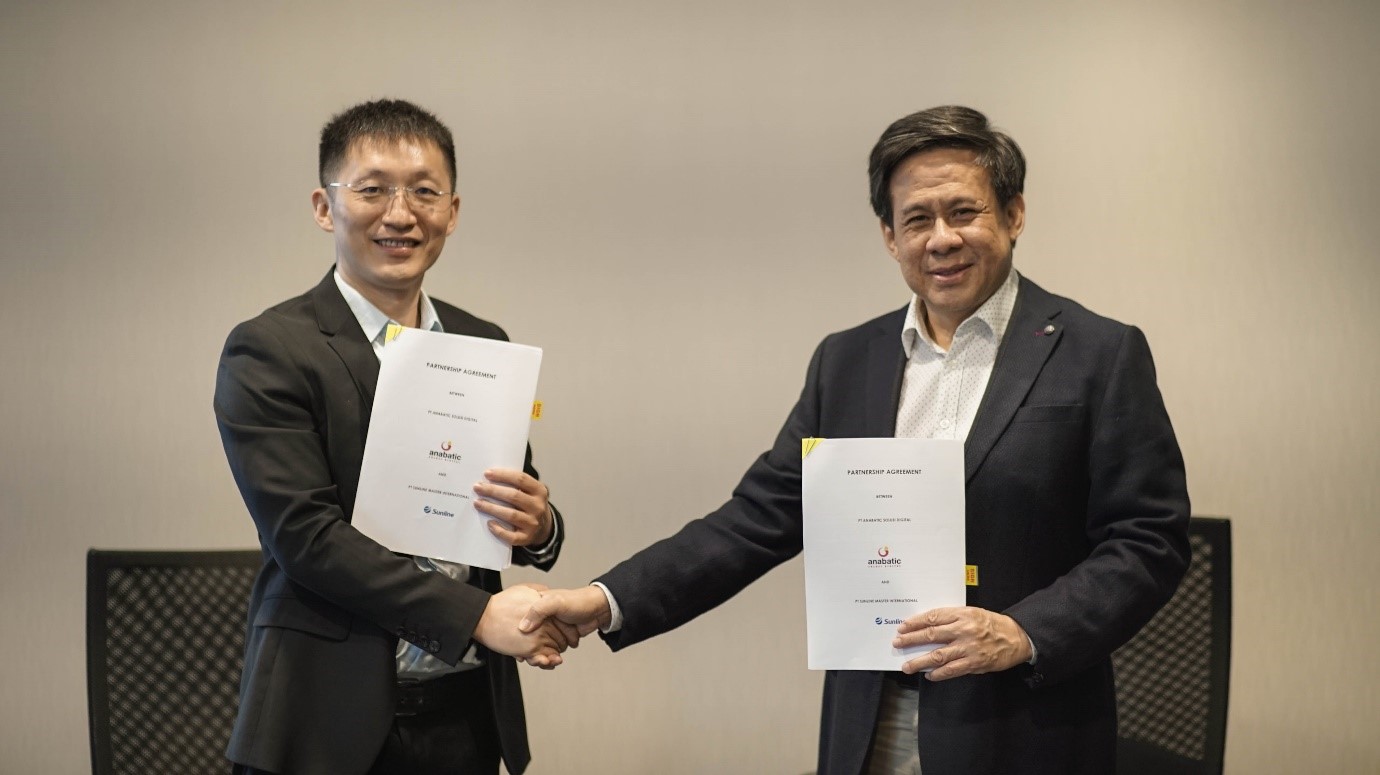
    PT Sunline Master International (Sunline), leading banking software and technology services provider has announced a collaboration with PT Anabatic Solusi Digital (Anabatic), a subsidiary of PT Anabatic Digital Raya and sub-holding of PT Anabatic Technologies Tbk, to support banks in Indonesia accelerate digital transformation and optimize business processes. With this partnership, Sunline and Anabatic will give full play to their respective advantages and use their technical strengths and resources to bring richer digital financial services to Indonesia.

    Signing ceremony of the Alliance Agreement between Sunline and Anabatic

    A Bank Indonesia’s report this year estimates that digital banking transactions will experience a significant increase in 2022, with an increase from Rp. 40,000 trillion in 2021 to Rp. 48,000 trillion in 2022. In line with the report, Nugraha Santosa, President Director of PT Anabatic Solusi Digital stated that, “Digital transformation is a must for banks and they need to increase the pace of innovation facing the rapidly evolving customer behaviours and expectations in the increasingly digital world. Hence, the market space for digital transformation in Indonesia’s banking industry is huge.” Digitalization has created various new opportunities to increase financial inclusion, and is a priority agenda of Indonesia’s G20 Presidency this year. In the face of a rapidly changing market environment, banks need to adjust flexibly and adapt quickly, and digital transformation remained an important trend in the Indonesian banking industry.

    Sunline is a global leading financial technology service provider that empowers the financial industry with advanced technology and rich products, leading the technology development and helping customers quickly achieve business innovation, optimize user experience, and accelerate digital transformation and is has been named as Forbes China Top 100 Potential Enterprises in 2017 and was the first Chinese financial technology service provider to be featured in IDC’s Asia Pacific Financial Insights report on game changers in core modernization. Anabatic is one of Indonesia’s trusted leading IT companies that provide advanced solutions of international alliances to the local Financial Industry. Anabatic’s deep understanding of the local Financial Institutions, Banking Businesses and Indonesian Syariah Banking Practices has led to numerous successful implementations for Conventional Core Banking, Islamic Banking, and Digital Banking cases. 

    Commenting on the partnership, Ruby Zhou, President of Sunline’s Overseas Business said, “Sunline is honoured to collaborate with Anabatic. As the leading financial IT experts and driven with a purpose to make banking relevant, we believe our continuous efforts and commitment in offering the most innovative technology advancements will empower Indonesian Banks to provide higher quality innovative financial services, be more prepared to face the competitive market and further propel the Digital Transformation of the Financial Industry in Indonesia.”

    Santosa also added, “With the deep industry experience and leading technical strength of Sunline and Analytical in providing financial solutions, both parties will create strong synergies to better support the development of the banks and financial institutions in the country. This strong collaboration will transform customer’s business, technology, and operation to meet demand of the new economy market as well as seize the opportunity of the huge digital economy in Indonesia.”

    This strategic partnership will not only accelerate the pace of digital transformation in Indonesian Banks, but will also drive more excellent digital experiences for the banks, helping them maximize business value and redefine the next generation financial services through the strength of the alliance.

  • DevOps Practices: Agile Iteration to Enable Efficient Collaboration Among R&D Teams

    In the previous article, we mentioned that DevOps is a culture that values communication and collaboration between “software developers (Dev)” and “operations (Ops)”. The methodology used is different from the traditional waterfall model, spiral model and other concepts, its core is “agile” which results in automation.

    More enterprises expect to achieve enhanced delivery efficiency through the introduction of DevOps model, in order to improve customer satisfaction and create more business value. But at the implementation level, how to successfully practice DevOps is still a difficult problem. The research and development collaborative management platform (MOne) independently developed by Sunline is a one-stop solution covering the whole process from requirements, design, development, construction, testing, release to deployment. Through the platform’s method of standard processes precipitation and agile practices, it forms effective empowerment at all stages of the development process via DevOps.

    This article will focus on sharing how the Sunline R&D collaborative management platform helps the R&D team achieve a whole new level of digital collaboration in the “agile iteration” stage of DevOps.

    The whole process of agile iteration

    The implementation process of agile iteration includes: product team planning the goal → development needs dismantling, scheduling development → testing, testers perform iteration scheduling, development, testing → agile coaches track and feedback the iteration, in this process, the scientific division of resources and excellent collaboration between different teams in China are the keys to truly realizing “agile”.

    ·       Product team

    As a bridge between the analysis of user needs and introduction of research and development needs, it is necessary to define the key features of the product according to the analysis of user scenarios, so that the product made is more relevant to the user.

    ·       Development team

    As for product development, it is necessary to analyze and disassemble the research and development needs of the development team according to product characteristics to focus on the needs of solving pain points faced by users.

    ·       Testing team

    The testing team serve as a quality component in the product development process, from use case management, automated testing and other means to ensure the products delivered to users can withstand different scenarios or tests.

    ·       Agile Coach

    Agile coaches monitor the progress, identify possible risks and issues face during the process, and help the R&D team to continuously improve the efficiency during the agile SCRUM framework.

    Agile iterative practice in different scenarios

    Scenario 1: Identify user needs based on user scenarios

    User scenario analysis is mainly provided to the product team for the deduction and analysis process. In the analysis process, there are two key pieces of information.

    1.     User activities: According to the user’s operation and process, the user’s operation process is deduced step by step. We call this process the analysis of user activities. This process is mainly to identify the key scenario behaviors on the user side.

    2.     Product capabilities: User activities need the characteristics of products (components) to support them. For example, the “click pipeline release” activity in user activities requires two products such as “dynamic orchestration pipeline” and “pipeline scheduling execution” of the MOne Pipeline component to support.

    The user scenario analysis designer serves to carry the user’s scenario analysis process, and finally identify what capabilities of the products (components) are required.

    Scenario 2: Focus on the key features of a product

    The “capability map” is a form of expression of the product (component) key features from the perspective of the user. The input source of the product’s capability composed of the following two parts:

    1.     The ability to identify product components after deducing user activities through “user scenarios”.

    2.     Plan which product components the system has in advance, and the key capabilities of the corresponding components.

    When all product capabilities are aggregated, a “capability map” of the product can be formed.

    Through the “capability map”, we can better manage and track product capabilities.

    Management of product capabilities based on R&D requirements: Product capabilities represent the output of product characteristics, and capabilities can only be released after the R&D tasks are decomposed and completed. Through the decomposition ability, we form a “to-do list” of R&D concern downwards, so as to realize the connection between product capabilities, and R&D needs. The research and development to-do items can be integrated into rounds of sprints through agile iterations. During the sprint process, the quarterly R&D requirements will be automatically fed back to the progress of product capabilities to achieve synchronous update of capability progress. Finally, when all R&D requirements under the capabilities are closed, it means the upper-level capability development is completed.

    Tracking of product capability progress: You can understand the progress of each product component capability through the product progress tracking trend chart. The progress report of product capabilities will be summarized on a weekly basis to facilitate management to understand the development of the product.

    Scenario 3: Collaborative mode for multiplayer development

    The “user scenario” of scenario 1 mainly identifies product capabilities through user activities, and the “product capability map” of scenario 2 is to better manage and track product capabilities. The above two scenarios are mainly for product team. When broken down into R&D tasks through capabilities, a “to-do list” of R&D concerns is formed.

    To-do item pool: By planning an iteration every 2 to 3 weeks, the to-do items are incorporated into the iteration for development.

    Visualized iterative Kanban board: Through the visual Kanban board, it is more convenient for the team to align the progress of iterative tasks and predict risks.

    Iterative Kanban board can be divided into different columns according to the process. When developers process tasks, they will move the task cards on the Kanban board to realize the state flow process. When all the cards are in one column, it means that the iteration tasks of this round are completed and the iteration can be closed.

    In addition, on the Kanban cards, important and critical tasks can be marked and identified through the “label method”, and “deferred signs” are added to remind members to deal with them on time to avoid delays.

    Scenario 4: Driven Development Mode of Feature Branch

    The feature branch-driven development mode is mainly to speed up the process of software code development to testing deliverables. We perform offline code coding by checking out the code branch corresponding to the R&D requirements. After the code development is completed, if you want to quickly perform functional verification, you can initiate a merge application process, which will automatically trigger the branch release process in:

    1.     CI construction pipeline, which performs source code construction, packaging, quality scanning and other processes, and uploads products to the corresponding product library.

    2.     CD release pipeline which automatically trigger the product package to be pulled and deployed from the product library to realize deployment in different environments.

    When deployed in different environments, it can be reviewed through development self-test, tester testing, and then to the pre-release environment of the product. After the development of the entire environment is completed, the branch code is automatically merged into the base (trunk) code.

    The mode of feature branch development connects multiple roles such as development, testing, and product, which can more quickly break through the barriers of departmental collaboration and speed up the rapid software delivery process.

    Through the above four scenarios, we describe the practice of Sunline’s concepts and methods in the “agile iteration” stage of DevOps. In the next article, we will focus on the practice of the “continuous testing” phase. Stay tuned!

  • DevOps Practices|Agile Iteration to Enable Efficient Collaboration Among R&D Teams

    DevOps Practices|Agile Iteration to Enable Efficient Collaboration Among R&D Teams

    In the previous article, we mentioned that DevOps is a culture that values communication and collaboration between “software developers (Dev)” and “operations (Ops)”. The methodology used is different from the traditional waterfall model, spiral model and other concepts, its core is “agile” which results in automation.

    More enterprises expect to achieve enhanced delivery efficiency through the introduction of DevOps model, in order to improve customer satisfaction and create more business value. But at the implementation level, how to successfully practice DevOps is still a difficult problem. The research and development collaborative management platform (MOne) independently developed by Sunline is a one-stop solution covering the whole process from requirements, design, development, construction, testing, release to deployment. Through the platform’s method of standard processes precipitation and agile practices, it forms effective empowerment at all stages of the development process via DevOps.

    This article will focus on sharing how the Sunline R&D collaborative management platform helps the R&D team achieve a whole new level of digital collaboration in the “agile iteration” stage of DevOps.

    The whole process of agile iteration

    The implementation process of agile iteration includes: product team planning the goal → development needs dismantling, scheduling development → testing, testers perform iteration scheduling, development, testing → agile coaches track and feedback the iteration, in this process, the scientific division of resources and excellent collaboration between different teams in China are the keys to truly realizing “agile”.

    ·       Product team

    As a bridge between the analysis of user needs and introduction of research and development needs, it is necessary to define the key features of the product according to the analysis of user scenarios, so that the product made is more relevant to the user.

    ·       Development team

    As for product development, it is necessary to analyze and disassemble the research and development needs of the development team according to product characteristics to focus on the needs of solving pain points faced by users.

    ·       Testing team

    The testing team serve as a quality component in the product development process, from use case management, automated testing and other means to ensure the products delivered to users can withstand different scenarios or tests.

    ·       Agile Coach

    Agile coaches monitor the progress, identify possible risks and issues face during the process, and help the R&D team to continuously improve the efficiency during the agile SCRUM framework.

    Agile iterative practice in different scenarios

    Scenario 1: Identify user needs based on user scenarios

    User scenario analysis is mainly provided to the product team for the deduction and analysis process. In the analysis process, there are two key pieces of information.

    1.     User activities: According to the user’s operation and process, the user’s operation process is deduced step by step. We call this process the analysis of user activities. This process is mainly to identify the key scenario behaviors on the user side.

    2.     Product capabilities: User activities need the characteristics of products (components) to support them. For example, the “click pipeline release” activity in user activities requires two products such as “dynamic orchestration pipeline” and “pipeline scheduling execution” of the MOne Pipeline component to support.

    The user scenario analysis designer serves to carry the user’s scenario analysis process, and finally identify what capabilities of the products (components) are required.

    Scenario 2: Focus on the key features of a product

    The “capability map” is a form of expression of the product (component) key features from the perspective of the user. The input source of the product’s capability composed of the following two parts:

    1.     The ability to identify product components after deducing user activities through “user scenarios”.

    2.     Plan which product components the system has in advance, and the key capabilities of the corresponding components.

    When all product capabilities are aggregated, a “capability map” of the product can be formed.

    Through the “capability map”, we can better manage and track product capabilities.

    Management of product capabilities based on R&D requirements: Product capabilities represent the output of product characteristics, and capabilities can only be released after the R&D tasks are decomposed and completed. Through the decomposition ability, we form a “to-do list” of R&D concern downwards, so as to realize the connection between product capabilities, and R&D needs. The research and development to-do items can be integrated into rounds of sprints through agile iterations. During the sprint process, the quarterly R&D requirements will be automatically fed back to the progress of product capabilities to achieve synchronous update of capability progress. Finally, when all R&D requirements under the capabilities are closed, it means the upper-level capability development is completed.

    Tracking of product capability progress: You can understand the progress of each product component capability through the product progress tracking trend chart. The progress report of product capabilities will be summarized on a weekly basis to facilitate management to understand the development of the product.

    Scenario 3: Collaborative mode for multiplayer development

    The “user scenario” of scenario 1 mainly identifies product capabilities through user activities, and the “product capability map” of scenario 2 is to better manage and track product capabilities. The above two scenarios are mainly for product team. When broken down into R&D tasks through capabilities, a “to-do list” of R&D concerns is formed.

    To-do item pool: By planning an iteration every 2 to 3 weeks, the to-do items are incorporated into the iteration for development.

    Visualized iterative Kanban board: Through the visual Kanban board, it is more convenient for the team to align the progress of iterative tasks and predict risks.

    Iterative Kanban board can be divided into different columns according to the process. When developers process tasks, they will move the task cards on the Kanban board to realize the state flow process. When all the cards are in one column, it means that the iteration tasks of this round are completed and the iteration can be closed.

    In addition, on the Kanban cards, important and critical tasks can be marked and identified through the “label method”, and “deferred signs” are added to remind members to deal with them on time to avoid delays.

    Scenario 4: Driven Development Mode of Feature Branch

    The feature branch-driven development mode is mainly to speed up the process of software code development to testing deliverables. We perform offline code coding by checking out the code branch corresponding to the R&D requirements. After the code development is completed, if you want to quickly perform functional verification, you can initiate a merge application process, which will automatically trigger the branch release process in:

    1.     CI construction pipeline, which performs source code construction, packaging, quality scanning and other processes, and uploads products to the corresponding product library.

    2.     CD release pipeline which automatically trigger the product package to be pulled and deployed from the product library to realize deployment in different environments.

    When deployed in different environments, it can be reviewed through development self-test, tester testing, and then to the pre-release environment of the product. After the development of the entire environment is completed, the branch code is automatically merged into the base (trunk) code.

    The mode of feature branch development connects multiple roles such as development, testing, and product, which can more quickly break through the barriers of departmental collaboration and speed up the rapid software delivery process.

    Through the above four scenarios, we describe the practice of Sunline’s concepts and methods in the “agile iteration” stage of DevOps. In the next article, we will focus on the practice of the “continuous testing” phase. Stay tuned!

  • Sunline’s Drives Digital Transformation Further with the Successful Launching of Chongqing Three Gorges Bank’s New Generation Core

    Sunline’s Drives Digital Transformation Further with the Successful Launching of Chongqing Three Gorges Bank’s New Generation Core

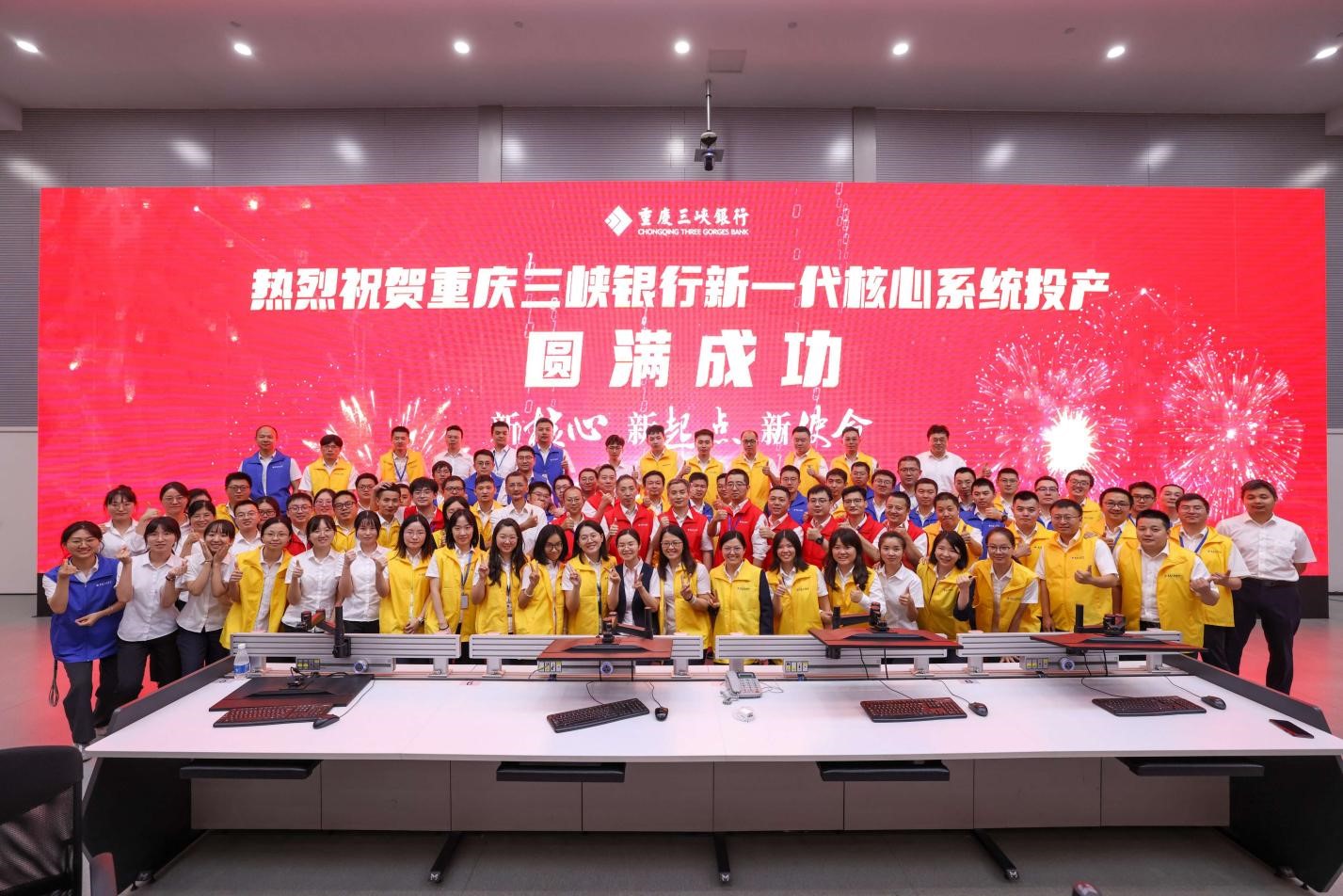
    Recently, the new generation core system project of Chongqing Three Gorges Bank was successfully put into production, which is another perfect application of Sunline V8 Core System in a city commercial bank, marking a starting point for the core transformation in Chongqing’s banking industry.

    Revolutionizing the old, transforming to the new

    At present, the increasing volatility of the international financial market with China’s economic and financial situation being most severe, has caused profound changes in the policy environment facing the banking industry. In addition, the booming developments in digital finance and big data has brought upon more challenges to banks.

    Chongqing Three Gorges Bank has always adhered to the development path towards “differentiation, specialization, and refinement”. Since its establishment in 2008, the business scale of the Bank has grown rapidly, its profitability has continued to increase, and its comprehensive strength has been significantly improved. By the end of 2021, the total assets of Chongqing Three Gorges Bank was reported to be nearly 250 billion.

    In order to comply with the trend of the digital era, continue to cultivate core competitiveness, and support the Bank’s strategic planning needs towards high-quality development, Chongqing Three Gorges Bank decided to start the construction of new core system, aiming to build an advanced, compatible, stable and forward-looking core. With a unique comprehensive system architecture, Sunline was chosen as the preferred partner for the construction of the Bank’s new core by virtue of its mature system, rich implementation experience and senior delivery team.

    Towards quality and efficiency enhancements

    The new-generation core project for Chongqing Three Gorges Bank includes modules such as deposit, public, accounting settlement, interface, and migration, with the needs to develop and connect 56 systems. Before the project was launched, the project team went through 9 rounds of data migration, 7 rounds of system integration tests, 6 rounds of business acceptance tests, and 6 rounds of production drills, in which the team has been solving problems, making up for shortcomings, and controlling risks.

    The new-generation core system adopts a distributed and microservices based architecture as a whole. After the successful launch, excellent performance indicators were reported with significant faster response speed, shortened average time consumption, and increased number of daily transactions. The advantages of the new core system are obvious:

    ·       “One core” to create the best customer experience

    The new-generation core system builds a unified data standard, product management, account management, and customer view that realizes differentiated pricing, multi-channel account integration, centralized payment and deduction, and one-stop comprehensive signing for banks, providing customers with more humanized, diversified, convenient and efficient services.

    ·       “Two major technological innovations” to improve system performance

    The underlying architecture of a distributed and microservices core greatly improves system performance, achieving 24×7 uninterrupted operation for banks. An open platform reduces the degree of coupling, build a competence center, comprehensively improving the R&D efficiency and system iteration rate.

    ·       “Three breakthroughs” that diversifies Digital Financial Services

    Realize centralized operations and maintenance management: the interconnection of the legacy core, Three Gorges Payment, and large-value deposit receipt system; key businesses such as limit management and account control are centrally managed and controlled; and business risks are monitored in real-time.

    Realize scenario-based process reengineering: establishing a unified customer view and 360° profile; reorganizing and recreating scenario-based processes for cash/voucher transfer, account opening, card and number replacement, customer and account information inquiry; and achieving a one-stop, unified signing of multi-channel and diversified services conducive to group fund management.

    Online and offline integration: to adopt parameter configuration and factory processing mode to achieve centralized and differentiated release of online products.

    The new core strengthens the interconnection between online channels and outlet built a counter response mechanism for online businesses such as open accounts, deposit certificates, and large-amount cash reservations; improves the business types of smart counters and ensure the unification with counter business rules and procedures; and enriches the business functions of electronic channels such as Three Gorges Payment, Mobile Banking, and Internet Banking.

    The completion of the new-generation core system group project supports all the existing business functions and technical requirements of Chongqing Three Gorges Bank with the strategic purpose of modeling, componentization, internal and external integration, risk control systemization, business processization, and management informatization.

    As Sunline’s the flagship product, the core system helps banks promote the process of digital transformation through technological updates and achieve high-quality financial development. From technology support to technology leadership, Sunline’s pursuit of innovation has no end, moving forward along the value direction of the banking industry through the continuous relay points of each project.