Blog

  • Take a Look at the Development in Innovation and Business Growth of Sunline’s Core System

    Take a Look at the Development in Innovation and Business Growth of Sunline’s Core System

    If there is one word to summarize the development of Sunline’s core system in 2020, ‘stable’ is most apt. Even under the epidemic situation, Sunline continued to lead innovation in the field of core systems, pioneering the ‘microservices + unitized’ core system in 2020 and performed steadily in terms of market growth.

    In 2020, the epidemic and the country’s call for financial innovation have further promoted technological transformation for the financial industry. Since then, microservices and distributed architecture have been widely developed and applied. Service providers have always followed closely the trends in financial expectations in their home country and abroad to focus on technological innovations and lead the development of the industry.

    Sunline continues leading the innovation of ‘microservices + unitized’ core system

    Under the harsh environment during the epidemic, Sunline’s core business is as stable as the mountain with continuous technological innovation as the key.

    Based on the rich knowledge and deep understanding on the core businesses of banks, Sunline has found a way to innovate the core system in an all-round manner via the trifecta: platform ecosystem, application architecture and business model, pioneering the development of a diversified core system based on ‘microservices + unitization’ and helping financial institutions achieve flexibility at the level of technical services via infinite dynamic expansion, rapid innovation of business products, restructuring of financial business processes and promotion of transaction-driven accounting transformation to a customer-centric product management service model to meet the rapid development of the bank’s future business needs.

    Innovation is embedded into the gene of Sunline’s bones. From the launch of the industry’s first Java based core system in 2013, the first distributed core system in 2014 and the first digital core system in 2015, Sunline has always insisted that innovation is force towards sustainability and growth.

    Sunline’s ‘microservices + unitized’ core system launched in 2020 is once again an outstanding innovation with infinite scalability, multi-center deployment architecture, fault isolation and many other advantages that contributes to what the core systems can offer today, bearing the responsibility of China being a mature and developed country in terms of digital innovations.

    Maintain a high winning rate for heavyweight projects and maintain a stable market 

    Years of continuous technological innovation have maintained the steady growth and expansion of Sunline’s core business in the market. In 2020, Sunline won the bid for a number of core system projects for heavyweight banks such as Bank of China, Postal Savings Bank (PSBC), Bank of Communications, Beijing Rural Commercial etc. In the market of direct banking, Sunline won core system projects for PSBC’s Youhui Wanjia Bank as well as China Merchant and JD.com’s Zhaoshang Tapu Bank, helping these direct banks improve their online direct selling capabilities with Sunline’s pioneering enterprise-level microservices and distributed architecture digital core.

    While maintaining a high winning rate in the market, Sunline also ensure every customer is served with excellence. There are several industry benchmark projects in 2020:

    ● The first ‘microservices + unitized’ diversified core system has been put into production in Bank of Dongguan and Liaoning Zhenxing Bank. Equipped with Agile development, the system fully meets the requirements of both banks with high availability, efficiency and scalability that seamlessly support rich control and management capabilities in terms of operation and maintenance.

    ● An important milestone for the provincial rural credit market with the creation of a new generation core system for Liaoning Rural Credit  that replaces the institution’s legacy core, future proofing Liaoning Rural Credit for the digital era with an independent and flexible multi-centre core business system that fully integrates the resources of the entire institution.

    ● Setting the record for the shortest time taken for the switching of a credit card core system in Ping An Bank’s new ‘A+’ credit card core project.

    The existence of technology is to empower businesses. In this sense, Sunline’s advanced technologies have been supporting the business development of our customers since our inception almost two decades ago. Customers’ loyalty and recognition are the best motivation to Sunline’s continuous innovation.

    Widely recognized by the industry with multiple substantial awards for excellence

    Holding dear to our vision and mission, Sunline has been developing steadily for almost two decades. We have been focusing on the technological innovation for the financial industry, achieved our advantages step by step with our accumulated knowledge and experience, gaining industry recognition for our strength.

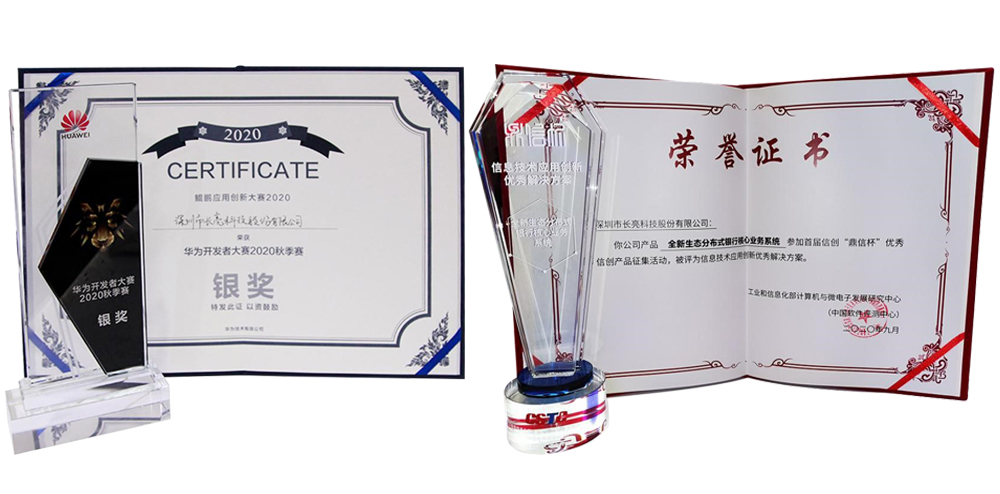
    In 2020, Sunline’s was not only listed on the nation’s heavyweight awards like IDC China Top Fintech 50, CB Insights China’s Top 50 Fintech, Forbes China 50 Most Innovative Companies but also global awards like Most Innovative Fintech Company in Global Brands Award. Sunline’s new generation ‘microservices + unitized’ distributed core system with strong scalability and adaptability towards multiple technology platforms has also won us the Silver Award at 2020 Huawei Developer Contest and the first Dingxin Cup for the ‘Most Innovative and Outstanding Solutions for IT Application’.

    Being the first Chinese Fintech brand to venture overseas, Sunline has also steadily grown its overseas business in 2020, winning significant core projects for banks and institutions in Malaysia, Indonesia, Thailand, Singapore and Hong Kong. Sunline has brought the advanced digital technologies and rich experience in financial digitalization from China to the global market, refreshing the global financial industry with digital transformation.

    Sunline will continue to uphold the belief that ‘only by insisting on innovation can we maintain a stable growth and continue to fly upwind’ and Sunline will proudly hold the responsibility to bring China’s financial technology to the world stage.

    Although the results of 2020 were only summarized in a thousand words, the effort and sweat behind the results were immeasurable. The driving force towards Sunline’s continuous innovation comes from each and everyone in the company. Along the way of every breakthrough in technological innovation and every successful project, there is always perseverance. The people of Sunline always have the fire to fight and the love to create wonderful things to illuminate the future.

  • Sunline’s Observation: 10-year History of Core Changes in China’s Banking Industry

    Sunline’s Observation: 10-year History of Core Changes in China’s Banking Industry

    In the past ten years, the financial market environment in China has undergone earth-shaking changes. With the stabilization of the domestic economy and the acceleration process of interest rate marketization of China, digital finance has also developed vigorously. At the same time, as emerging technologies continue to mature, the financial scene has also accelerated. The integration of technologies by banks brought about by profound changes in the economic environment, market competition environment and customer needs has also created new opportunities and challenges to the development of the banking industry and banking information systems.

    As the engine of a bank’s business information processing, core system is the most critical link in the bank’s IT system. In the continuous development in banks’ information system, core banking system started from a stand-alone business system (1980s – 1990s) that could only handle the business of a single branch. After a large data concentration (late 20th century – 2008), a thin core (2008 – 2014) and is now ushered in the development overflight and has entered the distributed era.

    What is the core banking system development in the past ten years?

    The prelude to the distributed era: The implementation of the first-generation JAVA core banking system

    In the era of large data concentration due to the enhancement of host capabilities and network capabilities, ‘big core’ is a common form of core business systems. The development of various peripheral businesses and sharp increase in business volume year by year has ushered banks into the ’thin core’ era, stripping various professional and characteristic business systems from the core business systems to optimize the design of the core, causing the creation of a large number of peripheral systems.

    The disadvantages of ‘pipe development’ brought about by large-scale concentration are particularly obvious in ‘thin core’ form. A large number of peripheral systems often develop to independent applications, leading to inconsistent data, uncoordinated functions and ultimately unsatisfactory customer experience leading to the exploration and practice of a new generation of core banking system.

    Before 2010, the mainstream development language for core banking systems was COBOL, C language or database stored procedures on mainframes. At that time, Sunline judged that JAVA language is inherently cross-platform and can support internet services. Once JAVA based core banking system is successfully developed, it will solve a series of pain points faced by the core banking system. It is based on this judgement that Sunline become the first to develop a JAVA based core system. In 2010, the prototype development was completed and special tests were conducted in the IBM Beijing Laboratory. The test results were very satisfactory and were highly praised by the IBM Laboratory.

    In 2011, the first generation JAVA core system in China’s banking industry were ushered into landing opportunity. At that time, Hengfeng Bank needed to refactor their core system and inclined towards JAVA. With the two sides hitting it off and after two years of construction, Sunline’s JAVA based core banking system was successfully put into production for Hengfeng Bank in 2013, becoming China’s first domestic JAVA core system in production. 

    The beginning of the distributed era: The landing of the first distributed core system

    The JAVA based core banking system solves the problems caused by ‘pipe development’ to a certain extent and had made progress business wise but on technology wise, banks’ core systems were still built on imported servers. Under the traditional IT technology architecture development model of banks at that time, the ‘mainframe + X86’ hybrid architecture still failed to make a breakthrough. In the digital field, distributed architecture based on pure X86 servers has developed rapidly.

    In 2014, the historical breakthrough opportunity came when China’s first private full digital bank, WeBank was established. With the internet gene of Tencent, the target customers are hundreds of millions of QQ users and WeChat users. Therefore, WeBank proposes a distributed core system with a requirement to support 500 million customer capacity and system support with flexible expansion.

    500 million was an astronomical number at the time and legacy core business system based on the traditional architecture cannot be adjusted to meet the design requirements of the distributed system in a short time. In this competition, many vendors participating in the POC withdrew within one week but as Sunline’s core banking system met all the expectations of WeBank. At that time, WeBank requested the connection of MySQL databases that are mainly used in Internet companies which is rarely used in the banking industry. Before, Sunline was mainly developed based on Oracle databases. However, Sunline’s POC team only used one week to complete MySQL docking work which fully benefited from the cross-platform and cross-database forward-looking design of Sunline’s JAVA based core system. The successful connection of MySQL database has doubled the confidence of WeBank to partner with Sunline in building a distributed core system.

    “We’ve crossed the river by feeling the stones beneath,” Li Gong, the technical engineer of Sunline who was in charge of the docking at the time recalled. “Before the construction started, we have spent a lot of time designing the business plan and technical framework within the industry. After everything was in place, construction began. Even so, various difficulties were encountered during the development process. Since the industry has no experience to learn from, we can only take one step at a time in the development process of distributed transactions. The method adopted at the time was to pick one transaction, convene all technical personnel, project members and leaders to verify together to analyze the functions that need to be optimized together and then tune, verify and repeat the process again and again until all has been optimized and transformed”.
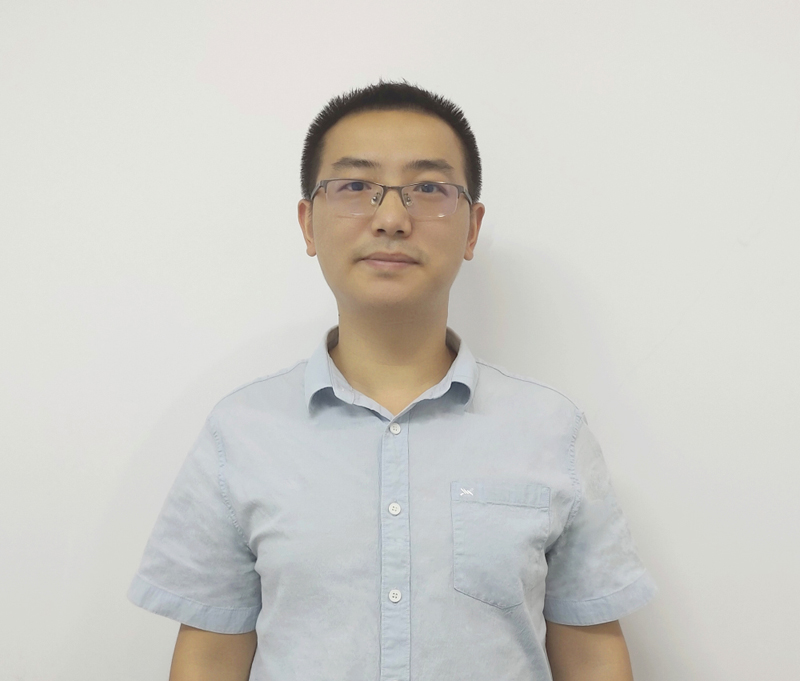
     Li Gong, Technical Engineer of Sunline

    After nearly a year, finally in March 2015, the WeBank distributed core system was successfully launched. The system had many pioneering features in the industry at that time, including the use of JAVA language for the development of architecture and business logic, and the use of distribution for all applications It has realized the separation of transaction and accounting, supports hundreds of millions of users and high concurrent transactions, etc., which has become the beginning of the distributed core system of my country’s banking industry.

    Fully entered the distributed era: Traditional banks began to deploy distributed cores

    WeBank became the first bank in the domestic banking system to adopt a distributed core system. This spark quickly formed a prairie fire. In 2015, Ping An Bank and Bank of Nanjing simultaneously initiated the construction of distributed core systems and the services provided by Sunline have already became a successful experience.

    According to Wei Feng, Deputy General Manager of Sunline, the person in charge who is responsible for the construction of distributed core systems said, “During that period, Sunline was under great pressure. At that time, distributed technology was just starting and we are required to send experts who are familiar with distribution to our own bank. Facing the concentrated demand for distributed talents in the concurrent projects of two major banks, we can only urgently deploy the original team involved in the construction of the WeBank’s distributed core system project in the early stage of the project, make full use of evenings and weekends as well as emergency trainings so that everyone can be familiar with distributed development methods and technologies in the shortest time.”
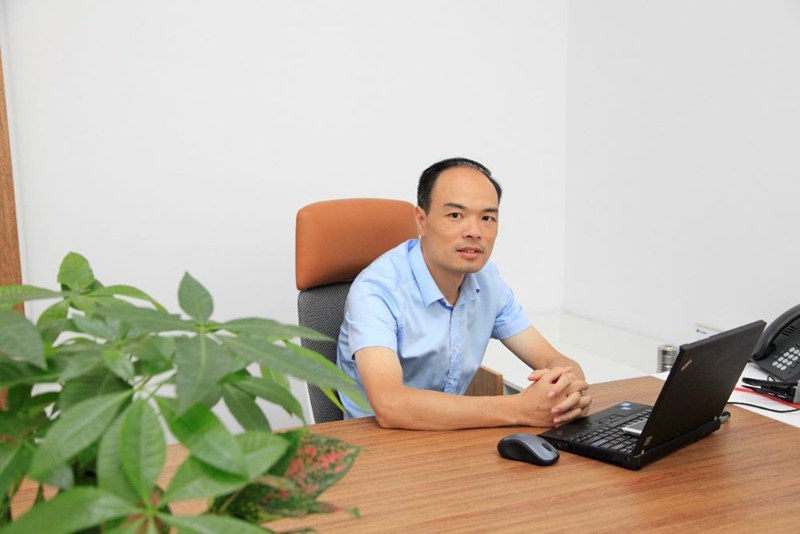
     

    Wei Feng, Deputy General Manager of Sunline

    Therefore, at the end of 2015 all the developers of Sunline faced unprecedented pressure. Firstly, these are two heavyweight customers. Secondly, there are many customized development tasks and thirdly, there are not enough talents. Everyone can only grasp every minute and every second. This state continues until the end of January 2016, ensuring that the development tasks of the project are completed on time and with quality.

    In October 2016, the distributed core banking systems of Ping An Bank and the Bank of Nanjing were launched at the same time. After the launch, the performance of the distributed core system completely met and exceeded the expected requirements, which gave banks in the industry considering replacing their distributed core systems. Over time, the enthusiasm to switch to distributed core banking systems soared.

    In August 2019, the distributed core ushered in a major turning point for the traditional banking field. The first core banking system in the country that adopted a domestic distributed database was successfully implemented in Zhangjiagang Rural Commercial Bank. Service providers were already familiar with distributed technology.

    Prior to this, domestic databases were only used on the periphery such as payment systems, customer relationship management systems and query systems. Zhangjiagang Rural Commercial Bank partnered with Sunline to make bold attempts to adopt domestic databases in the distributed core system which not only broke the bank’s long-term dependence on foreign database products but also further accelerated the process of the bank’s core distributed era.

    After going online, the new core system effectively supports the docking requirements of hundreds of peripheral systems that runs smoothly with efficient operation and maintenance as well as having achieved good application effects. It provides successful and replicable cases for the bank’s distributed core. There has been a new wave in the field and there are countless banks that have learned from Zhangjiagang Rural Commercial Bank. So far, the core of the bank has entered the distributed era.

    Advanced Distributed Technology: The first ‘microservices + unitized’ distributed core system is implemented

    From a technical perspective, there are three typical implementations of distributed mode which include distributed transaction database, database middleware and distributed application architecture. Zhangjiagang Rural Commercial Bank adopts the first type of distributed mode, namely distributed database. The second type of distributed middleware needs to rely on mature and stable sub-database and sub-table middleware while the third type of distributed application architecture can be subdivided into three types, namely microservice architecture, modular architecture and ‘microservice + modular’ architecture. WeBank adopted this modular architecture model.

    Zhang Mushu, Vice President Sunline R&D believes that unitization is a classic implementation mode of distributed architecture. Combining it with microservices architecture can bring more architecture dividends to the new generation of IT architecture such as unlimited scalability. Based on unit-level expansion and microservices elastic scaling; multi-center deployment architecture, through unit multi-center multi-active deployment, to improve disaster tolerance; gray-scale release capability, based on unit gray-scale and microservices version gray-scale to improve version release reliability; Fault isolation capability, through unit fault isolation and microservices fault isolation, reduces the scope of faults and improves the overall availability of the system but at the same time it will also bring complexity to the architecture including cross-unit distributed transaction problems, cross-microservices distributed transaction problems, service splitting over-fine performance problems, cross-microservices and cross-unit batch scheduling problems as well as business adaptation and transformation issues, etc.
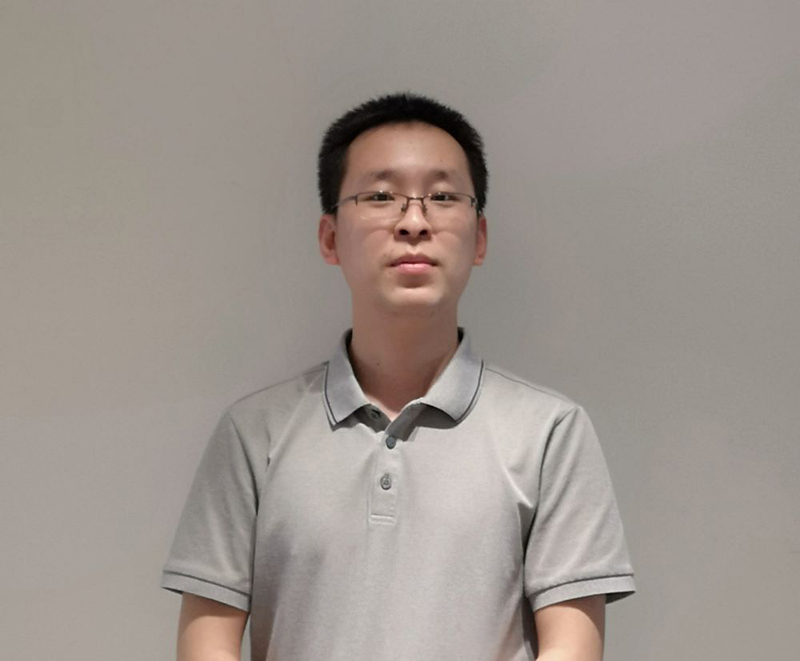
     Zhang Mushu, Vice President of R&D of Sunline

    Relying on a deep understanding of distributed architecture, Sunline has actively innovated and introduced this design concept into the banking industry and launched the first ‘microservices + unitized’ distributed core system.

    The ‘microservices + unitized’ distributed core can achieve flexible deployment and unlimited dynamic expansion at the technical service level which can meet the needs of explosive customers growth in the future. The business level supports rapid product innovation, rebuilds financial business processes and promotes transactions while the driving accounting method is transformed into a customer-centric service model based on product management.

    At the time when Bank of Dongguan was preparing to transform into a distributed core, they investigated WeBank’s core and had set their sights on Sunline as their preferred solutions provider and Sunline was developing SunLtts V8. After understanding, the bank found that SunLtts V8 fits their future development direction and the direction of the industry so they were determined to change into the ‘best core’.

    In June 2020, Bank of Dongguan’s new-generation core system was launched, fully meeting the bank’s requirements for low cost, high availability, high performance and rapid expansion. It can effectively support the rapid development of the bank’s digital business and meet the explosion of massive customer data and business, fully verifying the demand for rapid growth via the advanced nature of ‘microservices + unitized’ architecture.

    With the extensive development of digital transformation, banks as a key area of informatization are bound to further increase their investment in digitalization. The majority of small and medium-sized banks need architecture solutions that can complete digital transformation with lower costs and higher performance and that is how distributed ‘microservices + unitized’ architecture came into being. This architectural model eliminates dependence on specific imported products from design to implementation, laying a solid foundation for banks to achieve high-quality, high-reliability and high-security digital development.

    With the constantly surpassing technology, the core banking system has gone through different development stages, especially in the past ten years. Every advanced development cannot be separated from the promotion of technology and innovation but technological development is far more than this. A new round of technological development is constantly being updated and the future can be expected.

  • Sunline Attends Green Computing Industrial Summit 2020 to Share Insights on Empowering Green Transformation for Financial Industry

    Sunline Attends Green Computing Industrial Summit 2020 to Share Insights on Empowering Green Transformation for Financial Industry

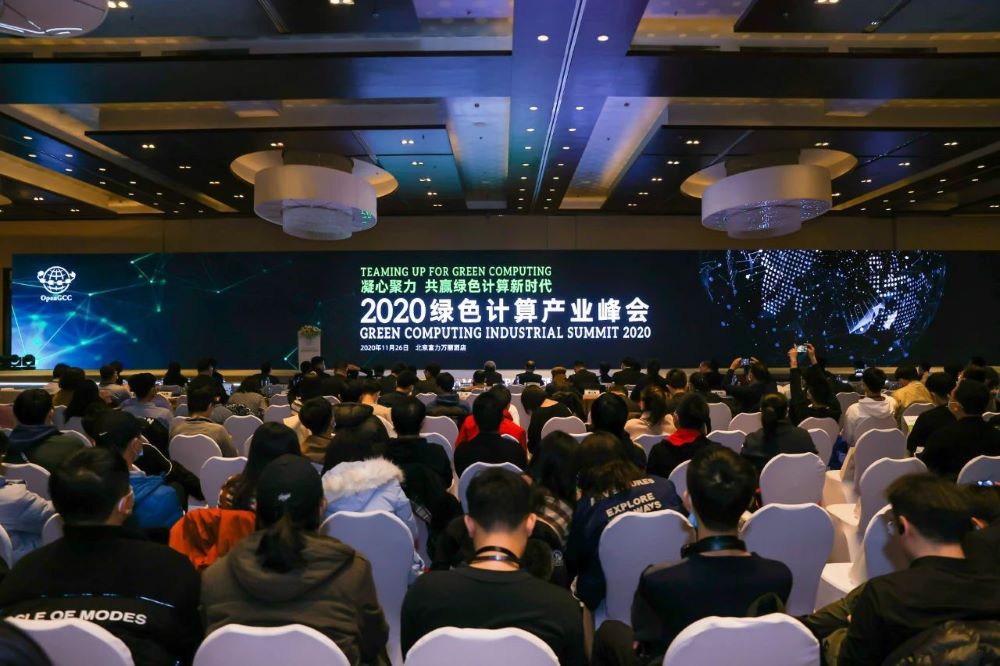
    On November 26, Green Computing Industrial Summit 2020 hosted by the Green Computing Consortium convened in Beijing. Themed ‘Teaming Up for Green Computing’, the conference brought together top green computing leading companies in the world to discuss green computing standards, systems and development opportunities to empower the reformation of the computing industry direction. 

    As a leading enterprise in the financial big data field and an important contributor of the green computing industry, Sunline was invited to participate in the conference to share the innovation and best practices of big data technology in the financial industry as well as how to promote the prosperity of the green computing ecosystem.


    In recent years, the evolution and development of emerging technologies such as big data and artificial intelligence has brought about increasingly strong demand for green computing products with high efficiency, high performance and low energy consumption. There is an urgent need to obtain more powerful and diversified computing power to meet the computing needs of different application scenarios in the diverse industries.

    Sunline has been focusing on empowering the financial industry with technological innovation and has worked with partners to create a safe, low-energy green computing industry ecology. In the field of banking data asset management, Sunline has long-term and profound technical accumulation, providing end-to-end data asset management solutions that covers planning, aggregation, management, analysis, application, etc. and has provided more than 100 banks worldwide with data asset management consulting and implementation services.

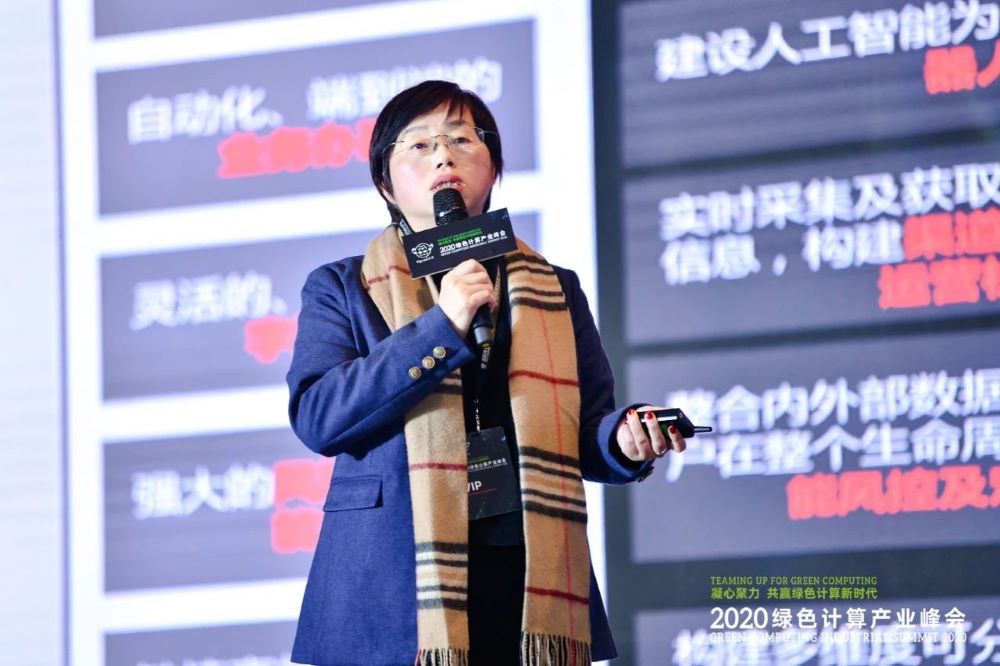
    During the conference, Xiong Lin, Vice President of Sunline gave a keynote speech on how ‘Data Center Helps Bank Digital Transformation’ with data-driven business process scenarios, noting that smart finance is in the primary development stage of ‘narrow scenarios’ and ‘shallow applications’, having a lot of room for development with the help of new infrastructure. Sunline is an enterprise that empowers the financial industry through the creation of a green computing industry ecosystem not only provide higher quality applications for financial customers but also promote positive development of the computing industry ecology through market applications.

    Xiong Lin, Vice President of Sunline


    The prosperity of the green computing ecosystem requires joint strength from upstream and downstream partners in the industry from underlying hardware, software, complete machines to applications. As a leading financial technology service provider, Sunline will give full play to its strong technological innovation advantages in the financial field and to join forces with other industry partners in the development, acceleration and upgrade of the industrial chain, jointly creating an advanced, innovative and global green computing ecosystem.

  • Sunline and Henan Asset Management Jointly Build China’s First Domestic Microservices Based Architecture Management Core System

    Sunline and Henan Asset Management Jointly Build China’s First Domestic Microservices Based Architecture Management Core System

    Recently, Sunline won the bid for a core system project for Henan Asset Management Co., Ltd. (hereinafter referred to as Henan Asset Management), helping the company build the first domestic made microservices based architecture management core in China.

    The adoption of supervision measures for financial asset management companies and other new regulations have affected the scale and layout of the non-performing asset industry, presenting an increasingly fierce ‘5 + 2 + N + banking system’ competition pattern. The pandemic has further aggravated the changes in the non-performing asset industry this year with the scale of non-performing assets continuing to rise and expand, creating a huge market space for asset management companies. Under the circumstances, further strengthening the informatization of asset management companies has become the top priority while in the long-term, businesses need to rapidly change development strategies.

    Henan Asset Management is the pioneer in the construction of a localized microservices architecture core system 

    Henan Asset Management is the new force in resolving financial risks in China and has been deeply implementing the three missions to resolve financial risks, serve reformation of state-owned enterprises and boost industrial transformation since its establishment. The company has been actively supporting structural reforms and continuously improving the benefits of serving the real economy, making every effort to build a modern asset management company with an international perspective. Under the rapid development and transformation of the non-performing asset industry, Henan Asset Management rapidly put the construction of IT system on the agenda to achieve business data structure, process, refinement and standardization through a robust core system construction, comprehensively enhancing market competitiveness.

    In the early stage of the project implementation, Henan Asset Management carefully researched and inspected the system construction of domestic asset management companies and service providers to establish the first localized microservices based architecture core system in the capital management industry to empower business with technology as well as accelerate business transformation and development. Sunline majors in advanced microservices, diversified technologies and rich experience in the implementation of asset management projects which have won high recognitions from customers.

    Sunline Asset Management Core System Empowers Digital Conversions of Henan Asset Management

    As early as 5 years ago, Sunline began to lay out the core system for asset management industry based on the company’s rich IT service experience in the financial field combined with the latest development trend of financial technology to meet the development needs of asset management core. Up until now, Sunline has successfully implemented the company’s core system in 20 domestic asset management companies, including five major asset management companies and local asset management companies.

    Sunline combines the current state of Henan Asset Management’s demand, architectural planning and advanced market technology to create a new generation core solution that meets the development needs of the company’s asset businesses, supporting the business components with strong scalability, stability, security and business adaptability, quickly responding to business innovation or changes and fully empowering digital transformation and development of the company.

    Taking a look at the advancement of Sunline’s asset management core system

    Sunline Asset Management Core Solution combines the latest technologies from Sunline, equipped with open source Spring as the main technology system and using distributed microservices based technology architecture with the support for localized database deployment. 

    ·    Using professional accounting engine and based on the use of workflow engine and rule engine, the solution creates a one-stop project operation, de-menu operation, process efficient core business system to meet the needs of Henan Asset Management’s personalized services.

    ·    Can be connected to external big data to realize digital business operations based on big data applications, big data due diligence, big data risk control, intelligent estimation, etc.

    ·    Adopts project-driven operation mode and component-based flexible configuration to effectively support various core business operation processes to be more structured, open and componentized.

    ·    Realize the electronic, process and standardization of business and management to prevent and resolve business risks, standardize business operations, assist management decision-making, improve work efficiency, promote business development, reduce management costs, and improve asset management efficiency.

    The Henan Asset Management Core Project is the first domestically-made microservices based architecture core system case for the asset management industry and is of great significance to the subsequent IT system construction in the entire asset management industry. Sunline will gradually become a great help to increase innovation and continue to upgrade products in helping more asset management companies reshape their competitive advantages and achieve breakthrough business development.

  • Sunline Attended Huawei Digital Intelligence Finance Forum, Shares Insights on Bank’s Digital Transformation Path

    Sunline Attended Huawei Digital Intelligence Finance Forum, Shares Insights on Bank’s Digital Transformation Path

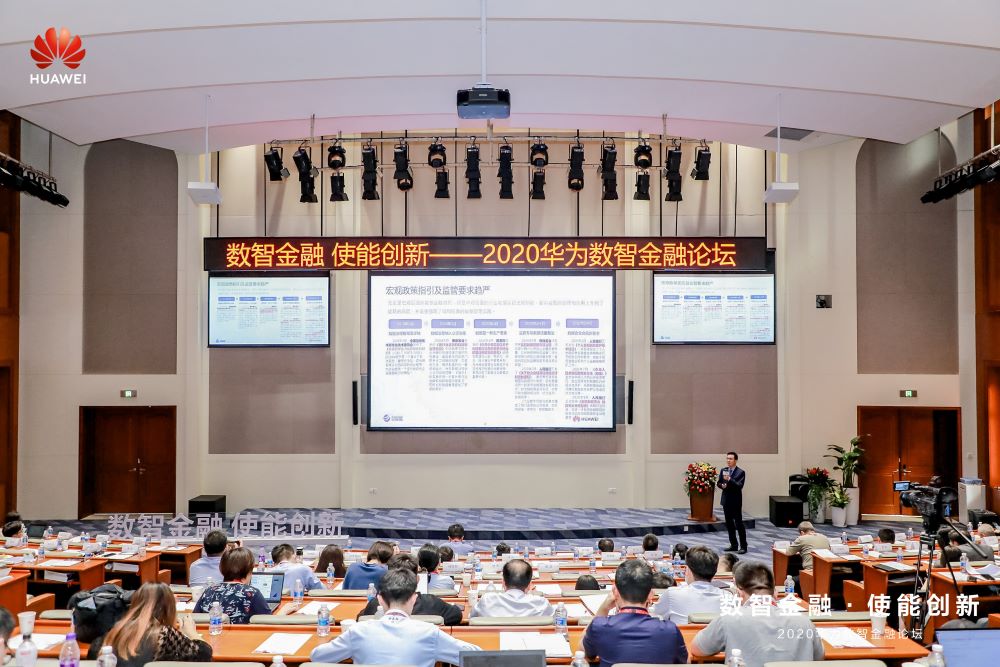
    On November 26-27, 2020, Huawei Digital Finance Forum convened with the theme ‘Enabling Innovation with Digital Intelligence Finance’ in Songshan Lake, Dongguan, bringing together national financial experts to discuss on how to build a future-oriented data intelligence platform, accelerate  capitalization of data, improve efficiency, enable innovation and how major players can jointly build a future-oriented smart financial system. Sunline, as a leading domestic financial technology company and an important partner of Huawei was invited to participate in the forum to share about the digital transformation path for banks.


    With the development of digital economy, technology has become a key driving force for the transformation of the financial industry, acceleration of the update and evolution of financial products, deepening of the transformation of business processes and business models and reshaping of the industry structure. The integration of financial institutions and technology industry is getting closer. Data warehouses, smart data lakes, knowledge graphs and AI platforms are becoming the core technology components of new finance, providing new ideas for the development of precision marketing, smart risk control and inclusive finance.

    As a leading financial technology solution service provider, Sunline has a long-term and profound technical accumulation in the financial big data field with independently developed data warehouses, unified data service platforms, data asset management platforms, etc. based on the core functional components of big data. Leading big data products are widely used in financial risk control, marketing and other fields to provide financial institutions with an integrated data intelligence ecosystem.

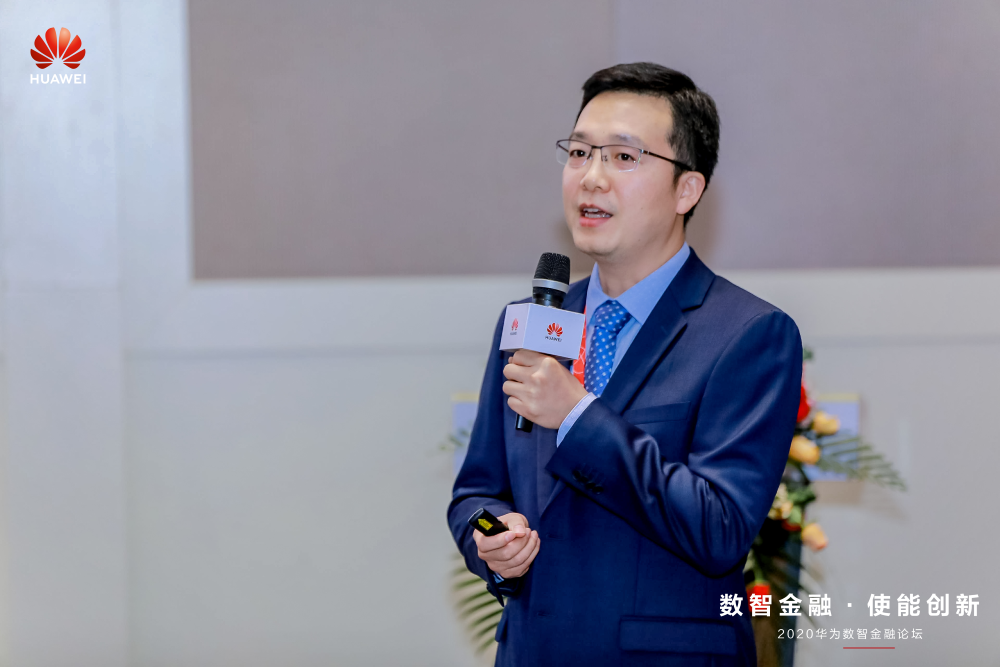
    At the Huawei Digital Intelligence Finance Forum, Mr. Gu Min, Executive Deputy General Manager of Sunline’s Big Data Business represented Sunline to share the digital transformation path of the bank, from business digitalization to layered analysis and interpretation, helping banks build an integrated data closed loop and a smart bank with the support of financial technology. At the same time, unveiling the joint fusion data warehouse solution by Sunline and Huawei.

     Mr. Gu Min, Executive Deputy General Manager of Sunline’s Big Data Business


    The converged data warehouse solution composed of ‘convergence-management-calculation-use’ solutions provided by Sunline for financial industry data running on Huawei’s software and hardware infrastructure to achieving complete integration from the underlying infrastructure to the data application architecture. The solution solves the problem so that customers can effectively manage data assets from data collection, storage and calculation, meeting the needs of different scenarios and time-sensitive data services to fully realize the value of data assets.

    With the rapid development of the digital economy today, data assets have become a new factor of production. Making full use of data to empower businesses and accelerate data assetization is critical to the digital transformation of the financial industry. As a leading financial technology company, Sunline will give full play to its strong technical innovation and application practice in the field of financial big data and form a joint force to deliver innovation and development with other industry partners, helping financial institutions flourish in the digital age.

  • The Influence of Sunline’s Project Culture to Drive Enthusiasm, Initiative and Responsibility in Team Members

    The Influence of Sunline’s Project Culture to Drive Enthusiasm, Initiative and Responsibility in Team Members

    In May 2019, Zhengzhou Yutong’s new financial core and peripheral construction project was officially launched. The construction involved 8 subsystems such as core system, settlement system, online banking system, credit system, bank-enterprise direct connection, data warehouse and reporting platform. Sunline realized a smooth project launch for Zhengzhou Yutong Finance in just 6 months, creating a precedent for the launch cycle of the core and peripheral systems of a financial company.

    Excellent project management is the foundation and guarantee for project success. Under the influence of the core values of ‘sharing results among employees, sharing responsibilities among team members and sharing successes with customers’, Sunline has extended a unique project management culture.

    Integration: People-oriented management model

    In terms of project management, Sunline has always implemented a people-oriented principle, respecting the personality, characteristics and independence of each team member, giving full authorization to project team members to mobilize enthusiasm, initiative and creativity, stimulate their potential and adopt a series of specific measures to allow project team members to quickly integrate into the project and carry out work in a direction:

    1. Carry out training and encourage team members to ask questions

    Before project implementation, project management team will actively organize various business and technical trainings to allow team members to quickly become familiar with the project demand, allowing them to quickly upgrade themselves as well as integrate their technical and business strengths.

    If the team are met with any technical or business issues during discussions, team members are encouraged to solve the issues as a team. Leaders encourage team members to actively ask one another for advice, teach each other and learn from each other’s strengths so that every member can improve and gain knowledge.

    2. Organize various activities to promote team work

    In Sunline, caring about project team members is the foundation in team work cultivation. In order to promote the tacit understanding and collaboration between team members from different departments, the project team actively organizes activities to enrich the lives of employees and make project members enjoyable while enhancing mutual understanding and trust.

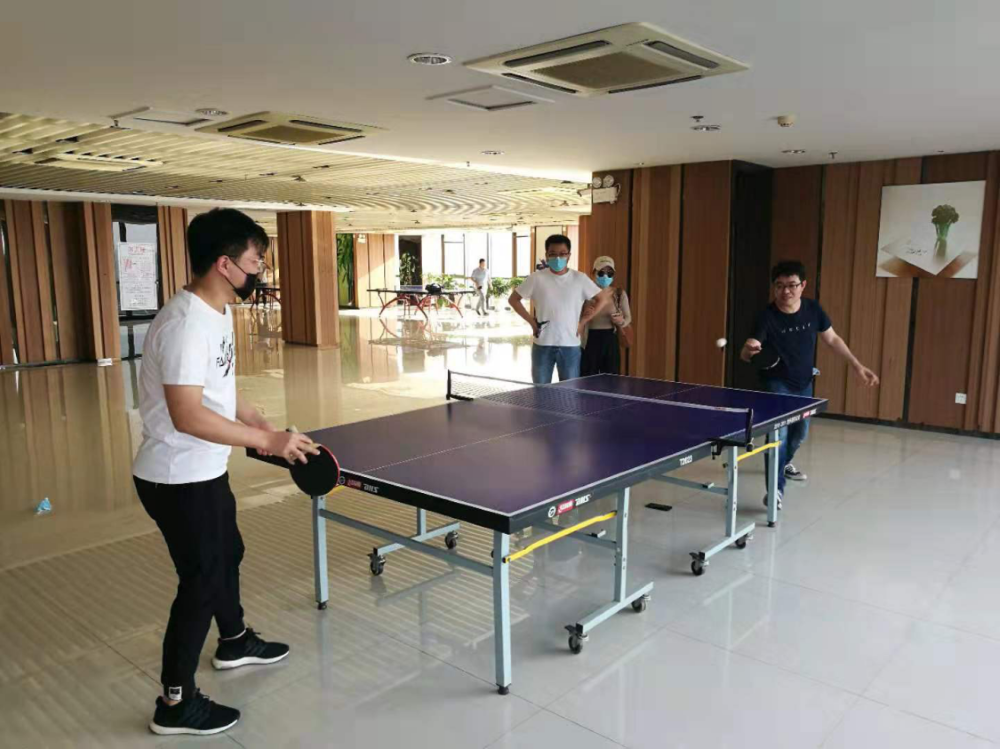
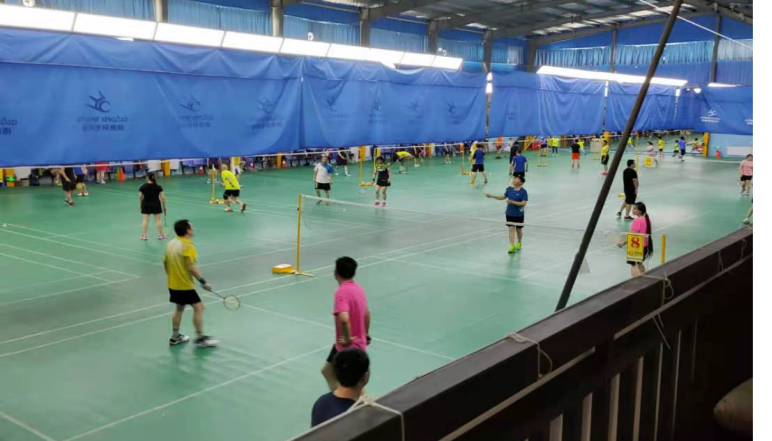
    Project team leaders regularly organize group activities such as badminton and table tennis competitions on weekends in order to exercise their physical and mental fitness.

    In Sunline’s point of view, people-oriented is not hard to achieve. First of all, as an independent individual, everyone needs to be fully respected and understood and to be accepted for their differences in thoughts, opinions and personalities. The different strength points of each person can be discovered and cultivated with enough space given to play their personal abilities and values. Secondly, a project team is like an army. The team must have a strong physique, professional skills, excellent strategic plans and clear goals, winning every war with team work, fighting for a common goal and fighting for honor.

    Competition: Stimulating potential

    There is no progress without competition because competition is a type of driving force that can promote personal development. Practicing a people-oriented management model, Sunline pays great attention to cultivate competitiveness of project team members.

    As an example, when the project team faces a drawback during project testing caused by software bug, team members will work together to solve the issues by classifying and prioritizing the bug before assigning relevant groups according to the subsystem to solve the bug situation. Each group leader will arrange team members to solve the issues according to difficulty level and evaluate each team according to their performance to set the corresponding reward mechanism.

    In order to achieve the goal, each group leader mobilizes their members to work together at all times. In a competitive state, there will always be unexpected sparks that exceed the task every day. During the project implementation phase, there were a time when a project group was slightly behind schedule due to unforeseen circumstances but members of the group who were unwilling to fall behind and delay the whole project and other groups so they voluntarily work overtime to catch up with the progress of other groups.

    In a competitive environment, the collective sense of honor of the project team members can fully utilized and the sense of ownership and team awareness can be improved. Team members will make the team’s goal as their own personal goal while the progress and quality of the delivery are regarded as their own pride, guaranteeing a quality project delivery.

    Zhengzhou Yutong’s financial core and peripheral construction project was successfully delivered

    Right before Zhengzhou Yutong’s financial core project was scheduled to go online, customer could not find the driver certificate when handling Ukey plug-in and had to look in their legacy system to find it. However, the customer’s legacy system no longer has any maintenance personnel, adding to the difficulties during project implementation. In order to ensure that the project go online as scheduled, Sunline’s project team did not stop until they reached their goals. After fighting for three consecutive nights, the problem was finally solved the night before the launch.

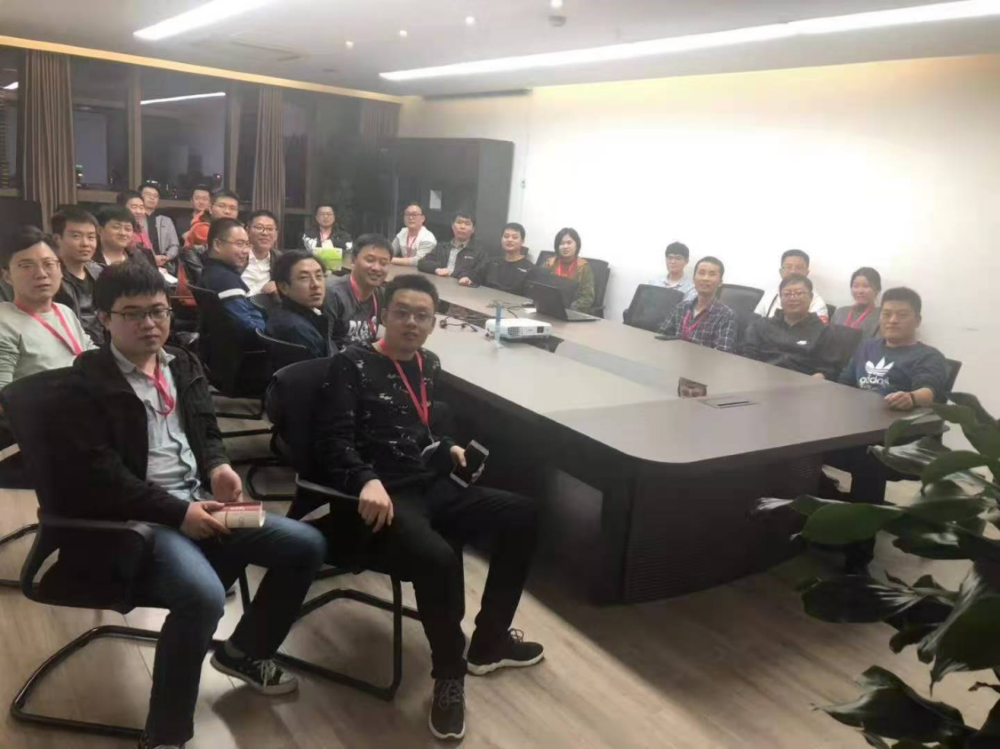
    During the on-line mobilization meeting, everyone’s morale was sky high and everyone was motivated and ready to deliver the project. 

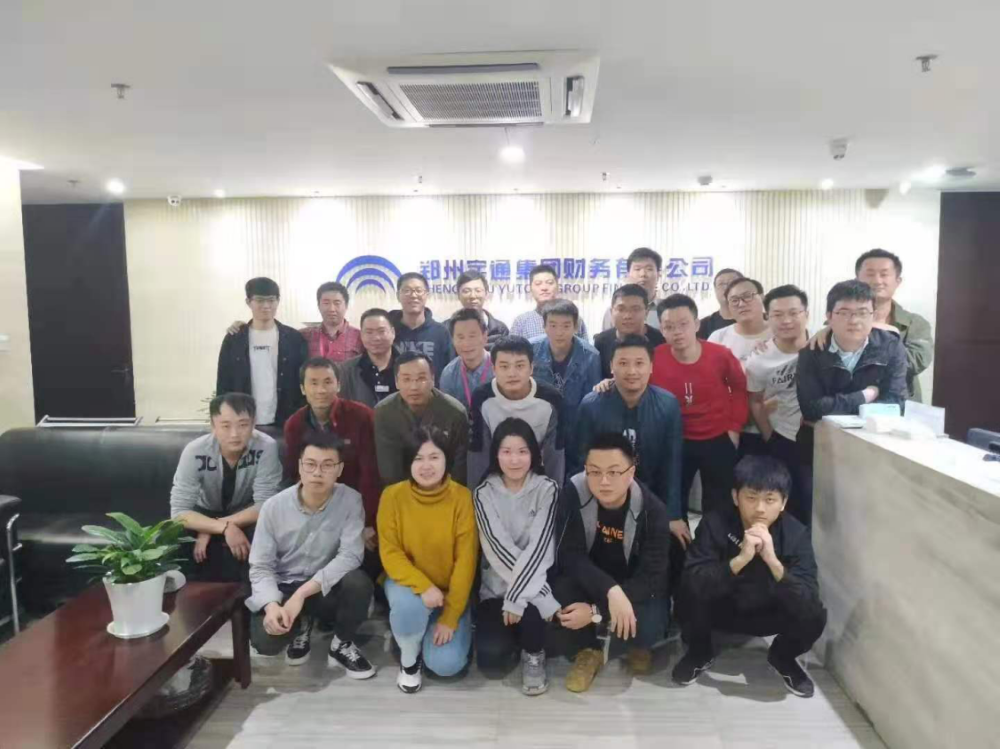
    In November 2019, the project was successfully launched, creating a precedent in efficient timeline of 6 months for a financial company’s core and peripheral systems to go online. The project team members who have been fighting for several nights were not able to conceal their excitement and joy albeit feeling tired because of the satisfaction from winning a war.

    Under Sunline’s project management to drive integration and competition, in addition to inheriting the company’s core values  to the team members’, their sense of enthusiasm, initiative and responsibility have been added to their own wealth of experience, allowing them to achieve more brilliant results in future projects and their future undertakings.

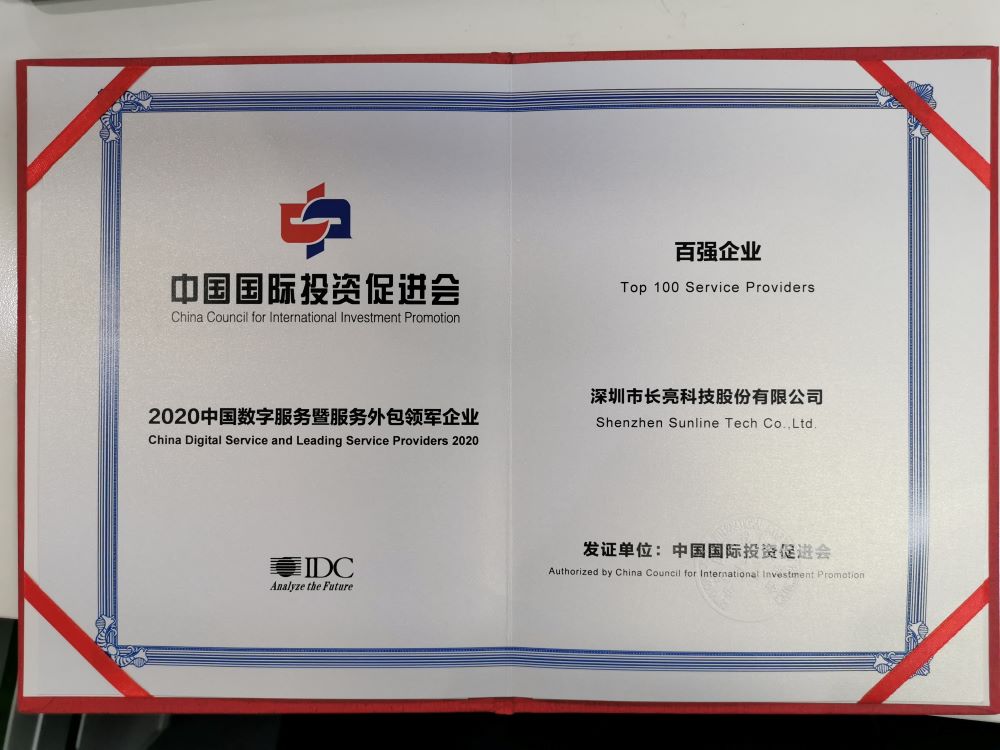
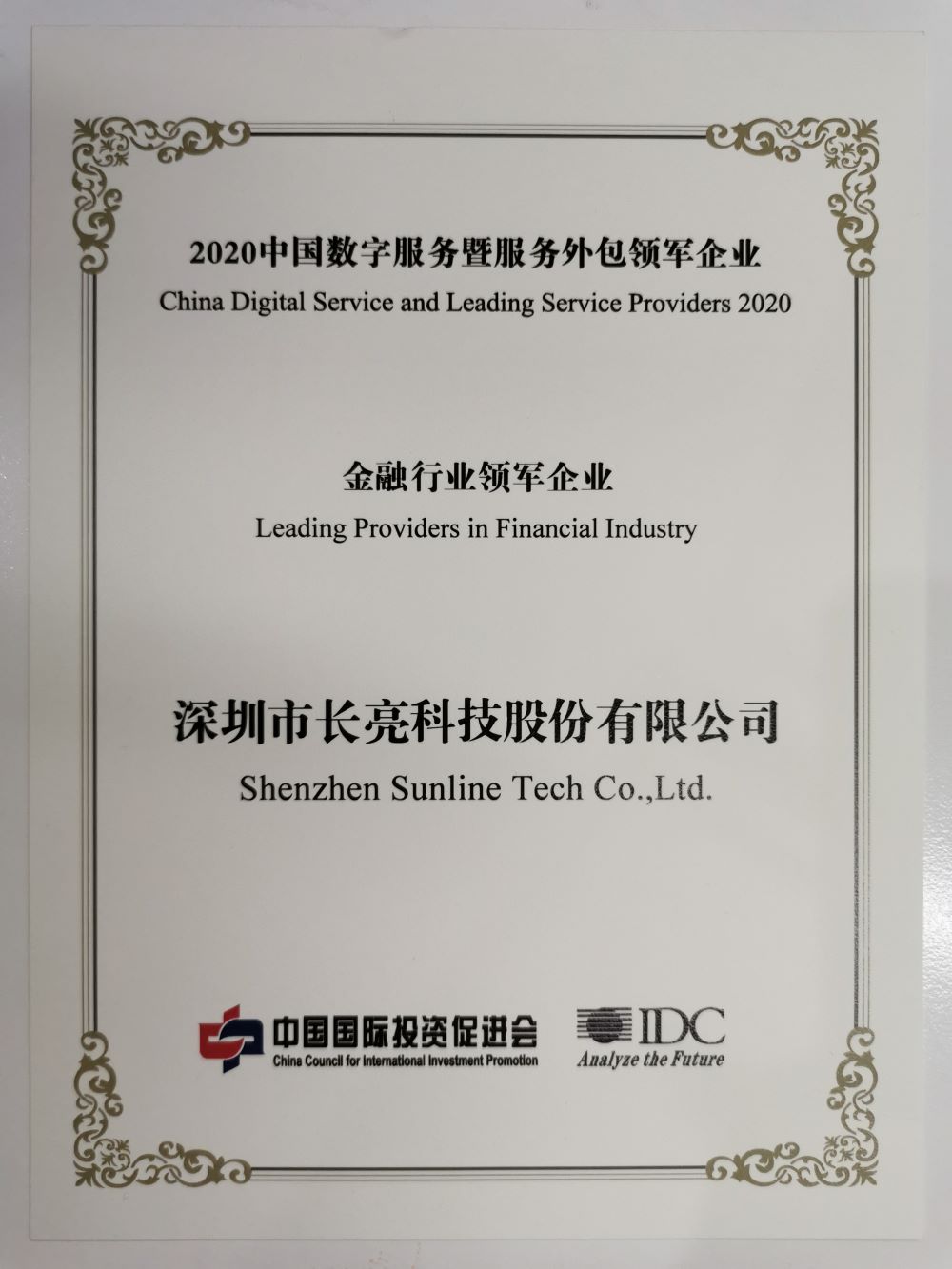
  • Sunline Won ‘Leading Providers in Financial Industry’ and ‘Top 100 Service Providers’ Awards

    Sunline Won ‘Leading Providers in Financial Industry’ and ‘Top 100 Service Providers’ Awards

    The recent China’s Leading Digital Service and Service Outsourcing Conference 2020 organized by China Council for International Investment Promotion (CCIIP) and IDC was grandly held during China International Service Outsourcing Trade Fair. As one of the leading enterprises in the country, Sunline has once again emerged as the ‘Leading Providers in Financial Industry’ and ‘Top 100 Service Providers’, marking two consecutive years of being the only company in Shenzhen to swoop two awards.


    The conference has been held for thirteen times and is an extremely authoritative and credible platform, an important way to showcase Chinese companies and promote ‘Chinese Services’. It has become a high-level activity and the results makes an important reference for the relevant industrial policies formulated by various regions.


    Once again being bestowed a double award in China Digital Services and Leading Service Providers 2020 is a strong evident on the high recognition by the authorities of developing countries on Sunline’s innovations, leading strengths and strong technology in the field of financial technology.

    Sunline has been deeply involved in the financial industry for many years and has been focusing on technology-driven innovations with continuous breakthroughs in emerging technology fields such as distributed core, big data and blockchain, playing a major role in leading the development of the industry. In the post-epidemic era, Sunline actively reserves resources, continuously improves professional technical capabilities and continues to accelerates the digital transformation of the financial industry.